

























































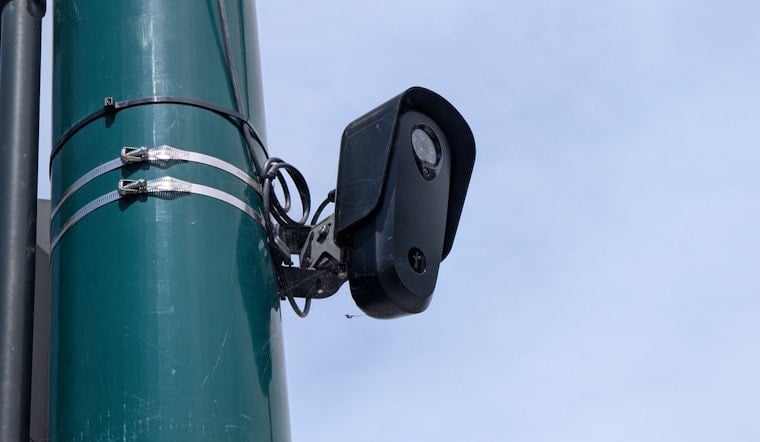
Two Greer police officers were fired in late June after an internal audit found they misused the department's Flock automated license-plate readers, a quiet personnel move that has now kicked open a larger fight over how hundreds of vendor-hosted cameras are used across the Upstate and whether South Carolina will ever tighten the rules. The shakeup has local officials, transparency advocates and lawmakers rethinking who gets to search plate logs and how long those records should sit on a server.
Greer dismissals and the audit
The City of Greer said Corporal Kareem Lynch was terminated on June 26 and Officer Sebastian Echeverry on June 29 after a departmental review, according to Greer News. Separation papers and records obtained by FITSNews allege Lynch repeatedly ran Flock searches to track a colleague while entering justifications such as "city planning" and "welfare check," and that Echeverry used "Alcohol Offense Non-DUI" as a catch-all reason for searches on several people. Both terminations were reported to the South Carolina Criminal Justice Academy, which is set to review the officers' law-enforcement certifications.
How many cameras watch the Upstate?
The network is far from small. As reported by FOX Carolina, seven of 10 Upstate sheriff's offices and five of six police departments in Greenville County use Flock cameras, and reporters confirmed units at roadside locations including Pelham Road in Greenville and Marshall Road in Greenwood. Community maps compiled by DeFlockSC and other volunteer trackers show hundreds of fixed automated license-plate reader units sprinkled across Greenville, Spartanburg, Anderson and neighboring counties.
A broader pattern of misuse
Greer is not an outlier. Investigations in Georgia and other states have uncovered officers running plate-reader queries for personal or non-criminal reasons, leading in some cases to arrests and firings, The Atlanta Journal-Constitution reports. National watchdogs including the Electronic Frontier Foundation say their review of millions of Flock queries points to widespread "mission creep," with searches tied to school-residency checks, noise complaints and protest activity that have little to do with serious crime.
State lawmakers tried to act
At the State House in Columbia, lawmakers have already floated guardrails for automated plate tracking. Proposals sought to limit third-party storage of data, curb appearance-based vehicle tracking and shorten how long records can be kept. One measure, H.4675, would have barred cloud storage for automated license-plate reader data and capped retention at 21 days. The text is on file with the South Carolina Legislature, but that bill and similar efforts stalled in committee this session. Activists say the legislative timeout leaves a patchwork of local policies and vendor contracts to fill the gap.
What it means for officers and residents
The Greer firings were forwarded to the South Carolina Criminal Justice Academy and to state investigators for review, according to documents cited by FITSNews, so administrators will decide whether Lynch and Echeverry keep their law-enforcement certifications. For drivers, the case is a reminder that routine plate scans can turn into detailed, searchable logs of movement and associations that sit in vendor-hosted networks unless and until stricter statewide rules are put in place.
Police and sheriffs defend the system
Law enforcement leaders counter that the cameras are solving real cases. Greenville County Sheriff Hobart Lewis told FOX Carolina the system helped track a suspect in a January 2024 double homicide, saying his office entered a tag number into the Flock system and was able to follow the vehicle into Spartanburg. Pickens County Sheriff Tommy Blankenship told the same outlet his agency keeps camera data for 30 days and that he would "cut them down" if federal misuse were ever proven. Other sheriffs have pointed to vendor audit tools as a way to spot and stop rogue searches from within their own ranks.
Oversight, audits and the next steps
Public-records requests, internal audits and local ordinances have already pushed some cities to pause or reconsider contracts with Flock and similar vendors. The Electronic Frontier Foundation and other civil-liberties groups argue that independent audits, clearer retention limits and stronger warrant rules are the bare minimum needed to keep the technology from being abused. Whether South Carolina legislators revisit earlier proposals in light of the Greer case and other recent reporting now becomes the next political test.





