

























































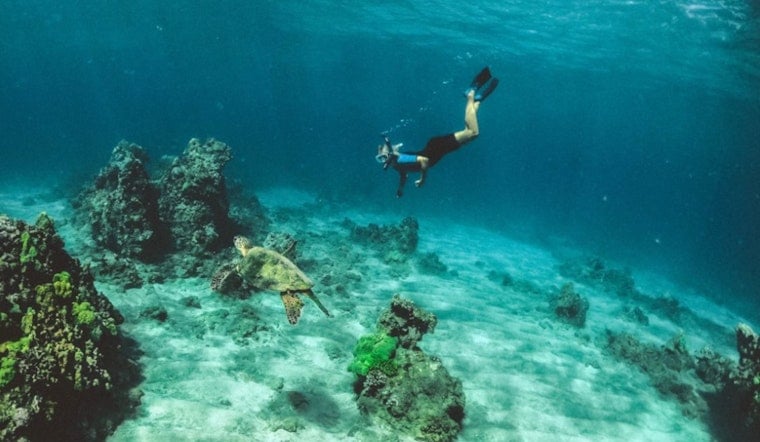
Climate driven coral declines could strip Hawaiʻi residents of up to $3 billion in value from reef based recreation by the end of this century, a new island wide modeling study warns. The projected hit covers everyday pastimes, from snorkeling and diving to shoreline fishing, swimming and gathering, and is expected to first show up along the leeward coasts of Hawaiʻi Island and Maui before spreading toward Oʻahu by mid century.
Study ties reef loss to recreation dollars
The study, led by researchers at the University of Hawaiʻi at Mānoa and published in Ecological Economics this summer, links what happens underwater to what people actually do at the shoreline. According to University of Hawaiʻi, the team coupled a biophysical simulation with a recreation demand model and mapped potential welfare losses for residents at a one kilometer resolution. The resulting $1.8 billion to $3 billion range reflects only local resident recreation, so it almost certainly leaves out a big chunk of the broader economic hit tied to tourism and non use values.
Where the hits start and when
Modeling in the paper shows the earliest and sharpest declines along the leeward, or west and south, shores of Hawaiʻi Island and Maui, where popular reef sites could see their recreational value drop first. Those losses then creep north to Oʻahu by mid century, as reported by Big Island Now. Under a high emissions pathway, the authors project a near total collapse of nearshore reefs by 2100, while a lower emissions trajectory leaves room for modest late century recovery on some windward stretches.
How the models work and what they miss
The research team used the Atlantis ecosystem model to project coral cover through 2100, tested three different climate pathways, and then translated those ecological forecasts into site specific recreation values with a travel cost approach, as explained by Phys.org. “Coral reefs are foundational to life in Hawaiʻi culturally, ecologically and economically,” lead author Ashley Lowe Mackenzie said, according to Big Island Now. The authors also point to big unknowns, including future population shifts, changes in site access, and potential restoration investments, any of which could push the damage estimates higher or lower.
Who bears the burden
To see who is likely to feel the losses most acutely, the study layers ecological projections on top of demographic data and an environmental justice screening. The analysis finds that lower income and otherwise disadvantaged communities face higher welfare losses per person, according to the paper’s preprint and supporting materials. The team used EPA’s EJScreen indicators to pinpoint where social vulnerability overlaps with steep projected reef declines, a pattern that suggests targeted mitigation could blunt some inequitable outcomes. Technical details and caveats are laid out in the study preprint on SSRN, which walks through the modeling decisions behind the welfare calculations.
What managers can do
Study authors and state officials say local action remains one of the clearest near term tools to soften the blow, even as global emissions drive the larger trend, according to University of Hawaiʻi. Cutting land based pollution, curbing over harvesting and backing site specific restoration all show up as ways to protect both reefs and the activities that depend on them. “The magnitude of those potential losses should be a wake up call,” senior author Kirsten Oleson said in the university release, and the team argues that their maps can help steer limited funds toward the most critical reefs and communities. State efforts such as the Holomua Marine Initiative are already collaborating with communities and Indigenous knowledge holders on place based responses.
The headline $1.8 billion to $3 billion figure is a conservative slice of the problem, since it excludes visitor spending, non use cultural values and possible ripple effects on fisheries and shoreline protection. As the authors note, finer scale maps give policymakers specific targets for restoration and water quality upgrades, a practical next step if Hawaiʻi wants to keep its reefs and the local traditions tied to them intact, Phys.org reports.



