

























































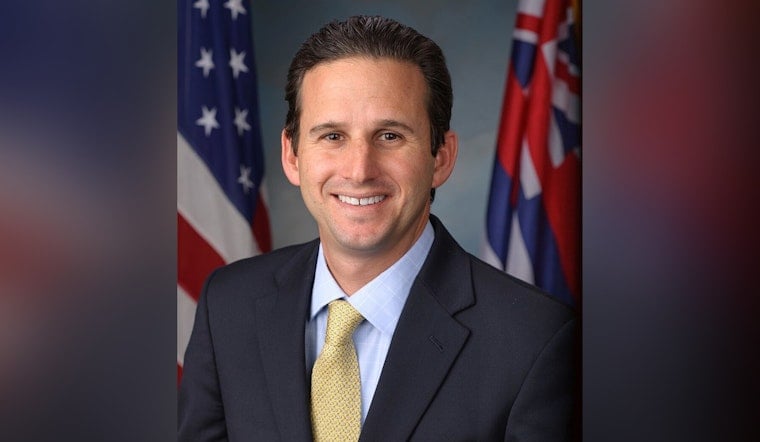
Sen. Brian Schatz is taking a direct swing at deepfakes and AI-driven scams, reintroducing bipartisan legislation that would force AI developers and major social platforms to clearly label photos, videos, audio and chatbot interactions that are produced or substantially altered by artificial intelligence. The AI Labeling Act calls for both visible, human-readable disclosures and machine-readable provenance markers baked into content, and it would let the Federal Trade Commission treat violations as unfair or deceptive practices. Co-sponsors include Sens. John Curtis (R-Utah) and Mark Warner (D-Va.), and supporters frame the effort as a way to slow scams and viral deepfakes that are already hitting Hawaiʻi users.
In a June 25 press release, Schatz said, “People deserve to know whether the videos, photos, and content they see and read online are real or not.” According to Schatz's office, the bill would set up a working group to hammer out technical standards and require AI developers and major platforms to cooperate on content verification.
Local coverage has cast the move as a direct response to high-profile manipulations and scams already swirling through feeds. As reported by Maui Now, sponsors highlighted a fabricated 2023 photo of an explosion near the Pentagon, widely shared deepfake images and AI voice-cloning used in scam calls as the kind of abuse the bill is meant to head off.
What the Bill Would Require
The bill’s text would require providers of generative AI systems to embed a clear, conspicuous disclosure plus machine-readable metadata that tags the output as AI-generated and records details such as the system and version used and the date and time of creation. Platforms would be required to preserve that provenance data, guard against tampering, make disclosure information accessible to users and clearly flag chatbot interactions as AI-generated; the legislation carves out an exemption for internal research uses.
Enforcement would fall to the FTC. Violations would be treated as unfair or deceptive acts or practices, with the commission authorized to write rules and create safe harbors. For those who want the legal fine print, the full text of the bill is available in the bill text.
Where It Fits Globally
Supporters point to similar moves overseas, including the European Commission Code of Practice and Article 50 transparency rules, which will require machine-readable marking of synthetic content starting in early August 2026. In U.S. policy coverage, the AI Labeling Act has been slotted into a growing pile of federal bills meant to standardize disclosure around machine-made material; NextGov recently listed it among several efforts to clarify when users are dealing with AI.
Support and Next Steps
The measure has lined up endorsements from creative and consumer groups, with the press release citing organizations such as the Authors Guild, SAG-AFTRA, the National Association of Voice Actors and Public Citizen among its backers. Schatz's office says the bill has been filed in the Senate and will head to committee, where lawmakers will dig into questions about detection accuracy, potential artistic exemptions and the technical cost of embedding machine-readable markings at scale.
Lawmakers and industry voices generally agree that the toughest part will be landing on interoperable, low-cost standards that platforms can adopt without wrecking feed performance or undercutting user privacy. For now, the AI Labeling Act plants a federal flag in a fight already underway in state legislatures, EU rulemaking and company policies, and for Hawaiʻi residents it is a signal that Washington is tracking a problem that has already shown very real local effects.





