

























































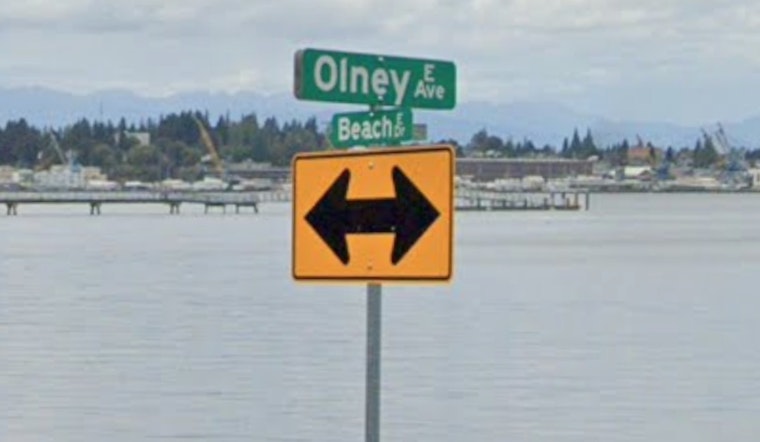
A passerby dove into the frigid waters of Sinclair Inlet on Monday and pulled a 71-year-old man from a pickup truck that had left the roadway on Olney Avenue just past the Washington Veterans Home. The truck was sitting in seawater nearly up to its windows by the time the Good Samaritan reached the cab, and while both the driver and the rescuer ended up very cold, neither was injured. The driver told deputies his brakes failed as he approached the intersection with Beach Drive.
According to the Kitsap Sun, crews from the Kitsap County Sheriff's Office, the Port Orchard Police Department and South Kitsap Fire & Rescue responded to the crash Monday evening. Responders were initially unable to remove the truck at the height of the tide, and the vehicle stayed partially submerged in the inlet for hours.
Passerby Dives In And Pulls Driver To Safety
The Kitsap County Sheriff's Office reported that a passerby went into the cold water and pulled the driver from the cab before crews could attempt to extract the vehicle from the shoreline. Responders evaluated the man at the scene and worked to warm up both him and the rescuer. Neither needed further medical treatment.
Tide Stalls Recovery; Pickup Hauled Out After Water Recedes
The pickup was eventually towed out of Sinclair Inlet later Monday evening after the tide went out, according to the Kitsap Sun. Authorities described both the driver and the rescuer as "very cold" from the frigid water but said there were no reported injuries.
Shoreline Crashes And Quick Rescues
Crashes that send vehicles into Sinclair Inlet are unusual but not unheard of, and past incidents highlight how fast bystanders and first responders sometimes have to move in cold-water emergencies. A 2014 rescue along the inlet, when neighbors and emergency personnel pulled a driver from the water, showed how quickly tides and narrow shoreline roads can complicate recovery efforts, according to the Kitsap Daily News.
The sheriff's office recorded the driver's account that his brakes failed, and authorities have not released any additional findings. For now, the community's attention is fixed on the Good Samaritan whose fast action appears to have prevented a far worse outcome.





