

























































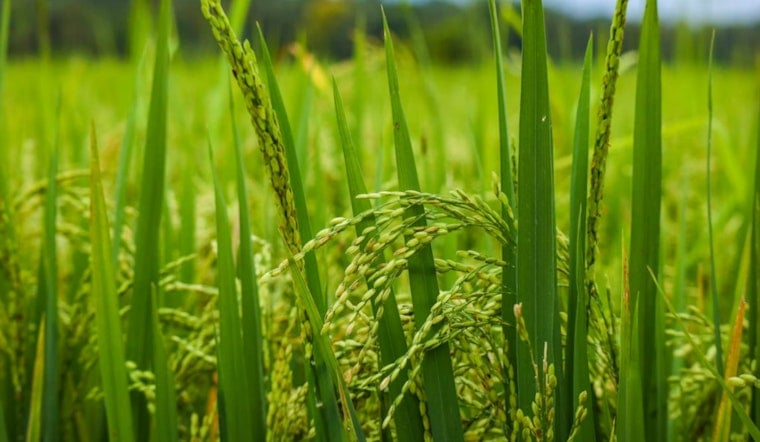
Short-grain Japanese rice is having a comeback moment on Kauai, and it is not wasting any time. A new peer-reviewed study found that experimental plots in Kapaʻa hit maturity in just 97 days, with yields on par with fields in Japan. Researchers say that kind of performance could carve out a niche market for premium, locally grown rice that supports both food security and Hawaii’s restaurant scene.
The study, led by Sotaro Honda, appears in Frontiers in Agronomy and details a collaboration between the University of Hawaiʻi at Mānoa and the Tokyo University of Agriculture and Technology. The peer-reviewed article walks through side-by-side upland trials in Hawaiʻi and Japan, tracking everything from field performance to grain quality.
How the trial worked
In the summer of 2025, the team planted two short-grain Japanese cultivars in Kapaʻa on Kauaʻi and managed them with upland irrigation rather than the classic flooded paddies, according to a project release from the Tokyo University of Agriculture and Technology. The Kapaʻa plots hit maturity in about 97 days, roughly a month faster than the same varieties grown in Tokyo. The Kauaʻi-grown grains were heavier, had a high whole-grain ratio, and came in with lower protein content while still achieving yields comparable to the Japanese trials, as reported in science coverage. Phys.org summarized the trial methods and results.
Why it matters for Hawaiʻi
"This was an excellent start to the collaborative research to explore the potential of bringing back rice farming to Hawaii," Professor Tomoaki Miura said, according to Hawaii News Now. The outlet notes that Hawaiʻi currently imports all of the rice it eats, roughly 140 million pounds a year, and researchers frame local production as one tool to shore up food security. For now, they argue the realistic goal is small, high-value production for restaurants and local markets, not a return to big commodity-style operations.
What stands in the way
Turning a few promising plots into a functioning industry is another story. Limited agricultural land, tricky irrigation logistics, and a near-total lack of local milling and processing infrastructure all stand in the way. The published study describes the work as an early step, supported in part by Japan’s J-PEAKS program and U.S. research grants, and says the aim is to design low-cost, water-smart production systems tailored to Hawaiʻi rather than compete with mainland commodity growers, according to Frontiers in Agronomy. HONOLULU Magazine has outlined how rice disappeared from the islands in the first place and the investment it would take to rebuild the full value chain.
What’s next
The researchers are now eyeing larger multi-island trials, pilot processing runs, and market-development work to see whether a premium Hawaiʻi-grown rice can actually find buyers in restaurants and local shops. EurekAlert reported that the team wants to pair yield data with processing tests and branding plans, and to explore school-meal and local-market channels as early demand checks.
If those pieces come together, small batches of Hawaiʻi-grown, sushi-style rice could start showing up on island menus and grocery shelves in the coming years. For now, the Kauaʻi trial is a proof of concept: promising enough to spark interest, but still in need of investment, infrastructure, and farmers willing to bet on rice making a real return.





