

























































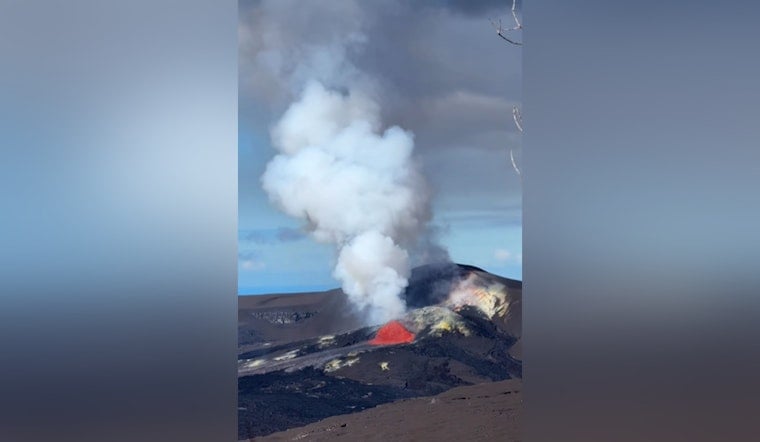
Kīlauea snapped back into lava fountaining this morning with the start of Episode 51, sending plumes and light tephra drifting across Kaʻū on Hawaiʻi Island. Hawaiʻi County Civil Defense urged residents near Pāhala and Nāʻālehu to get ready now, including disconnecting roof to tank catchment systems, and reminded anyone with respiratory issues to either shelter in place or leave affected areas. Early lava fountains were on the small side, around 100 feet, but scientists warned that activity could ramp up in a hurry.
What Scientists Are Seeing
According to the U.S. Geological Survey Hawaiian Volcano Observatory, summit eruption activity resumed with renewed overflows from both vents and continued summit inflation that made the onset of Episode 51 likely today or possibly Thursday. HVO raised Kīlauea’s alert level to WATCH and the Aviation Color Code to ORANGE, noting steady seismic tremor, dozens of small earthquakes, and sulfur dioxide emissions estimated between 1,000 and 5,000 tonnes per day. Scientists emphasized that eruptive activity is still limited to Halemaʻumaʻu crater, but tephra and volcanic gas remain a potential hazard for downwind communities.
Winds, Ash And Health Risks
The National Weather Service cautioned that low level trade winds could push ash, Pele's hair, and other lightweight tephra southwest toward Pāhala and Nāʻālehu, while higher level winds may steer taller plumes into communities next to Hawaiʻi Volcanoes National Park. The NWS advised residents to disconnect rain catchment systems and be ready for short notice road or park closures if ashfall increases. Officials also underscored that people with asthma or other respiratory problems should shelter, relocate, or follow medical guidance until air quality improves.
County Advisories And Practical Steps
Hawaiʻi County Civil Defense issued precautionary notices asking residents and visitors to act now by temporarily disconnecting gutters that feed rain catchment tanks, closing windows, and keeping masks and eye protection within easy reach. The county is directing people to monitor Civil Defense alerts and local air quality dashboards for any instructions on sheltering or evacuation. For step by step advice on protecting household water systems and cleaning up light tephra, the county has posted detailed guidance: Hawaiʻi County Civil Defense.
How Big Can The Fountains Get?
According to USGS Volcano Watch, Episode 50 on June 27 sent a lava fountain to roughly 1,030 feet, a reminder of how quickly Kīlauea can jump from low overflows to towering jets of molten rock. Most fountaining episodes have been short, often less than a day, but even brief bursts can carry fine ash and Pele's hair far downwind, irritating eyes, skin, and lungs. For real time awareness, HVO keeps summit livestream cameras running and offers an email Volcano Notification Service so subscribers can receive near real time alerts.
Park Access And Viewing
Hawaiʻi Volcanoes National Park reports that the eruption area around Halemaʻumaʻu remains closed because of unstable crater rims and falling tephra, although there are designated safe overlook viewpoints along the caldera rim when conditions cooperate. Park staff warned that overlooks and roads can shut down with little warning and urged visitors to check the park website for the latest access and parking details. The park also advises staying away from the summit when vog or ash levels are elevated: Hawaiʻi Volcanoes National Park.
How To Stay Updated
For live imagery and official updates, residents and visitors can follow USGS HVO webcams and sign up for the Volcano Notification Service. Local coverage from Hawaii News Now reported the morning start of the episode. People are also being urged to keep an eye on Hawaiʻi County Civil Defense and National Weather Service alerts for any changes to ash fall forecasts, road closures, or park access. If you depend on rain catchment water, officials say to follow county guidance before reconnecting your system and to test water quality before drinking after an ash event.



