

























































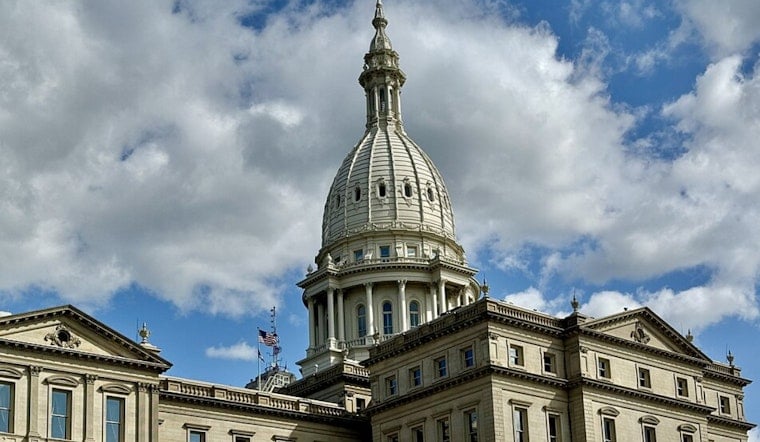
State lawmakers in Lansing this week rolled out a bill package aimed squarely at the roaring mufflers and late night cruising along Woodward Avenue, the state highway that cuts through Berkley, Royal Oak and other Oakland County communities. House Bills 6151 and 6152 would give police clearer authority to ticket vehicles that are altered to be excessively loud and would ratchet up penalties for repeat offenders. Neighbors say the engine noise and drag racing style cruising have turned warm evenings into a near nonstop racket on porches and in backyards. Royal Oak officials told reporters they are on board with the proposed changes.
What the bills would do
State Reps. Natalie Price (D Berkley) and Jason Hoskins (D Southfield) introduced the legislation to tighten up enforcement and close legal gaps that have limited what local officials can do on state roads. The plan would move away from tricky decibel readings and instead zero in on obvious, unlawful vehicle alterations, while also giving drivers a chance to fix legitimate mechanical problems before penalties kick in. The sponsors say they want enforcement to be more consistent from city to city without hammering people over honest mistakes. As outlined by House Democrats, the bills have been sent to the House Transportation and Infrastructure Committee.
Penalty changes in the bills
The proposals would rewrite parts of the Michigan Vehicle Code, increasing fines for modified or deliberately loud exhaust systems and spelling out clearer civil and criminal options for prosecutors. According to the bill language, a first violation involving a modified muffler would carry a $500 fine, and a second or later violation would cost $1,000. Courts could reduce or waive those penalties if a driver proves the vehicle was repaired before the court date. The measures also tweak how violations are logged and reported to the Secretary of State. Per LegiScan, the text lays out the new fine schedule and related code updates in detail.
Neighbors, riders and police respond
Nearby residents told Channel 7 that the racket is no longer limited to big events, with engine noise spiking from spring well into the snowy months and on many summer weekends. “It’s really loud, and it’s hard to even have a conversation in the backyard some nights,” Audrey Stone told WXYZ. Rep. Price said noise complaints are the number one issue she hears from people in her district, and the Royal Oak Police Department has said it strongly supports the bills. Not everyone with a set of keys is thrilled, though. One motorcyclist interviewed by Channel 7 called the $500 starting fine “pretty steep.”
How enforcement could work
Police departments along the Woodward corridor have already teamed up for a seasonal crackdown known as “Operation Decrescendo,” using calibrated decibel meters to ticket dangerously loud vehicles and discourage reckless driving. “Anything over 90 decibels on Woodward Avenue is against state law,” Sergeant Robert Ried told WXYZ. Participating departments say the campaign runs through September, with an exception carved out for the Woodward Dream Cruise. Officers argue that pairing targeted patrols with clearer state rules would make it far easier to deal with modified mufflers without pulling out complicated sound measurements. Local agencies involved in recent enforcement include Pleasant Ridge, Berkley, Huntington Woods, Birmingham, Bloomfield Hills, Royal Oak and the Oakland County Sheriff’s Office.
Legal penalties and next steps
Under the bills, some exhaust violations could be handled as misdemeanors in certain sections of the code, while others would stay civil infractions with higher fines. Judges would have the authority to dismiss or reduce penalties if a driver shows proof that the vehicle was brought back into compliance before their court date. The sponsors say that the approach is meant to draw a line between intentional aftermarket amplification and basic mechanical failure. The package is now sitting in committee in Lansing and would need full legislative approval before any new fines kick in, according to LegiScan and the House Democrats press release.
How lawmakers sort out questions about enforcement and possible carve-outs, while still addressing the sleepless nights of nearby residents and the priorities of the local car scene, is likely to surface in committee hearings this summer. For now, the bills have reignited a familiar metro Detroit argument over where to draw the line between car culture and neighborhood livability. If they pass, local departments would have a clearer legal path to go after modified mufflers on Woodward and other state highways.





