

























































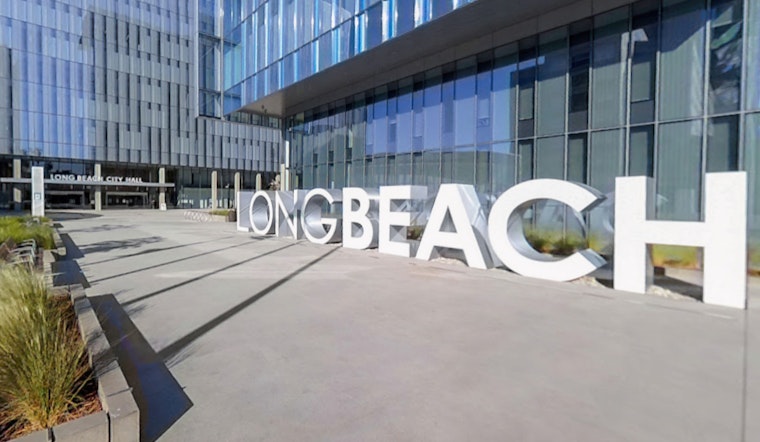
Long Beach is reeling in a serious payday. The Port of Long Beach will get roughly $383 million from California’s Port and Freight Infrastructure Program to speed up electrification, on-dock rail upgrades and charging infrastructure. State documents tied to the System-Wide Investment in Freight Transport (SWIFT) project estimate it could support more than 22,000 jobs once everything is fully built out, while cutting diesel pollution around the terminals and modernizing the gate, rail and vessel systems that keep cargo flowing through the San Pedro Bay ports.
What the $383 million buys
According to the PFIP awards summary from CalSTA, the Port of Long Beach’s SWIFT package was granted exactly $383,346,997, with an estimated 22,481 jobs tied to full project build-out. The same summary breaks the award into several big-ticket items: roughly $158.4 million for a Pier B on-dock rail support facility, $50 million for a zero-emission locomotive demonstration, about $73 million to replace terminal equipment and install chargers, and roughly $44.5 million for harbor-craft and shore-power demonstration projects.
Zero-emission kit and emissions cuts
The state’s 2025 PFIP annual report from CalSTA estimates that SWIFT, at full funding, would cut roughly 255,000 tons of CO2 per year by 2028. It also projects reductions in NOx and PM2.5 in surrounding port neighborhoods, with modeled public-health benefits that include lives saved and hundreds fewer serious injuries over a 20-year period. The report notes that $144,357,000 of the SWIFT award had already been allocated as of October 2025, and that many PFIP-funded components are expected to reach completion by December 2028.
Local programs and who gets funded
The awards narrative from CalSTA says SWIFT money will underwrite a port-run Zero-Emission Terminal Transformation program, along with a Harbor-Craft Business Continuity and Emission Reduction fund designed to help repower or replace harbor-craft engines and vessels. The same document lists demonstration projects at Long Beach Container Terminal, planned deployments of zero-emission yard tractors, top handlers and reach stackers, and pilot efforts involving battery or hybrid tugs and shore power.
Why it matters for Long Beach
Governor Gavin Newsom, in program materials cited by CalSTA, wrote that through the Port and Freight Infrastructure Program the state is “not just upgrading infrastructure” but “accelerating a zero-emission future.” The report emphasizes that these investments are aimed at cutting truck trips along the I-710 corridor and lowering pollution in neighborhoods like Wilmington, West Long Beach and nearby communities that have long shouldered the downside of port traffic.
Industry trade outlets have published detailed tables of the smaller harbor-craft awards and which companies are in line for new vessels and gear, but the official project descriptions and the job and emissions estimates come from CalSTA’s program documents. Electrek ran a breakout of those smaller awards and vendor names. City and port officials say they plan to release procurement timelines and community updates as contracts are finalized.



