

























































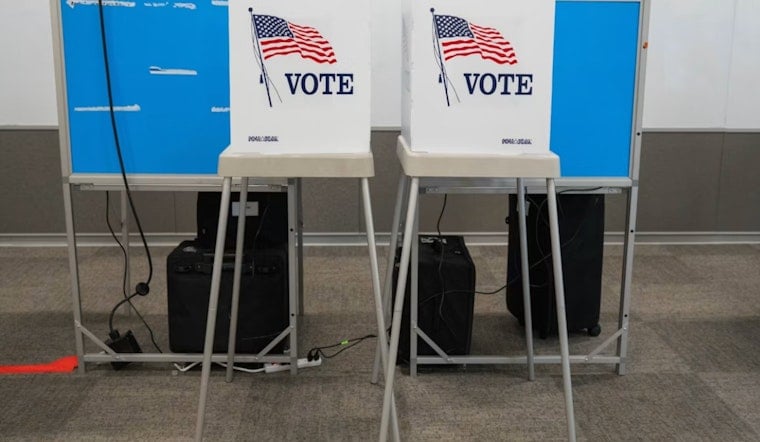
Macomb County voters are in for a crowded August primary, with a long list of local tax questions waiting on the August 4 ballot. On tap are city-library renewals, school operating-millage proposals, public-safety and ambulance renewals, plus a brand-new parks, recreation, and senior-services tax proposal in Chesterfield Township. Depending on what passes, homeowners could see changes on next year's tax bills, from small library tweaks to multi-million-dollar township funding packages.
What's on the ballot
According to MLive, the August ballot includes library millage renewals in Eastpointe and Utica, along with operating-millage questions in school districts such as Almont, Clintondale, L'Anse Creuse, and New Haven. Voters in Harrison and Washington townships will see public-safety proposals tied to police and emergency services. The countywide list mixes straightforward renewals, technical “restorations” and a handful of new levies that local officials say are needed to keep current service levels intact.
Major asks and dollar estimates
The Macomb County Clerk's ballot packet outlines how much money is at stake with each proposal. Harrison Township is seeking to renew a 9.0831-mill levy projected to raise about $11.9 million in its first year. Washington Township is asking voters to renew separate millages for police protection and for ambulance and advanced life support services, each tied to roughly $4.3 million in annual revenue.
The same ballot packet shows Chesterfield Township asking for a new 1-mill parks, recreation, and senior-services tax that would bring in about $2.5 million a year. On the library front, Eastpointe's renewal is estimated to generate $742,458, while Utica's would bring in about $103,838. Several school districts, including Almont, Clintondale, L'Anse Creuse, and New Haven, are asking voters to renew or restore operating millages that support their general-operations funding.
Why 'renewal' and 'restoration' appear
Many of the proposals are worded as “renewal” or “restoration” questions because of how Michigan tax law works over time. Under the state's Headlee Amendment, the millage-reduction fraction can gradually ratchet authorized rates down. Local governments then go back to voters to renew or restore millage authority so they can recapture revenue lost to those automatic rollbacks and maintain existing services.
The Michigan Department of Treasury publishes guidance explaining how millage rollbacks and millage-reduction fraction calculations work, and why jurisdictions periodically ask voters to restore previously approved rates.
How to check your ballot and vote
For voters trying to sort out which of these questions will actually appear on their personal ballot, Macomb County's elections page offers the full list of August 4 proposals plus sample ballots. The League of Women Voters' Vote411 site provides side-by-side explanations for local races and measures.
If you are not sure which millages apply to your precinct, or you need details on absentee voting or your polling place, those resources are a good starting point, and the Macomb County Election Department can provide additional specifics.





