

























































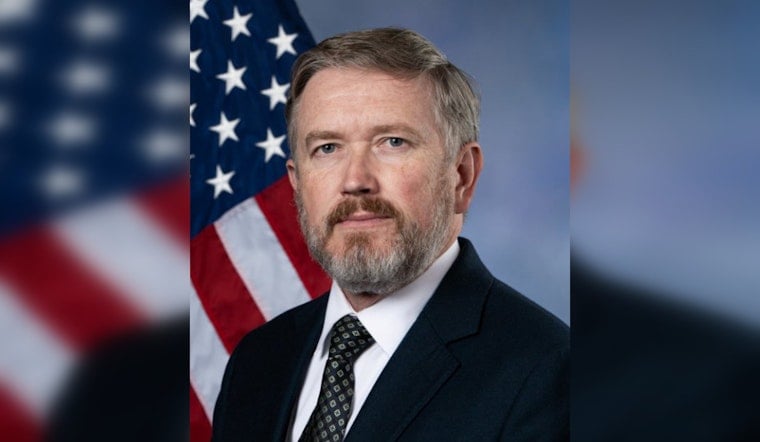
Rep. Thomas Massie is taking direct aim at Flock Safety camera networks, pledging to introduce a bill that would choke off federal grants to cities and police departments that use the automated license plate readers. His move drops into an already heated national fight over how far vehicle surveillance should go, and who gets to draw the line.
The threat lands at a moment when cities and counties across the country are already poking at their contracts, running internal audits and listening to residents who worry about constant tracking. Local officials, civil liberties advocates and police brass are all waiting to see whether Congress reaches for a blunt funding hammer or opts for more targeted rules.
Massie rolled out the idea on social media, saying he plans to introduce legislation that would block federal money from going to jurisdictions that deploy “Flock (and other style) cameras,” as reported by WLWT. His post, paired with a cheeky “Don’t Flock Me” graphic, is archived on his X feed X.
Flock’s scale and what the company says
Atlanta based Flock Safety pitches its system as a straightforward investigative tool, not a dragnet. The company points to its own internal numbers as proof that it works. According to Flock Safety, the platform supported more than 1 million investigations and helped locate over 10,000 missing people in 2025. In the same breath, Flock has urged lawmakers to focus on “strong, clear safeguards” for license plate readers rather than punishing cities by cutting off money.
Audits and officer discipline
Concerns about misuse have already pushed the issue out of public meetings and into internal affairs divisions. Several Georgia law enforcement agencies ran audits of their Flock access, and what they found was not pretty. An investigation in Albany uncovered unauthorized queries that led to suspensions, firings and criminal charges, including five officers who were dismissed and arrested, according to CBS Atlanta. Separate reviews in DeKalb County also triggered criminal cases, as reported by WALB.
Vandalism and local pushback
The backlash has not stayed on paper. Activists and unknown vandals have been taking their frustrations straight to the poles, literally, by damaging or cutting down Flock cameras in several states. Earlier this year, TechCrunch documented a wave of camera removals and attacks across the country, while local coverage in Houston showed multiple units taken out in rapid succession, according to ABC13.
How this fits with other congressional moves
Massie’s proposal is not the only effort in Washington to rein in automated license plate readers. Rep. Tim Burchett has already put a broader bill on the table, H.R. 9800, the Protection Against Mass Surveillance Act. That measure would bar federal agencies from buying or using ALPR systems at all and would block federal grant dollars from being used to purchase them, according to Police1.
Supporters of Flock style cameras argue that sweeping bans and funding cutoffs would kneecap investigations and cost departments a valuable lead generator. Critics counter that the same networks, if left unchecked, quietly enable broad, warrantless location tracking of anyone who happens to drive past a pole.
Legal questions and likely court fights
Hitting cities in the wallet over their camera contracts would raise immediate legal and procedural questions. Previous attempts to tie federal funding to local policy choices have repeatedly landed in court, with judges at times blocking the effort entirely. That pattern showed up in earlier fights over whether Washington could withhold money from jurisdictions with so called sanctuary policies, according to a review of those disputes by Factually.
Legal scholars and municipal attorneys say any Massie style penalty would almost certainly face fast tracked challenges over how far the federal government can go in pressuring local officials by threatening unrelated grant streams.
Massie has not released bill text, so it is still unclear which pots of federal money he would try to link to compliance or how broad his proposal would run. For now, the fight is unfolding on two tracks at once, in Congress, where members are debating whether to curb ALPRs from the top down, and in city council chambers, where local leaders are deciding in real time whether to renew, renegotiate or cancel their Flock contracts while they wait to see what Washington actually does.





.jpg)