

























































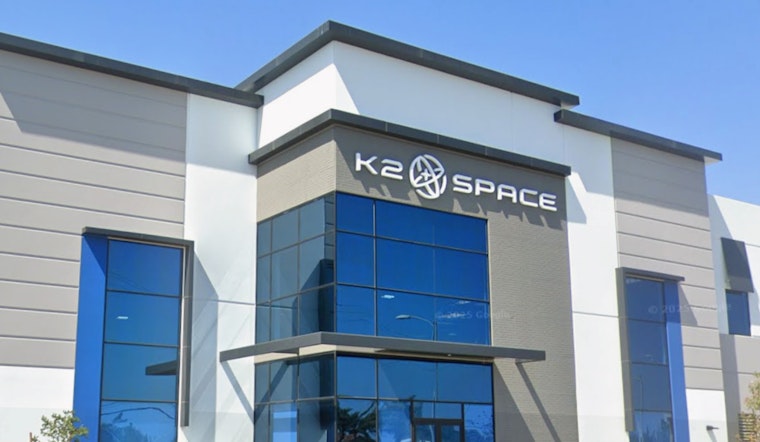
K2 Space, a Torrance-based startup betting big on unusually large, high-power satellites, is planting its flag in the Seattle area with a new engineering office that is meant to carry the company from flashy prototypes into serious mass production. The move drops K2 straight into the Pacific Northwest’s already crowded space hardware scene, right as the company shifts from test flights to larger commercial runs.
In a company news release, K2 said the new Pacific Northwest hub will zero in on flight software, autonomy and the low-level systems that let its high-power satellite buses run demanding payloads. CEO Karan Kunjur called the Seattle area “a natural fit given its decisive reputation as an aerospace and engineering hub.” The company also noted it has raised more than $500 million and has registered over $1 billion in contracts as it scales up operations, according to PR Newswire.
K2’s first full-scale “mega” satellite, Gravitas, flew in late March on a SpaceX Falcon 9 as part of a Transporter-16 rideshare, a launch covered by Spaceflight Now. That coverage and company materials describe Gravitas as weighing roughly two metric tons, with solar arrays producing about 20 kilowatts of power, a setup aimed at power-hungry payloads such as in-orbit computing gear and national-security modules.
Why Seattle?
The Seattle region already has a deep bench of satellite builders, launch suppliers and support engineers, exactly the kind of ecosystem K2 says it needs to grow its high-power platforms. GeekWire points to SpaceX’s Starlink facility in Redmond, Amazon’s Kuiper program in Kirkland and a cluster of smaller manufacturers that together make the area a magnet for orbital hardware work.
Jobs and the local supply chain
K2 said several employees already work remotely from the Pacific Northwest, and the Seattle office is meant to give those engineers a local base while the company adds more staff. Open positions and application details are posted on K2 Space, and the company also points to its corporate site for more context on operations in Torrance and Washington, D.C. (K2 Space).
National-security tie-in
The expansion lines up with K2’s growing role in defense work. Aggregated industry reporting indicates K2 was identified as a spacecraft-bus supplier on the Space Force’s next-generation protected tactical communications effort. Coverage compiled by CB Insights and other industry outlets indicates that supplier slot helped sharpen K2’s near-term production and engineering priorities.
K2 has told investors and partners it expects an aggressive production ramp. The company reiterated in its news release that it plans to produce hundreds of satellites annually by 2030, as it brings its Torrance factory up to high-rate output. Building engineering strength in talent hubs like Seattle is described as a central piece of that plan.
For Seattle-area engineers and suppliers, K2’s decision is another sign that the region’s space cluster remains a serious draw for companies chasing high-power satellite designs. Local reporting and industry watchers say the move could deepen supplier networks and add more high-end engineering jobs in Bellevue and greater King County, a trend GeekWire says is already taking shape.





