

























































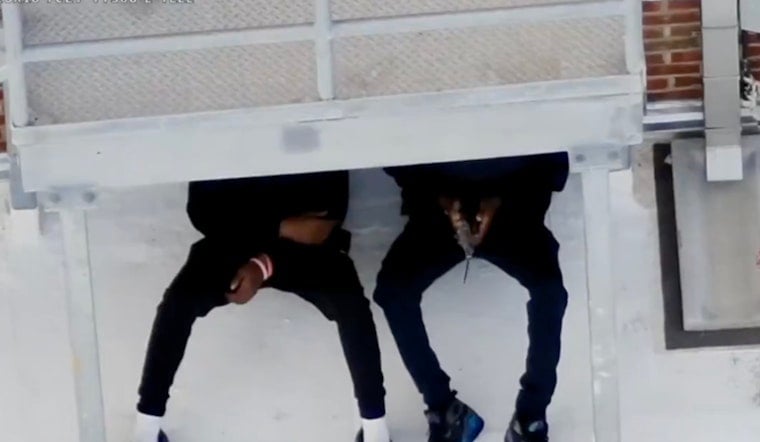
A police drone helped NYPD officers corner two teenagers on a Brownsville public‑housing rooftop after gunfire was reported late on June 28, according to police. Officers say they recovered a firearm and took both juveniles into custody; one teen now faces weapons charges while the other is accused of trespassing.
As reported by News12 Brooklyn, officers responded to a 911 call about shots fired near Powell Street and Livonia Avenue on June 28. The NYPD’s Tactical Assistance and Response Unit (TARU) deployed drones to help search the area, and within minutes a drone operator spotted two people on the roof of a nearby public‑housing building. Police told the outlet that officers then recovered a firearm and took both suspects into custody, adding that a 16‑year‑old was charged with criminal trespass and criminal possession of a weapon, while a 14‑year‑old faces criminal trespass charges.
How TARU and the DFR program work
The department’s TARU team operates NYPD drones as part of a broader “drone as first responder” rollout, a program that can send unmanned aircraft to priority 911 calls to provide commanders with a live aerial view, according to Congress.gov. Officials say those real‑time feeds help officers locate suspects and secure scenes more quickly while cutting down on the need to rush additional personnel into potentially dangerous locations. In other words, the drone is meant to do the risky peeking around corners before officers have to.
Oversight and safety questions
Advocates and watchdogs are not entirely sold on the NYPD’s growing drone toolkit. They warn that what starts as an emergency‑response tool can slide into broad, day‑to‑day surveillance of public life if it is not tightly regulated.
The Surveillance Technology Oversight Project has urged limits on police drone deployments in a recent report that highlighted data‑retention and equity concerns. Reporting by StateScoop has also documented a significant rise in NYPD drone flights, alongside calls for more public oversight of how and when the devices are used.
Incidents like the Brownsville rooftop case land squarely in the middle of that debate: police point to them as success stories, while critics worry they normalize constant eyes in the sky over neighborhoods that already feel heavily policed.
Legal note
Because the suspects are juveniles, their cases will move forward under New York State’s juvenile‑delinquency and Family Court rules rather than in adult criminal court. Those systems treat youth proceedings differently, including options for sealing or restricting access to records.
For background on how New York handles youth cases and record confidentiality, readers can look to NY.gov guidance on the state’s “Raise the Age” law, as well as the Family Court rules posted on NYCourts.
The NYPD’s release of rooftop footage in this incident underscores both the tactical promise of drone operations and the policy questions they raise in neighborhoods like Brownsville. As News12 Brooklyn notes, police say the drones helped officers locate the teens quickly, while advocates argue that elected officials and agency leaders should spell out clear rules and transparency measures before this kind of technology becomes just another routine part of city policing.


