

























































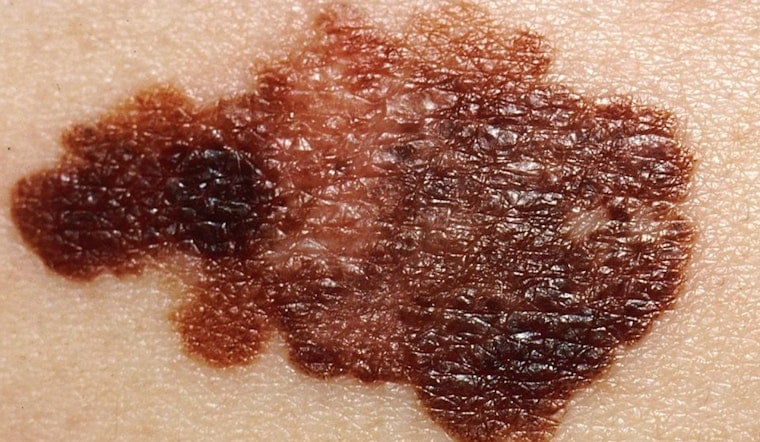
Ohio is quietly climbing the national melanoma charts while a lot of younger adults keep lying out, logging on, and brushing off sunscreen warnings. Dermatologists say the combo of rising state cases, tanning trends and social media nonsense is particularly worrisome because melanoma is highly treatable when caught early. Public health experts are pushing Ohioans to relearn basic self-checks and tune out viral sunscreen scares that are not backed by science.
State data and the national picture
Federal and state cancer records currently put Ohio above the U.S. average for melanoma. According to the National Cancer Institute's State Cancer Profiles, Ohio's age-adjusted melanoma incidence in recent federal counts is roughly 27.2 cases per 100,000 residents, with about 3,900 diagnoses a year. The national rate is about 21.9 per 100,000, as reported by SEER. That gap means Ohio can face a heavier burden of disease and more fallout from late diagnoses, even if overall survival in the state improves.
Influencers, misinformation and tanning
A new survey from the American Academy of Dermatology suggests that sunscreen myths are spreading fast online, especially for younger adults who live on their feeds. Per the American Academy of Dermatology, 64% of Gen Z respondents said they had seen sunscreen misinformation, and 36% named influencers as a primary skincare source. More than 16 million Americans reported cutting back on or stopping sunscreen after seeing online claims, the group says. The survey also notes that tanning is still a go-to habit: about three in five Americans tanned in 2025.
Why doctors are alarmed
Local dermatologists say the numbers line up with what they see in exam rooms: delayed skin checks and patients following risky online tips. Dr. Kord Honda told Cleveland.com that "unfortunately, factual information can be harder to find, and it can be difficult to know what to trust." He also warned that a so-called "protective tan" offers almost no real defense, calling it roughly the equivalent of an SPF 2 or SPF 4. Honda urges monthly self-exams using the ABCDEs of melanoma: asymmetry, border, color, diameter over 6 millimeters, and evolving changes, matching guidance from the Cleveland Clinic.
How to lower your risk
Doctors and public health groups keep coming back to the same basics. They recommend using a broad-spectrum sunscreen with SPF 30 or higher and reapplying every two hours, skipping tanning beds entirely, wearing protective clothing, and getting any suspicious spots checked quickly. The American Academy of Dermatology and other experts emphasize that early detection is crucial: melanoma found before it spreads has a near-100% five-year survival rate. The message is blunt but simple: daily, proven sun protection beats any viral workaround.
The stakes reach beyond Ohio. The American Cancer Society estimates roughly 112,000 new melanomas and about 8,510 deaths across the U.S. this year, a reminder of why Ohio clinicians are leaning hard on skin checks and clearer information. For Ohioans, that means staying skeptical of social media cures, knowing the ABCDEs, and seeing a clinician promptly if a mole starts to change.





