

























































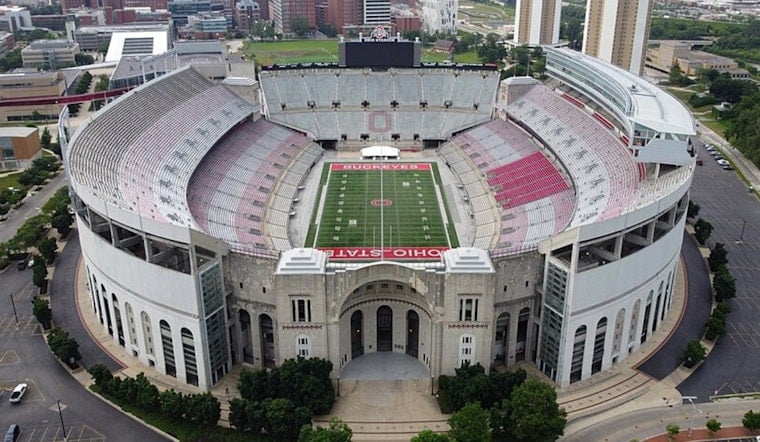
World Cup soccer is not coming to the Horseshoe anytime soon. Ohio State University says it has no plans to widen Ohio Stadium to fit a FIFA-size pitch, effectively ruling the venue out for World Cup matches unless there is a major rebuild. The decision keeps one of college football's most iconic bowls intact and protects the premium AA deck that helps drive the stadium's huge capacity. For Columbus, the takeaway is pretty simple: the biggest international soccer nights will stay at soccer-specific venues, not inside the Shoe.
Executive associate athletic director for internal operations Mike Penner told Axios Columbus that OSU "hasn't really had any conversations about widening the stadium" and that "it would be a substantial project." He also noted that "nothing is insurmountable" but emphasized how much the university values the AA deck and the stadium's current configuration. Taken together, Penner's comments signal that OSU is not pursuing any immediate plan to reconfigure the lower bowl for FIFA-level matches.
How Past Renovations Set the Limits
Between roughly 1999 and 2001, Ohio Stadium went through a nearly $200 million renovation that reshaped the building and, unintentionally, its soccer future. The project lowered the playing surface by about 14 feet, removed the old running track, and added a lower ring of seating. Those changes increased capacity and brought fans closer to the action, but they also tightened the bowl. That lower ring, commonly called the AA deck, pushed premium seats closer to the sideline and left very little lateral space to widen the playing area without tearing out seating. The renovation timeline and its impact on the bowl design are well documented in public stadium records and histories.
Field Math: Why the Shoe Cannot Fit a World Cup Pitch
An American football field is locked in at 53 1/3 yards, or 160 feet, wide. FIFA's recommended international pitch, by contrast, is 105 by 68 meters, which comes out to roughly 115 by 74 yards, leaving about 20 extra yards of width that the Horseshoe simply does not have. Per SIS Pitches, the American football field width is standardized, and FIFA's preferred international dimensions are laid out in guidance for top-level matches. To bridge that gap at Ohio Stadium would mean moving or removing seating rings or rebuilding parts of the lower bowl, a costly engineering and operational undertaking.
What Columbus Still Gets
Even without the World Cup inside the Horseshoe, Columbus is hardly being relegated to the soccer sidelines. The Crew's ScottsMiracle-Gro Field is set to host nine LA28 Olympic soccer matches in July 2028, and the city served as a 2026 World Cup training base for teams such as Ecuador. The Crew and city leaders point to those events as proof that Columbus can land major international soccer without touching the Shoe. For now, Ohio Stadium remains a football-first fortress while the Crew's venue and other local sites handle the sport's biggest global dates.
OSU's broader message is practical: the university likes the stadium essentially as it is. Officials say they are willing to talk with the city, the Crew, and other stakeholders, but they also describe any full-bowl conversion as "substantial" and expensive. Without a major, costly, and unexpected shift in direction, Columbus is unlikely to be in the mix for FIFA World Cup matches, even if the United States is floated in future bid cycles. As Axios Columbus reported, OSU would be open to conversations but does not have plans to alter the Horseshoe's core design.





