

























































Tobe Energy, an Oklahoma City startup, has pushed its hydrogen work off the lab bench and into a solar-powered demonstration unit, and says it will install its first large-scale commercial system at a Broken Arrow test site later this year. NODE-01, the company's deployable electrolyzer demonstrator, is designed to bridge the gap between pilot experiments and industrial hydrogen production while the firm builds manufacturing capacity in Oklahoma City. If early performance holds, Tobe says the effort could help position the city as a small but meaningful hub for U.S. electrolyzer manufacturing.
“We've moved from pilot to commercial scale, taking our electrolyzer from 1 kilowatt to 50 kilowatts in under a year,” CEO Colby DeWeese told OKC VeloCity. The outlet reports that NODE-01 is a solar-powered demonstration facility and notes that much of Tobe's manufacturing, testing and development work happens in Oklahoma City. DeWeese told the site that vertical integration, building circuit boards, power electronics and electrolyzer stacks under one roof, is central to the company's scaling plan.
How the system works
Tobe describes its approach as a proprietary form of isothermal electrolysis that uses pulsed-waveform power electronics to reduce waste heat and avoid membranes or precious-metal catalysts, claiming early system efficiency above 92%, according to Tobe Energy. In a LinkedIn post, DeWeese called NODE-01 the firm's “first deployable unit” and flagged “early data: 92%+ efficiency,” language that mirrors the company's technical claims. Independent, third-party certification has not yet appeared in trade testing, but the design is the basis for Tobe's push into commercial pilots.
Testing at Zeeco's Advanced Research Complex
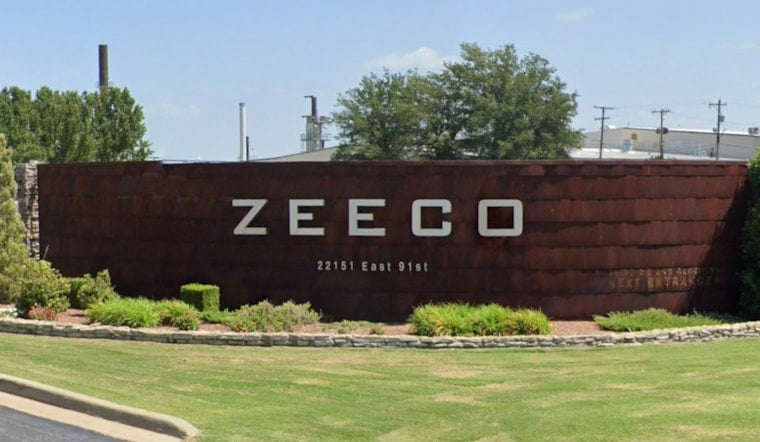
Investor materials and coverage indicate Tobe has signed a memorandum of understanding to work with Zeeco and place its first commercial system inside Zeeco's Advanced Research Complex in Broken Arrow, a secure, utility-ready proving ground for industrial pilot plants. Cortado Ventures, which led Tobe's seed round, outlined the Zeeco collaboration in investor materials, and Zeeco's website describes the ARC's industrial-scale test pads, utilities and engineering support. The arrangement gives Tobe access to real-world test infrastructure and Zeeco's manufacturing and controls expertise.
Scale plans
Tobe's timeline shows a push from NODE-01 toward broader commercial deployments this year and a rapid scale target after that. The project's timeline on Tobe Energy lists a 2026 first-commercial-deployment milestone and a 2027 ambition to deploy 100 megawatts of electrolyzer capacity nationwide. Hitting those goals would require follow-on orders, grid or developer partnerships and additional manufacturing scale.
Funding and investors
Tobe has attracted venture and institutional backing: Cortado Ventures led a $1.8 million seed round, and the University of Tulsa's Hurricane Ventures announced an investment late last year, per a PR Newswire release. Investors say the technology could unlock use cases from data-center backup power to synthetic-fuel feedstocks, and the capital is intended to underwrite prototype manufacturing and field testing ahead of larger orders.
Local economic-development organizations also played a role. The Greater Oklahoma City Chamber and the Oklahoma Manufacturing Alliance helped connect Tobe with facility options and workforce networks as it set up operations in the city, according to OKC VeloCity. For a region long tied to oil and gas, the startup offers an example of how capital-intensive, hardware-heavy manufacturing projects can find local partners and supplier talent.
What to watch next: independent performance data from NODE-01, the schedule for Zeeco ARC commissioning of Tobe's system later this year, and whether customers emerge for follow-on units. If Tobe meets its targets, the company says it could be a made-in-Oklahoma answer to rising demand for clean hydrogen in heavy industry and data centers.





