

























































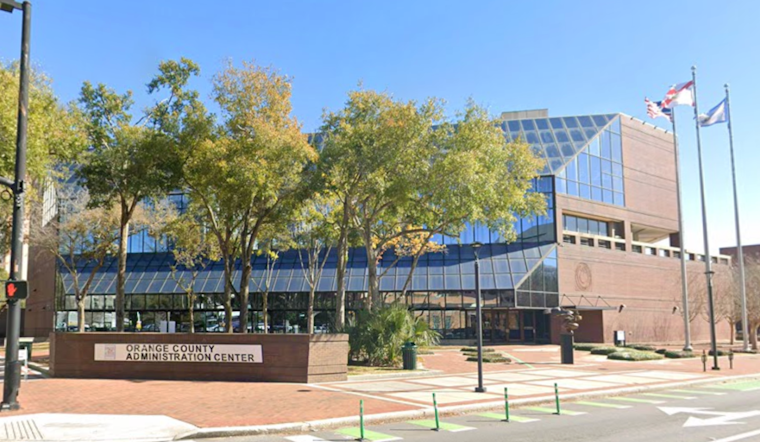
Orange County is snapping up a newly renovated, roughly 200-room hotel next to the county jail on South John Young Parkway, betting $13 million that it can quickly turn the property into transitional housing for people experiencing homelessness. County leaders say the move gives them a ready-made building that can be adapted far faster than starting from scratch at a moment when shelters and service providers warn that demand is already outpacing supply.
Commission Vote and the Property
According to WESH, commissioners approved roughly $13 million for the nearly four-acre hotel site that sits beside the Orange County jail on S. John Young Parkway. The property, already renovated before the county stepped in, has about 200 rooms. The mayor’s office told reporters it could ultimately serve as transitional housing or temporarily house county offices while staff hammer out a detailed services plan.
Why Leaders Say It Is Needed
County staff and advocates have argued that reusing existing buildings is a faster way to add desperately needed beds, and that it helps connect people to services in an environment that is already built for round-the-clock occupancy. The regional Point-in-Time count identified 2,781 people experiencing homelessness across Orange, Osceola and Seminole counties, according to Spectrum News 13. Local leaders say sites like this can provide case management, mental health supports and housing navigation while longer-term placements are found.
Voices on the Ground
Eric Gray, executive director of the Christian Service Center for the Homeless, told WESH that roughly 1,500 adults and children are either on the streets or staying in shelters on any given night in Orlando and Orange County. Gray has been a prominent advocate for more bridge housing and services. His role leading the local day-service center is listed on the organization’s website, and Christian Service Center confirms his work with outreach and housing programs.
Next Steps and Open Questions
While commissioners signed off on the purchase price, they left major programming decisions to county staff. Key details are still up in the air, including who will run the facility, when renovations will start, how many rooms will be set aside for families versus single adults, and how ongoing services will be funded. Those choices will determine how quickly the building can welcome residents and what kind of support they will find when they arrive.
What the Conversion Could Mean
Supporters argue that hotels already come with plumbing, kitchens, and individual sleeping units, so converting them can cut both time and costs compared with building a new shelter or housing complex. Critics and nearby residents often worry about oversight, security and long-term funding when commercial properties are repurposed for shelter or transitional housing. Advocates counter that the purchase will only deliver on its promise if it is backed by stable funding for case management, healthcare, and housing placement services.
The county’s move signals a notable shift toward using existing commercial properties to respond to homelessness, although officials and advocates alike acknowledge that permanent progress still depends on expanding affordable housing and securing consistent service dollars. County staff did not immediately release a construction timeline or identify an operator for the site.





