

























































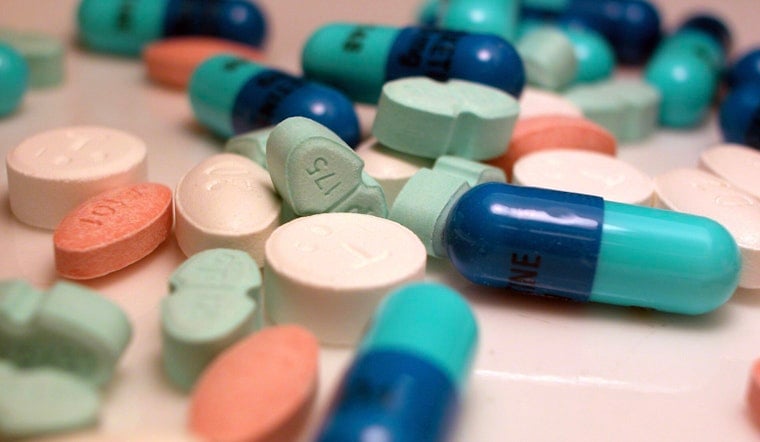
Along a busy stretch of St. Nicholas Avenue in Washington Heights, what used to be a standard city sidewalk now doubles as a no-frills pharmacy, according to neighbors. Tables stacked with blister packs and boxes of antibiotics, Viagra and other prescription medicines line the block, creating what residents bluntly describe as an open-air pill market that runs most of the day and has quickly become a public-health and safety headache.
According to the New York Post, the makeshift market stretches along St. Nicholas Avenue from roughly West 179th to West 183rd Streets. Reporters counted about 20 tables laid out with loose blister packs and full boxes of prescription-only drugs. Vendors told the Post they typically arrive around 9 a.m. and stay until about 6 p.m., and some said they can bring in as much as $300 a day.
Police statistics show sharp increases nearby
NYPD data for the 34th Precinct, which covers Washington Heights, indicate that several major crime categories are already up this year. Robbery is up about 13.3 percent, felony assault is up about 13.6 percent and burglary has risen roughly 9 percent year-to-date, according to the department’s CompStat report for the week of July 6–12, 2026. Those figures and trends are laid out in the NYPD’s weekly precinct-level report. NYPD CompStat.
Who enforces illegal vending?
On paper, the city has a lead player for cracking down on illegal sidewalk vending. Since April 2023, the Department of Sanitation has been designated the primary agency for street-vendor enforcement, responsible for overseeing sidewalk cleanliness and coordinating enforcement efforts across multiple city departments. The agency’s formal role and responsibilities are detailed in Department of Sanitation testimony and materials.
Health risks and where the pills come from
The Post reports that many of the products on those folding tables are sourced from the Dominican Republic. Items openly sold include amoxicillin, Viagra, Cialis and a product identified in the story as "Cataclofen Plus," with some prices undercutting licensed pharmacies. A licensed pharmacy worker told the Post he had seen prescription medications being sold on St. Nicholas Avenue and described the setup as hazardous. Vendors quoted in the article even offered basic dosing tips to shoppers as they browsed.
Legal consequences
New York law already treats the street sale of prescription medications as more than just a nuisance. Article 178 of the state Penal Law and related legislative measures address the unlawful sale and transfer of prescription drugs, with higher-degree offenses prosecutable as felonies. Legislative texts and companion bills outline the specific degrees and potential penalties set out under state law. New York State Senate.
Neighbors and officials demand action
Residents and local officials who spoke to the Post say they want a two-pronged response that treats the sidewalk trade as both a law-enforcement and public-health problem. The paper quoted Councilman Frank Morano warning that when New Yorkers start buying prescription drugs from folding tables instead of licensed pharmacies, "we've crossed the line into a public health and public safety failure." Councilwoman Joann Ariola added an even starker prediction, telling the Post, "someone is going to die from this, I have no doubt." Neighbors say they want enforcement that also reduces the risk of counterfeit, mishandled or expired medications ending up in people’s homes.
For now, city agencies and prosecutors are under mounting pressure to either clamp down on the trade or pair enforcement with harm-reduction strategies. To residents walking the St. Nicholas corridor, the pill tables are both a daily reminder of deeper supply chains feeding the neighborhood and a risky pharmacy aisle laid out on the sidewalk.




![MorgueFile : see [1]](https://commons.wikimedia.org/wiki/File:VariousPills.jpg)