

























































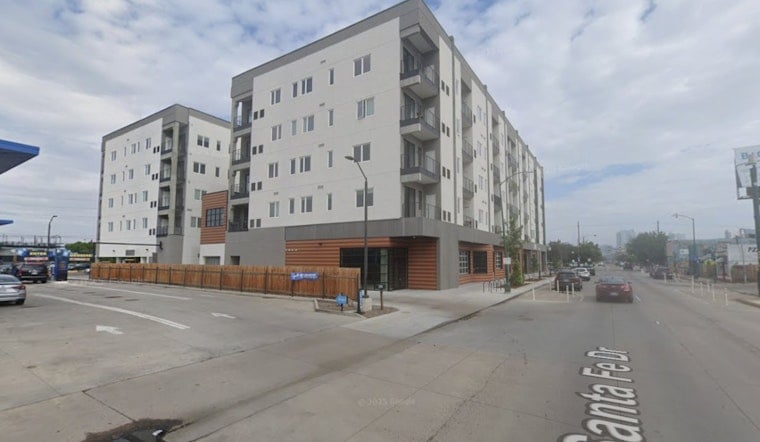
Pop Denver, a newly built apartment complex in Denver’s Lincoln Park neighborhood, is now in the hands of a court-appointed manager after its developer failed to pay off a construction loan when it matured. A Denver judge has ordered the property into receivership, shifting short-term control of operations and rent collection away from the owner while the lender pursues its options in court.
The five-story, 123-unit building at 655 N. Santa Fe Drive was developed by First Stone Development, led by Lenny Taub, and wrapped construction in mid‑2023. According to court filings cited in earlier reporting, First Stone obtained a construction loan of about $35 million in December 2023 that a mortgage trust now says was not repaid at maturity and is in default. The trust asked the court to appoint a receiver and recommended Cordes & Co. to step in. Denver District Judge Kandace Gerdes granted that request the same day, placing Pop Denver under receivership while the lender pursues its remedies, as reported by BusinessDen. The building’s leasing website still lists the property’s address and current management information on its page.
Who Will Run Pop Denver Now
The lender proposed Cordes & Co., a national receivership and asset management firm, to take over as receiver, and the court signed off on that choice. On its own materials, Cordes & Co. says its receivership teams typically secure properties, manage vendors, collect rents, and provide regular accounting to the court, responsibilities that will now apply at Pop Denver as well.
What Tenants Should Expect
For renters, a receivership order does not usually mean immediate upheaval. Legal guides say a receiver’s first job is to preserve the asset and keep the money coming in, which tends to mean leases stay in place, services continue, and staff and vendors keep working while the court supervises the case. A receiver can also authorize needed repairs, adjust or renegotiate vendor contracts, and, in some situations, prepare a property for sale if the borrower cannot fix the default. The precise list of powers comes from the court’s appointment order, but it commonly includes collecting rent, paying expenses, and managing day‑to‑day operations, as per Nelson Mullins.
Why Lenders Are Pulling the Trigger
The move at Pop Denver is playing out against a tougher backdrop for apartment owners across metro Denver. The Apartment Association of Metro Denver has reported higher vacancies and lower average rents compared with prior periods, and that soft patch has made it harder for some projects to cover debt service as loans come due. Market trackers, including Yardi Matrix, show advertised asking rents in Denver down year over year, a trend that can tighten the path to refinancing for newer buildings facing maturing construction loans, according to The Denver Gazette and Yardi Matrix.
Project History and Legal Fallout
Pop Denver did not start life as an apartment play. Taub originally pitched the project as a condominium building but shifted to rentals midway through construction in 2022 when condo buyer demand fell off. That pivot later sparked a broker lawsuit filed in early 2025, which the parties asked the court to dismiss in November. Those earlier disputes, coupled with a post‑pandemic lending environment that has grown more conservative, likely made it harder to refinance or fully pay off the maturing construction loan, according to BusinessDen.
Legal Implications
Because the lender went to court after a maturity default, the case follows a standard script for distressed commercial real estate loans. A court‑appointed receiver steps in as a fiduciary, preserves the lender’s collateral, and follows detailed instructions in the appointment order on how to handle rent collections, operating expenses, and any sale or other disposition. Typical powers include securing the property, collecting income, paying necessary expenses, and applying remaining proceeds to creditor claims according to the court’s direction, as per ALPS Receivership.
Bottom Line
For Pop Denver, receivership is a public sign that a project conceived for a very different market is now under real financial pressure. It also shows how a mix of heavier supply, softer rents, and higher borrowing costs has narrowed the refinancing window for recently completed developments. We will update this story as additional court filings, lender documents, or statements from First Stone and Cordes & Co. become available.





