

























































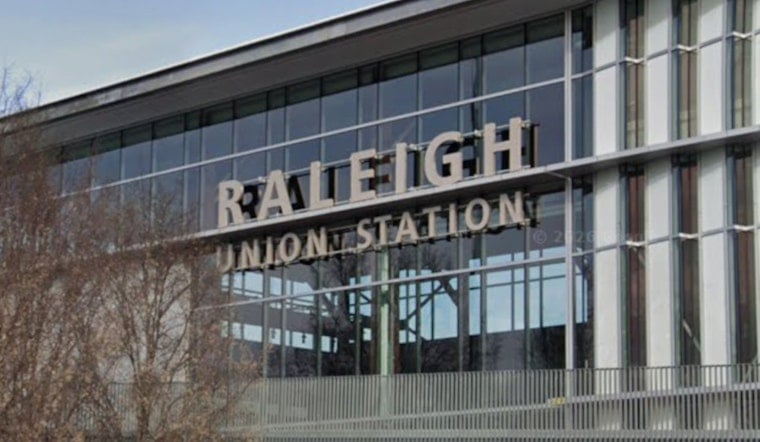
Raleigh’s main train hub erupted into chaos Saturday when, according to police, a 19-year-old Chapel Hill man tried to kill another man and then turned on Amtrak staff at Raleigh Union Station. Officers say the suspect grew combative on the platform, tried to climb onto the top of a train and fought efforts to arrest him before they finally got him into custody.
Arrest documents identify the suspect as 19-year-old Terence James Kiernan of Chapel Hill. Records show he is charged with attempted first-degree murder, two counts of assault of a government official or employee, and felony possession of a synthetic cannabinoid. The paperwork alleges Kiernan punched a man, assaulted two Amtrak conductors and struck a train. Officers further state he kicked two Raleigh police officers while handcuffed and resisted being escorted to a patrol vehicle, according to arrest records reviewed by CBS17.
What Happened at Raleigh Union Station
Raleigh Union Station, at 510 West Martin Street, is the city’s primary intercity rail hub and a key downtown transit stop, serving Amtrak’s Piedmont and Carolinian routes each day. Local coverage and state listings note its platforms and waiting area, which authorities say provided the backdrop for the alleged outburst. The News & Observer has chronicled the station’s role in regional rail service.
Charges, Custody and Next Steps
According to CBS17, Kiernan is being held without bond on the attempted-murder charge. A $15,000 secured bond is listed for some of the remaining counts. He is scheduled for a first appearance in Wake County District Court on Monday afternoon, where prosecutors are expected to review the arrest records as the investigation moves forward.
Legal Context
Attempted first-degree murder under North Carolina law requires proof that a defendant acted with premeditation and a specific intent to kill, along with an overt, calculated step toward carrying out that killing. Appellate courts have detailed those elements, treating first-degree murder as the state’s most serious homicide offense. For a discussion of the elements of attempted first-degree murder, see State v. Bethea, and consult the N.C. General Statutes for definitions and penalties related to first-degree murder through the N.C. General Assembly.
Investigators say they are still piecing together what led to the confrontation and have not released further information about the alleged victim’s condition. The case is expected to move through Wake County courts next week as prosecutors decide whether to pursue formal indictments.





