

























































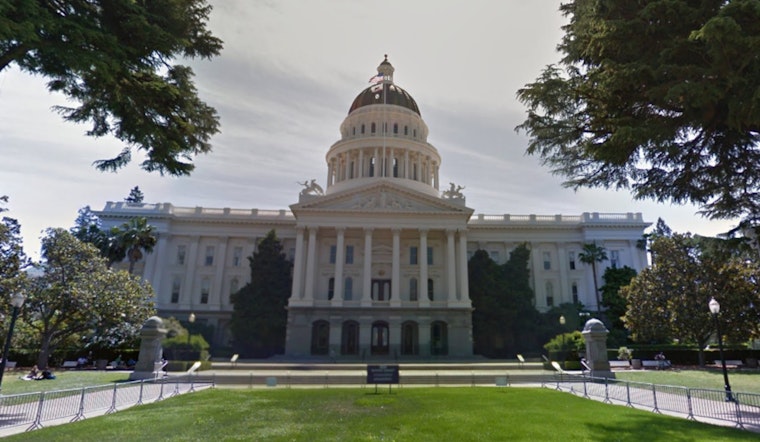
State lawmakers in Sacramento are moving to crack down on oversized and flavored nitrous oxide canisters, the “whippets” and tanks that prosecutors say are being pushed toward teens, piling up as roadside trash, and turning up in deadly crashes. The proposal is framed as a way to choke off the party supply at retail counters while keeping medical, culinary, and automotive uses on the table.
Sen. Catherine Blakespear’s SB 936 would make it unlawful to sell or distribute nitrous oxide containers that hold more than eight grams or that are flavored to taste or smell like food, and it would bar devices designed to let people inhale the gas directly. As laid out in the bill text on California Legislative Information, the measure carves out narrow exemptions for licensed medical, dental, and veterinary uses, culinary whipped cream chargers, containers marketed for vehicle performance, and wholesale or industrial sales.
Prosecutors Sound the Alarm
Prosecutors and county officials say the retail shift to large, flavored tanks has arrived alongside a sharp spike in nitrous related incidents. “We had 118 cases; 74 of those cases happened just in 2025 alone,” James Fontaine, chief of the major narcotics division at the San Diego County District Attorney’s Office, told a Senate committee, according to CalMatters. Prosecutors say many of those cases involve crashes and drivers who were inhaling nitrous before getting behind the wheel, a mix that is every traffic cop’s nightmare.
Opposition Pushes For Regulation Over Criminalization
Civil rights and defense groups are telling lawmakers to hit pause, warning that the bill, as written, could sweep too broadly and end up criminalizing ordinary retail conduct instead of singling out bad actors. “We are opposed to SB 936 unless it is amended to take a regulatory approach,” George Parampathu of ACLU California Action told the committee, per the CalMatters transcript. Parampathu urged legislators to lean on licensing and targeted retail rules, similar to flavored tobacco restrictions, rather than adding another set of infractions to the penal code.
Local Bans Paved The Way
The state effort builds on local experiments that have already gone further. Humboldt County adopted a retail ban in 2025 that makes it unlawful in the unincorporated county to sell nitrous oxide for recreational use, citing litter, recycling hazards, and broader community harms. Local officials say the ban followed targeted retail surveys and tragic crashes tied to large, flavored canisters, as detailed in the Humboldt County ordinance.
Penalties and Business Consequences
Under SB 936, violations would be treated as infractions with fines of up to $500 for a first offense, $1,000 for a second, and $2,000 for third and subsequent offenses. The bill also allows courts to suspend business licenses or tobacco licenses for up to a year following a prior conviction for a violation, language spelled out in the California Legislative Information record.
Health Risks Cited by Supporters
Supporters are leaning heavily on health warnings. Medical research links heavy or repeated nitrous oxide inhalation to neurological injuries, including subacute combined degeneration of the spinal cord and peripheral neuropathy, and in rare cases to fatal hypoxic events. They point to a growing stack of clinical reports describing long term nerve damage tied to misuse, as summarized in a PubMed Central review.
What Comes Next
SB 936 cleared the state Senate and was amended in the Assembly on July 2, 2026, and it is now awaiting further committee review in Assembly Appropriations, according to LegiScan. Supporters range from the San Diego County District Attorney’s Office to rural supervisors and state public health advisers, and the measure has drawn formal letters of support from state health officials, including a DHCS advisory letter. For filings and detailed statements of support, see Sen. Blakespear's office and a DHCS support letter.
If the Assembly keeps the amendments and the bill becomes law, retailers statewide would face a new set of rules aimed at shrinking a market critics say has become a public safety problem while preserving legitimate medical and culinary uses. For now, the fight in Sacramento is over how to balance urgent safety warnings from prosecutors with civil liberties concerns about overbroad enforcement and what the smartest, most targeted way to regulate retailers really looks like.





