

























































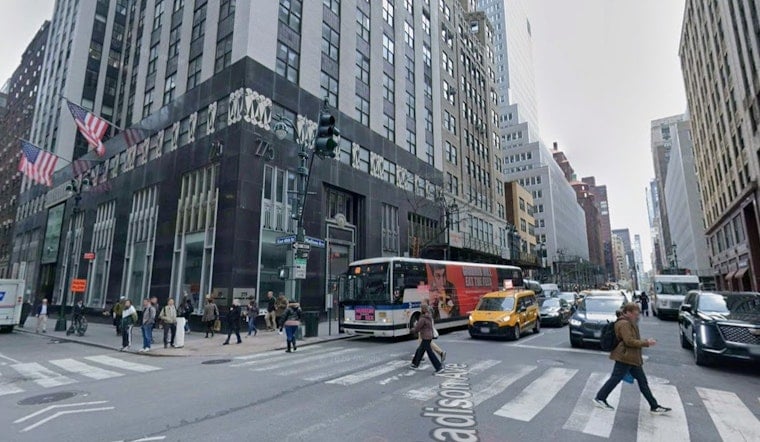
The owners of 271 Madison Avenue are asking a Manhattan judge to wipe out a roughly $35 million jury award, arguing that months of secretly gathered surveillance video from Florida show the plaintiff living a far more active life than she told the jury. Their post-trial filings say the footage undercuts claims of life-altering injuries that helped drive the blockbuster verdict. Meghan Brown, a former JPMorgan analyst, was hurt in 2015 when a lobby door shattered and has said the crash left her with permanent cognitive damage.
Jury Award and Court Findings
Following a March 2024 trial, a Manhattan jury awarded Brown $35,179,208 for past and future pain and suffering and for future medical care, finding that the building’s negligence was a substantial factor in her injuries, according to New York Courts. The written decision describes the jury’s acceptance of evidence of ongoing cognitive deficits, balance problems and other limitations tied to the February 2, 2015 accident. As the decision lays out, the award included $20 million for future pain and suffering and more than $13 million earmarked for future care.
Defense’s New Motion Points to Months of Footage
In their latest motion, the building’s lawyers say private investigators tailed Brown in Florida for roughly nine months and captured video that they argue is impossible to square with a portrait of profound, permanent disability. As reported by New York Post, the filing claims Brown is seen prepping alone for a three-hour golf-course event, working 10-hour shifts, grocery shopping and texting while riding a trike. Defense counsel says those scenes clash with the long-term care needs presented at trial.
Brown’s Team Rejects the Characterization
Brown and her lawyers flatly dispute that the videos tell the whole story, saying the defense is cherry-picking moments and ignoring the broader medical record. Tom Moore, who represented Brown at trial, told the New York Post that “this is a life shattered, and this is a life that will never be put back together as it was prior to 2015.” The court’s opinion recounts testimony from treating providers who described persistent cognitive deficits and long-term care needs that the jury credited in full when it set the award.
High Bar to Overturn a Jury Verdict
New York law makes it tough to undo what a jury has decided, even when new material surfaces after trial. Courts evaluating motions under CPLR 4404(a) generally will not overturn a verdict unless there is no valid line of reasoning or permissible inference by which a rational jury could have reached it, a standard outlined in recent New York decisions and legal summaries. For context on the legal standard, readers are typically pointed to analysis in reported decisions and case law summaries that walk through how rarely such motions succeed.
What Happens Next
The building’s motion is now pending in Manhattan Supreme Court. If the judge refuses to set aside or trim the verdict, the defendants can still take their fight to an appellate court. Public court dockets and filing services reflect active post-trial motion practice stretching into 2025 and 2026, and the existing record, including the jury’s credibility findings and earlier post-trial rulings, will loom large in whatever decision the judge issues.
At bottom, the battle turns on two sharply different narratives: a jury and treating doctors who concluded Brown suffered a lasting brain injury, and a defense team that says months of surveillance footage tell a very different story. How the judge weighs that new material against the strict legal standard for tossing a jury’s work will determine whether this case ends at the trial-court level or heads into its next chapter on appeal.





