

























































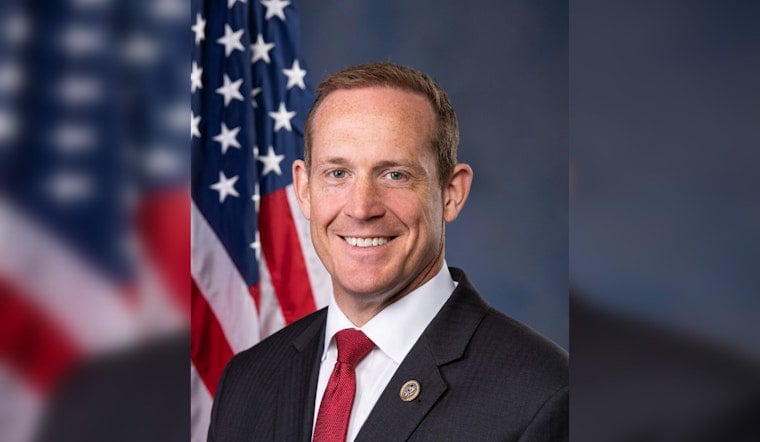
Sen. Ted Budd says roughly $25 million in federal money is headed to Asheville Regional Airport to overhaul the roads that feed the terminal, a move local leaders argue could smooth travel just as western North Carolina tourism continues to rebound. Announcing the award on July 8, Budd credited Transportation Secretary Sean Duffy and the U.S. Department of Transportation and cast the work as part of a broader investment strategy to keep up with the airport’s rapid growth. Local officials have been making the same case for months, saying that better access, drop‑off lanes and circulation outside the terminal are essential if AVL is going to handle heavier visitor traffic without turning the curb into a permanent traffic jam.
Budd’s post and the federal award
In a post on Sen. Ted Budd’s X account, the senator backed the proposed roadway improvements and thanked Secretary Duffy and the Department of Transportation for what he described as a $25 million federal award. Budd repeated his argument that “easy arrival and departure at Asheville Regional Airport is vital for western North Carolina’s economy,” and he linked to reporting that attributes the funding to the landside work planned around the terminal. His message arrived as local and federal officials work to nudge several AVL projects out of the planning phase and into actual construction.
Federal airport grants rolling out
The Federal Aviation Administration and the U.S. Department of Transportation have rolled out a new round of airport grants aimed at modernizing terminals, towers and access roads across the country, part of a multi‑billion dollar package set to be distributed this summer. According to The FAA, the most recent batch of awards covers projects that boost safety and capacity at regional hubs. Department officials have highlighted landside and access improvements as among the types of efforts these grants are designed to support, which puts AVL’s roadway work squarely in the mix.
AVL’s growth and why roads matter
Asheville Regional Airport reports that it handled more than 2.24 million passengers in 2025, a jump that airport leaders say has pushed landside access and parking to the top of the capital to‑do list. Asheville Regional Airport notes that new routes and a recently completed concourse helped fuel that growth and have increased pressure on the existing drop‑off and circulation areas outside the terminal. Local tourism and business groups contend that making it easier to reach the airport and get to the gate will be key to sustaining the region’s rebound, cutting down on travel friction for visitors and tour operators who already juggle tight schedules and mountain weather.
Where congressional and appropriations money fits
Federal cash for AVL is not coming from just one pot. It has flowed through congressional appropriations, FAA discretionary grants and local airport planning efforts that line up projects with whichever funds become available. In January, Rep. Chuck Edwards’ office highlighted a $2.5 million member‑directed item for a west‑side taxiway as part of FY2026 appropriations, a reminder that congressional allocations can stack on top of DOT grants rather than compete with them. Rep. Chuck Edwards frames that taxiway project as one piece of a broader federal investment package for western North Carolina.
How the roadway work fits AVL’s plans
The Greater Asheville Regional Airport Authority has already baked roadway improvements and rehabilitation projects into its long‑range capital‑improvement planning, tying landside upgrades directly to terminal and airfield work that is underway or queued up. Greater Asheville Regional Airport Authority documents show the airport sequencing design, permitting and construction for multiple projects as funding arrives, rather than waiting to tackle them one at a time. Airport leaders have said coordinated landside work needs to track with expanded gate capacity so that new flights do not simply move the bottleneck from the runway to the front curb.
What’s next for travelers and the region
Local leaders and hoteliers greeted Budd’s post as another sign that long‑talked‑about investments are finally getting real while VisitNC and other partners work to bring visitors back into the mountains. Coverage of efforts to revive western North Carolina tourism has stressed that dependable access to AVL will be a central part of any success story. Airport and federal officials have not yet released a public schedule for the roadway upgrades, and details on phasing, design and procurement will ultimately decide when construction ramps up and what exactly travelers encounter at the curbline in the months ahead.



