

























































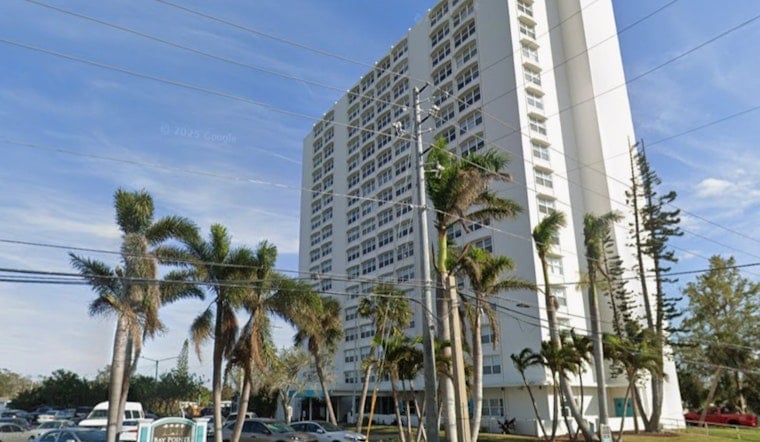
A 17-story senior tower just across the Corey Causeway from St. Pete Beach has changed hands in a deal that delivered a hefty payoff for its seller and sets the stage for a major rehab under a new ownership team.
Related Group, in a joint venture with Florida Community Development Corp., has acquired Bay Pointe Tower, a 210-unit senior housing high-rise in South Pasadena, for about $28.8 million. The age-restricted property sits near the shoreline and caters to older residents in the St. Petersburg area. Robbins Property Associates, which bought the building in 2014 for roughly $8.6 million, walked away with a substantial gain on the sale.
Deal details
According to Multi‑Housing News, the Related joint venture paid $28.8 million for Bay Pointe Tower and financed the purchase with an acquisition loan of about $25.2 million originated by Merchants Bancorp, with a reported maturity in 2027. The report notes Related’s growing footprint in the Tampa metro along with the seller’s outsized return compared with its 2014 purchase price.
Those pricing figures line up with a broader trend in the seniors sector, where stabilized properties are attracting fresh interest after a period of market dislocation.
Financing and public backing
Local public records show the Housing Finance Authority of Pinellas County held a TEFRA hearing earlier this year outlining a plan to issue up to $15.7 million in multifamily housing revenue bonds to help fund the acquisition and rehabilitation of Bay Pointe Tower. The HFA documents identify Bay Pointe Preservation LP as the initial owner-operator vehicle tied to the deal.
The pairing of private acquisition debt with tax-exempt bond proceeds is a familiar playbook in affordable and seniors housing, especially when buyers are targeting “acquisition and rehab” strategies instead of ground-up construction.
Public-housing conversion plans
Planning documents from the St. Petersburg Housing Authority list Bay Pointe Tower as part of a Restore-Rebuild (Faircloth-to-RAD) conversion. The plan calls for an eventual project-based Section 8 PBV structure with a preference for elderly occupancy.
Those filings point to 210 total units and describe a process that includes acquisition, rehabilitation and temporary relocation of residents as the conversion moves forward. Stakeholders typically track RAD conversions closely, since they reshape subsidy structures, property management approaches and long-term affordability commitments.
Property snapshot
Completed in 1971, Bay Pointe Tower rises 17 stories and consists of studios and one-bedroom apartments, with average sizes of roughly 484 and 630 square feet, respectively. Property records and market listings cite onsite amenities that include a fitness room, clubhouse, laundry facilities, a library and surface parking.
State assisted-housing inventories show the building carries a HUD use agreement and an assisted unit profile that extends into the early 2030s, giving residents and advocates a sense of how long current affordability protections are expected to remain in place.
Why investors are circling seniors housing
Senior-housing deals have rebounded in recent years, and coverage of this transaction references JLL research that found rising pricing and improving occupancy helped push investment volume into the low-to-mid $20 billions in 2025. That backdrop has nudged institutional players and regional developers toward preservation-style strategies, where existing buildings are upgraded rather than torn down and replaced.
In the Tampa Bay region, that dynamic means older affordable and age-restricted properties are increasingly being evaluated for capital improvements and subsidy conversions, often with a close eye on how resident protections are handled.
What comes next
Over the coming months, Related and its partners are expected to move through the HFA and HUD approval process, refining rehab scopes, tenant relocation plans and the bond financing schedule described in public filings. The TEFRA hearing materials and St. Petersburg Housing Authority documents will effectively serve as the road map for how extensive the renovations will be and how long affordability commitments are set to last.





