

























































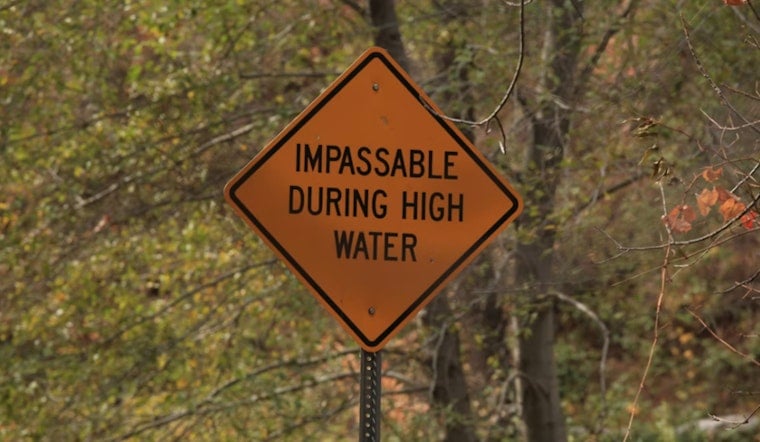
Heavy Sunday storms turned into a serious headache across the North Carolina Piedmont on July 19, as the National Weather Service slapped a flood advisory on parts of the region and warned drivers to think twice before taking their usual routes home.
Forecasters cautioned that urban and small-stream flooding could linger through the night in low-lying spots and areas with poor drainage. Neighborhood streets, parking lots and low-water crossings were flagged as trouble zones where even a few inches of standing or moving water can quickly turn dangerous.
Officials stressed that water over a roadway is not something to test. What looks like a shallow puddle can hide a washed-out surface or a fast current that becomes life-threatening in minutes.
At 5:34 p.m., NWS Raleigh issued an updated advisory, in effect until about 8:45 p.m., calling out Durham, Franklin, Granville, Orange, Vance and Warren counties among the places to watch, according to the Charlotte Observer. Doppler and radar estimates showed bands of heavy, training showers capable of brief but intense downpours that could overwhelm storm drains and small creeks.
Where the advisory applies
The advisory centers on urban corridors and small-stream networks across the central Piedmont. Streets in low-lying neighborhoods are most likely to see ponding and minor flooding as runoff piles up faster than drainage systems can handle it.
The National Weather Service in Raleigh urged residents in the named counties to stay alert, keep an eye on local road conditions and be ready to move to higher ground if water starts to rise.
What the NWS warns
As part of its Turn Around, Don't Drown campaign, the NWS repeated its blunt advice about driving into floodwaters. According to the National Weather Service, as little as 6 inches of fast-moving floodwater can knock an adult off their feet, and about 12 inches of rushing water can carry away most cars.
Drivers were told not to gamble on flooded roads, not to go around barricades and not to assume that a familiar route is safe simply because it usually is.
Safety tips and what to expect
Local public-safety agencies often shut down flooded crossings without much warning, so detours and slower commutes are likely in affected areas. Residents were advised to plan extra travel time if they have to be on the road.
The Durham Herald Sun and other local outlets reminded people who live in flood-prone areas to move to higher ground when water starts creeping up, to avoid driving through standing water and to follow updates from county emergency management offices and the NWS as conditions evolve.





