

























































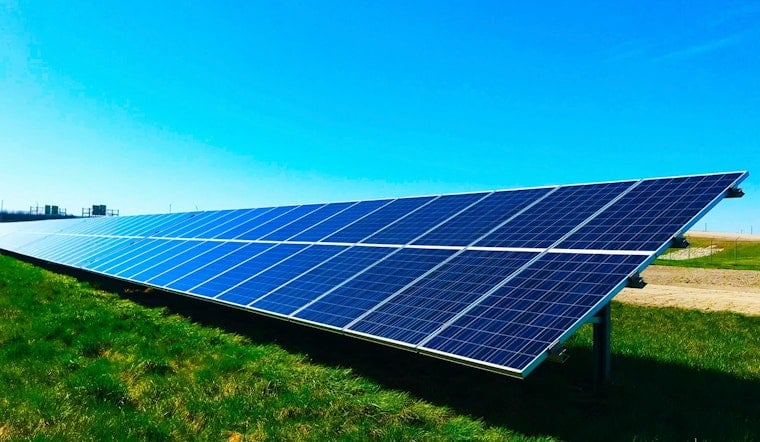
State and nonprofit partners in western North Carolina are rolling out trailer-mounted "beehive" solar microgrids and a small wave of permanent systems to keep community hubs running when storms knock the power out. The multi-partner effort is designed to help libraries, food distribution centers and fire stations rely less on diesel generators and fuel deliveries after disasters. Local officials say the first five stationary systems are slated to start going in this summer, with two mobile units prepped to roll wherever the next major outage hits hardest.
How the beehives work
The Footprint Project and its partners refer to the towable trailers as "Beehives" and outfit each one with role-specific modules, including "cooler bees" for refrigeration, "power bees" for charging devices and handling partial building loads, and "water bees" for filtration, according to Blue Ridge Public Radio. Those partners report that a single Beehive can store on the order of 100 kilowatt-hours and can keep a large building running for roughly 10 hours during an outage. Because the systems are mounted on trailers, crews can simply tow a unit into an affected town and plug it in, sidestepping many of the fuel and maintenance headaches that come with long-running diesel generators.
Where they’ll be installed
The State Energy Office and its coalition have identified initial permanent sites across six Helene-impacted counties and named five first installs, including East Asheville Library and the Burnsville Fire Department, according to a press release from the State Energy Office. At Burnsville the package on deck includes a roughly 39.96 kW solar array paired with about 80 kWh of battery storage to support operations during extended outages, according to NC DEQ. Burnsville Fire Chief Niles Howell told BPR, "I love redundancy," stressing that having extra, diverse power options mattered after Helene forced the department into long generator runs.
Funding and timeline
Industry coverage notes that the initiative is backed by about 5 million dollars in state energy program and federal IIJA funding and aims to deliver up to 24 stationary microgrids plus two mobile Beehive hubs, with broader deployment expected through mid 2027. Microgrid Knowledge reported on the statewide plan and schedule, and that Land of Sky Regional Council will act as a regional purchasing and lending hub to move the trailers where they are needed most. Grist noted that Governor Josh Stein had requested an additional 1 million dollars for microgrids in his Helene relief proposal, a line item lawmakers ultimately left out.
Where this fits nationally
Small solar-plus-storage microgrids and resilience hubs are increasingly part of the national disaster-response toolkit. Puerto Rico and parts of the Gulf Coast have used local microgrids to keep clinics, stores and community centers powered through extended outages, as described in IEEE Spectrum reporting. Community lighthouse projects in New Orleans have likewise turned churches and neighborhood centers into resilience hubs with solar and batteries, showing how publicly funded, locally managed systems can supplement the broader grid, according to Associated Press and regional reporting. For many rural towns in western North Carolina, local officials say that mix of donated equipment, public dollars and regional operators could make microgrids affordable and maintainable in places where a single organization could not shoulder the full cost alone.




