

























































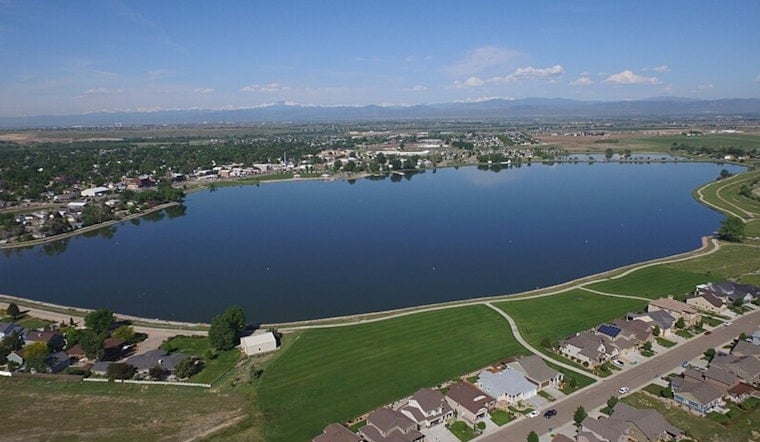
Summer at Windsor Lake just hit an abrupt stop. The Town of Windsor has shut down the swim beach effective immediately after tests confirmed a harmful blue-green algae (cyanobacteria) bloom in the water. Swimming, tubing, and water skiing are off-limits until further notice. Non-motorized boating is still allowed at users’ own risk, but officials strongly advise staying out of the water. Trails around the lake, the volleyball court, and catch-and-release fishing remain open while crews keep a close eye on conditions.
According to CBS Colorado, signs went up around the beach after testing confirmed the presence of potentially toxic algae. Some visitors who showed up looking to cool off instead found the swim area roped off. The advisory arrives during a run of hot weather and comes shortly after the town adjusted boating rules earlier this season because of low water levels.
Town response and monitoring
In a news release, the Town of Windsor said staff first noticed suspicious blooms at the surface, then sent water samples for lab testing and closed the swim beach out of an abundance of caution. Operations Manager Kendra Martin said, “Our team takes the health and safety of our residents very seriously,” while Deputy Town Manager Eric Lucas noted that LG Sonic MPC buoys installed in May 2024 have already shown “really good improvement” in bacteria levels. The town says it will continue partnering with the Colorado Department of Public Health and Environment to track water quality through the summer.
Why the bloom happened
State and federal experts say cyanobacteria thrive in warm, slow-moving water rich in nutrients such as nitrogen and phosphorus, which can wash in with stormwater and fertilizer runoff. “They can also look like spilled paint on the surface of the water,” Sarah Erickson of the Colorado Department of Public Health and Environment told Colorado Public Radio, a reminder that a glance at the shoreline is no substitute for lab work. The EPA similarly emphasizes ongoing monitoring and cutting down nutrient pollution as key tools to manage risks in recreational waters.
What visitors should know
For now, the advisory covers the swim beach only. The park’s other amenities, including the 2.5-mile trail, playground, and open areas, remain available. Even so, town officials are urging people and pets to avoid contact with lake water while the bloom is active. Windsor Parks posts sample results and swim-beach rules on its Windsor Lake page, which includes recent E. coli readings and safety guidance.
Permit holders can continue to use non-motorized boats at their own risk, and catch-and-release fishing is allowed while the swim area is closed.
How long will the beach stay closed?
The town says it will reopen the swim beach only after testing shows toxin levels have dropped back into a safe range for recreation, according to the Town of Windsor. The U.S. Geological Survey notes that microcystin concentrations around 8 micrograms per liter are commonly used as a warning threshold for recreational waters, and that blooms can linger for days to weeks depending on weather and nutrient conditions. Windsor officials say they will keep up regular testing and coordinate with state health agencies before lifting the advisory.
Where else to swim
Harmful algae advisories are popping up across Colorado this summer, and officials are urging residents to check posted warnings before heading to any lake. Windsor Parks lists alternative spots on its facilities pages, including Chimney Park Pool and the Eastman Park River Experience, which may offer immediate options for anyone looking to cool off while Windsor Lake’s swim beach is off-limits.
If anyone suspects they or a pet were exposed to harmful algae, officials recommend seeking medical or veterinary care and watching town and state websites for updated advisories.



