

























































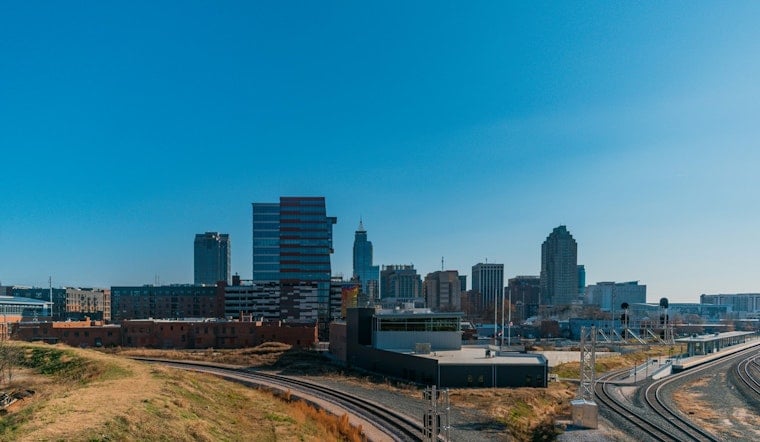
Raleigh-Durham's office market is showing signs of life as companies pull workers back toward shared workspaces, but the Triangle's commercial real estate revival is still more uneven than triumphant. A panel of local developers and brokers meeting Tuesday in Cary described a market where the best buildings are attracting attention while older or less convenient inventory keeps absorbing the shock.
The discussion came during Triangle Business Journal's Tomorrow's Real Estate event, held Tuesday at The Umstead Hotel & Spa. According to Triangle Business Journal's coverage, the conversation centered on office vacancy, rent increases and infrastructure, while the event program brought together leaders from Lee & Associates, Beacon Development, Helix Ventures and Savills to examine the Triangle's office, retail, flex and industrial sectors.
Vacancy Is Stabilizing, But The Market Is Still Split
The latest numbers offer a cautious version of good news. Cushman & Wakefield's Q2 report put Raleigh's overall office vacancy at 21.9%, unchanged for the third consecutive quarter, even as Raleigh-Durham industrial leasing topped 1.7 million square feet during the quarter.
That suggests the return-to-office push is not filling every office tower equally. Companies appear more willing to commit when the space offers newer construction, better amenities, easier commutes or a location that can help bring employees back without making the workday feel like a punishment.
Colliers' Q1 snapshot counted vacancy across the broader Raleigh-Durham market at 17%, with smaller leases, renewals and limited new construction helping stabilize conditions. Average asking rent ended March at $30.41 per square foot, while rents in prime submarkets such as North Hills can top $50 per square foot for highly amenitized space.
Raleigh Has Momentum, While Durham And Cary Lag
The recovery is also geographically lopsided. Axios Raleigh reported in April that CBRE was tracking 2.9 million square feet of potential Triangle office demand, the highest level since before the pandemic, while Midtown Raleigh, downtown Raleigh and the Glenwood Avenue corridor were drawing the most interest.
That same report identified downtown Durham as slower to regain momentum and Cary as the Triangle submarket with the highest vacancy rate. In other words, the region's office story is less a broad comeback than a contest between places that can offer a compelling daily experience and places still waiting for tenants to return.
Newmark's Q1 report found Raleigh vacancy at 19.5%, down from a 20.7% peak in the second quarter of 2025, with 57,867 square feet of positive net absorption and no new supply delivered since the second quarter of 2024. The report also said companies are consolidating into smaller, higher-quality and more amenitized Class A spaces, a trend that can improve premium properties while leaving older buildings in a tougher fight for tenants.
Infrastructure Could Decide The Next Office Winners
The infrastructure question is not a side issue for a region where office decisions are tied to long commutes, road capacity and uneven transit options. If employers expect people to spend more days in the office, landlords and developers will have to compete on more than square footage, with parking, connectivity, food options and access to major employment corridors becoming part of the lease conversation.
For now, the Triangle has a healthier demand pipeline than it did during the worst post-pandemic slowdown, but financing costs, cautious tenants and a thin construction pipeline are keeping the recovery measured. The next phase will likely reward buildings and submarkets that make in-person work feel useful, convenient and worth the trip.



