

























































A Las Vegas judge has handed Nevada a significant early win in its long-running fight with Meta, granting a preliminary injunction in the state’s consumer-protection case over Messenger. The ruling follows a finding that there is a reasonable likelihood Meta violated Nevada’s Deceptive Trade Practices Act by not fully disclosing child-safety risks tied to end-to-end encryption on the messaging platform. The order gives the state a legal foothold to press its claims while the broader case grinds on.
Attorney General Ford announces win in case against Meta: state of Nevada secured a preliminary injunction after the Eighth Judicial Court found a reasonable likelihood that Meta violated the state's Deceptive Trade Practices Act by failing to disclose known child safety risks associated with Messenger's end-to-end encryption technology.
— Nevada Attorney General (@nevadaag) July 22, 2026
Judge Finds ‘Reasonable Likelihood’ Meta Misled Parents
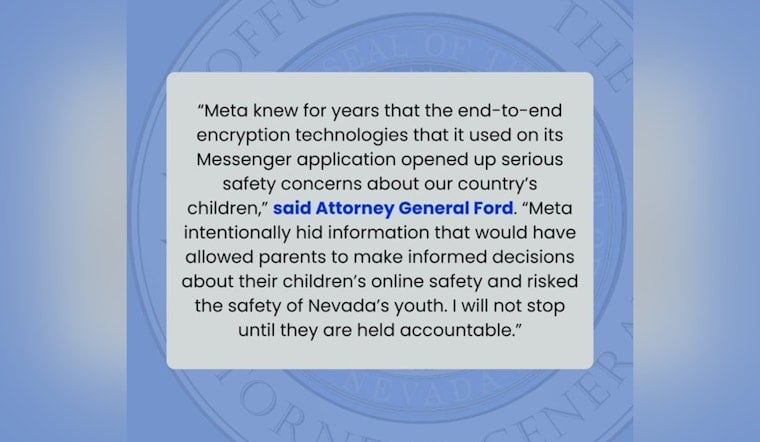
According to the Nevada Attorney General, the Eighth Judicial District Court concluded there is a reasonable likelihood that Meta failed to disclose known child-safety risks associated with Messenger’s move to default end-to-end encryption and issued a preliminary injunction. Attorney General Aaron Ford’s office said Meta “intentionally hid information that would have allowed parents to make informed decisions about their children’s online safety.” The order lets the state pursue injunctive relief while the merits of the claim are litigated.
Internal Warnings And Other Cases Helped Build Nevada’s Argument
Nevada’s action did not materialize in a vacuum. State lawyers leaned on evidence surfacing in other proceedings as they pushed for relief. Reporting by Reuters detailed internal 2019 messages in which Meta safety executives warned that encrypting Messenger would sharply reduce the company’s ability to flag child-exploitation reports. That reporting, along with a March verdict in New Mexico that found Meta liable in a related child-safety case, has given prosecutors material they say shows the company understood the tradeoffs and risks, as The Washington Post has reported.
What The Injunction Actually Does
For now, the injunction pauses at least part of Nevada’s requested relief while the court continues to evaluate the state’s claims. The attorney general’s announcement did not include the full court order, so the precise contours of the restrictions are not yet public. Nevada’s social-media litigation, filed Jan. 30, 2024 as Case No. A-24-886110-B, is one of several state actions testing whether platform design choices cross the line into violations of consumer-protection law, according to Nevada Legislature documents.
Meta has previously told reporters and regulators that it developed safety features to accompany encryption and is defending itself across multiple actions nationwide. In its regulatory filings, the company notes that it faces consolidated and state-level litigation over alleged youth harms and design choices tied to its products.
Legal Fallout And What Could Come Next
The preliminary injunction gives Nevada additional leverage to seek court-ordered remedies if it ultimately wins on the merits. Under Nevada’s Unfair and Deceptive Trade Practices Act, the attorney general can pursue injunctive relief for deceptive business practices, and lawyers expect a steady stream of appeals and motions as both sides fight over discovery and jurisdictional issues.
If the injunction is upheld or expanded, it could force changes to how Messenger’s encryption and safety disclosures are presented to Nevada users or prompt negotiated fixes that ripple into parallel cases elsewhere.
We will keep an eye on the docket, monitor new filings and statements from both sides, and report back as appeals and motions hit the court.




