

























































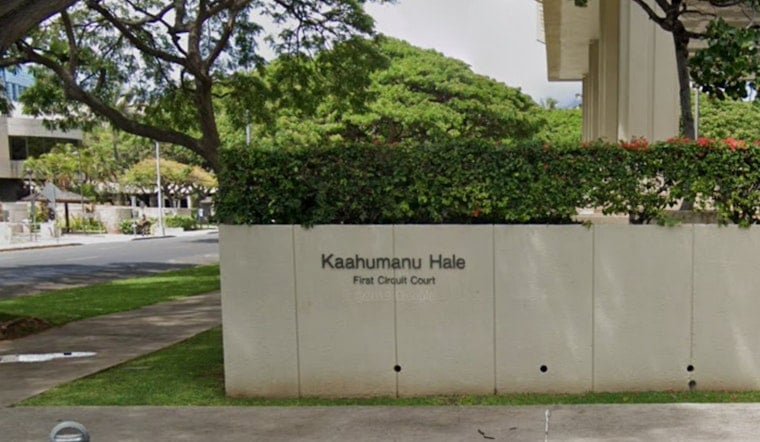
Jeremy Calizo walked out of the Circuit Court of the First Circuit on July 2 without a single day of jail time, after a judge granted a deferred acceptance of his no‑contest plea to six felony counts tied to explosive devices. Instead, he was ordered to complete 240 hours of community service and placed on a four‑year deferral. Prosecutors say the charges could be dismissed if he follows every condition the court laid out.
The plea brings to a close allegations that grew out of an undercover Department of Law Enforcement operation in Waipahu on Dec. 23, 2024, when investigators say they watched an aerial device launch into the night sky. State attorneys had pushed for a tougher sentence that included jail time along with probation.
Undercover sting and explosive test
According to the Department of the Attorney General, detectives recovered one device in Calizo’s possession and five more from his vehicle after the Dec. 23 operation. Forensic testing later confirmed that at least one recovered device contained explosive material.
The Honolulu Police Department Bomb Squad conducted a controlled function test on one of the devices that produced what the state described as a violent explosion, captured on video. Investigators say a detective saw Calizo bent over a cylindrical launch tube in the roadway, watched a device arc over nearby rooftops, and then moved in and arrested him as he walked toward the intersection of Hina and Halelehua Streets.
Plea, sentencing and what prosecutors wanted
“These were not legal consumer fireworks, they were illegal explosive devices,” Attorney General Anne Lopez said in a news release issued through the Department of the Attorney General, warning that such devices “are unpredictable and can cause catastrophic injuries or death.”
In court, the Department argued against any deferral and asked instead for 30 days in jail, 240 hours of community service and four years of probation. The judge opted for a deferred acceptance with the same 240‑hour service requirement, leaving jail time off the table for now.
Calizo had entered no‑contest pleas on March 27, 2026, to six counts under the state’s explosives statute. The case was handled by the Attorney General’s Criminal Justice Division.
Legal implications
Under Hawaiʻi law, intentionally possessing, constructing or detonating a homemade explosive device is a class C felony, carrying a potential sentence of up to five years in prison for each count. That penalty framework is spelled out in Hawaiʻi Revised Statutes § 134‑28.
The four‑year deferred acceptance granted in this case means that if Calizo complies with all terms during that period, he can avoid a criminal conviction entirely. The outcome highlights how judges sometimes try to strike a balance between punishment and rehabilitation in explosive device prosecutions.
Where this fits in Oʻahu enforcement
The case lands amid a broader effort by state and local agencies to clear volatile pyrotechnics out of Oʻahu neighborhoods and deter risky roadside launches. As reported in a cash‑for‑fireworks buyback, the Department of Law Enforcement and Honolulu police have teamed up on events in Waipahu to collect hazardous aerials before they are lit off over crowded streets and rooftops.
Local coverage, including reporting by KITV 4 Island News, has spotlighted the Waipahu investigation and the launch apparatus tied to these devices. Officials continue to urge residents to surrender illegal fireworks rather than try to use them or take them apart.
For now, Calizo remains under court supervision. If he completes 240 hours of community service and meets all conditions of the four‑year deferral, the six felony counts may be dismissed. The case stands as a reminder of how quickly illegal aerial devices can turn dangerous for bystanders and property, and of the state’s stepped‑up push to keep them off the streets.





