

























































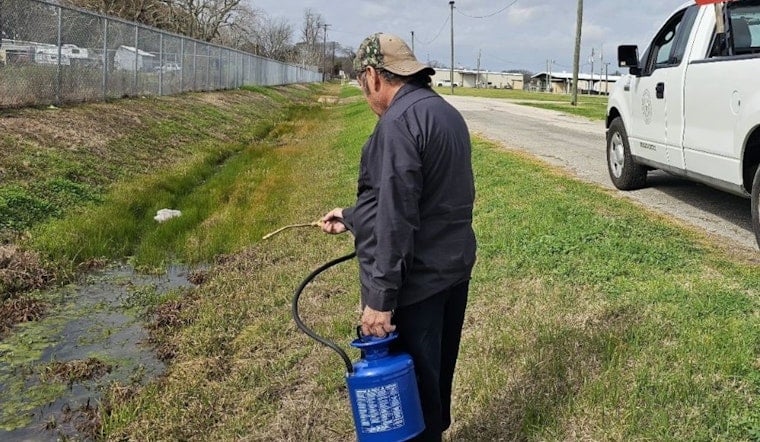
Multiple mosquito traps across Pearland have tested positive for West Nile virus, and county vector teams are cranking up spraying and surveillance in the affected neighborhoods. The virus was detected in samples collected in late June and again on July 1, and officials say more traps are now in place to see whether local transmission is continuing. Most people infected with West Nile never feel sick, but the virus can cause fever, headache and body aches and, in rare cases, serious neurological illness.
Where mosquitoes tested positive
Local reporting flagged several Pearland trap sites that produced positive mosquito pools. Samples collected June 25 at Cripple Creek and Wood Creek and at Orange Street and Rain Lilly Court tested positive, along with additional samples from July 1 taken near Heron Lane, Southwyck Parkway and County Road 94. According to CW39 Houston, state and county labs confirmed the results and alerted local health officials.
What state surveillance shows
In the Texas Department of State Health Services weekly arbovirus report for the week ending June 27, Brazoria County logged seven West Nile positive mosquito pools, while neighboring Harris County reported about 110 positive pools during that same week. The agency compiles trap data from local districts and uses those confirmations to help shape county responses.
How local vector teams are responding
The Brazoria County Mosquito Control District says it is stepping up targeted adulticiding and larviciding in neighborhoods near the positive traps, is deploying additional surveillance traps, and plans to retest the area next week to decide whether more aggressive measures are needed. The district’s operations page notes that traps are tested both locally and at state labs, and that positive results trigger extra local spraying.
County guidance and how to report problems
Harris County Public Health and its Mosquito & Vector Control Division are urging residents to report mosquito problems through the hotline at (713) 440-4800 and to check the county’s live map of positive pools and proposed treatments to see what is happening nearby. The division notes that treatment trucks typically run overnight when weather cooperates and that residents should stick to basic precautions while surveillance continues.
How to protect yourself from bites
The Centers for Disease Control and Prevention recommends using EPA-registered insect repellents that contain DEET, picaridin or oil of lemon eucalyptus, wearing light-colored, loose-fitting long sleeves and pants at dawn and dusk, and getting rid of standing water where mosquitoes like to breed. The CDC also notes that most West Nile infections are asymptomatic, but when symptoms do appear they can include fever, headache and body aches, and occasionally severe neurological disease. Seek medical attention right away for high fever, stiff neck, confusion or trouble walking.
Officials say they will keep monitoring traps and posting updates. Residents can track activity through the state’s weekly arbovirus reports and county treatment maps. To report dead birds or suspected mosquito breeding sites, contact your county vector-control office (Harris County: (713) 440-4800; Brazoria County: 979-849-5711) or check the Texas Department of State Health Services weekly arbovirus reports for statewide data.





