

























































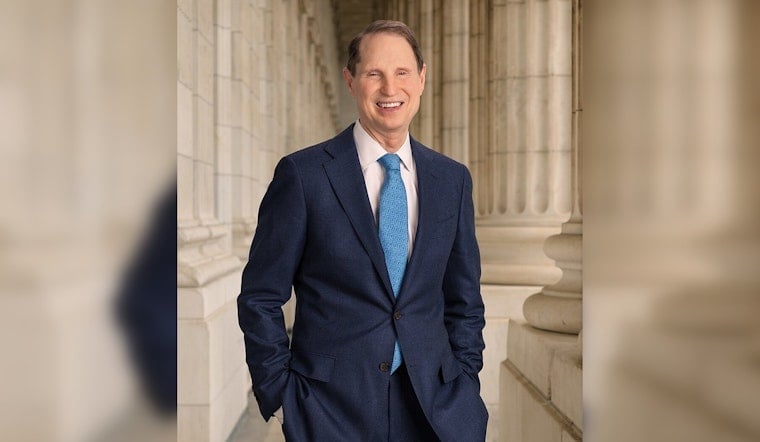
Portland Sen. Ron Wyden is taking the fight over recreational nitrous oxide national, joining two Senate colleagues this week to roll out a bill targeting the flashy, flavored products that have become a cheap party high for young people. The Nitrous Oxide Inhalation Prevention Act would create a federal framework around how the gas is packaged, sold and marketed, from age limits to flavor bans, and is aimed at slowing a nationwide spike in poisonings and severe neurologic injuries. Lawmakers say the measure is meant to treat nitrous misuse as a public health problem rather than a criminal issue for legitimate industrial and culinary users.
“Companies need to be held accountable for predatory advertising that pushes these addictive products to kids,” Wyden said, casting the push as a public health effort. Sens. Richard Blumenthal and Alex Padilla backed that argument, accusing manufacturers of using flavors and bright packaging to hook young users, according to a press release from U.S. Sen. Ron Wyden's office.
What the Senate bill would do
The proposal would expand Food and Drug Administration authority over retail access, packaging and labeling, ban flavored cartridges and marketing aimed at youth, set age restrictions, and create prevention and education grants for schools and first responders. The sponsors say it is written to preserve legitimate medical, culinary and industrial uses while closing retail marketing loopholes that have opened up in recent years. Wyden's office has released the bill text along with a one page summary of its main provisions.
Rising harms behind the push
Researchers point to sharply rising harm as the backdrop for the federal effort. A study in JAMA Network Open found nitrous oxide related deaths climbed from 23 in 2010 to 156 in 2023, an increase of more than 500 percent. A separate poison center analysis documented intentional nitrous exposures rising from roughly 28 cases in 2003 to about 401 in 2024, with those trends including hospital admissions for neurologic injury and other severe outcomes. Clinical Toxicology/PubMed summarizes the poison center findings.
FDA advisory and retail marketing
The Food and Drug Administration issued a consumer advisory in March 2025, updated in June, warning people not to inhale nitrous oxide products after tracking adverse event reports and identifying dozens of branded, flavored canisters sold online and in stores. Investigative reporting has shown the products arriving in bright, youth oriented packaging, along with large tanks offered through online marketplaces and some local shops. Both the FDA and reporting from KBTX/InvestigateTV have highlighted the marketing tactics and the health hazards.
State moves: Oregon and beyond
States are not waiting for Congress to act. In Oregon, 2025 legislative work included a staff summary of HB 3447, which would tighten age verification and online delivery checks for certain nitrous canisters, and state law already restricts sales to minors, according to legislative documents. Local coverage has noted that the new Senate bill would effectively mirror Oregon’s standard and set a federal floor for other states to follow. The Oregon Legislature (HB 3447) and KPTV have both detailed the state level moves.
Legal and policy stakes
The policy details are already drawing fire from different sides. Public health advocates argue that strong federal rules could close loopholes and standardize age checks that now vary widely by state, while some industry groups warn that language drawn too broadly could interfere with legitimate trade and professional use. Over in the House, a companion effort, the Nitrous Oxide Safety Act (H.R. 7945) introduced by Rep. Kevin Mullin, would take a tougher line by seeking to ban retail consumer sales while preserving professional uses. The bill text is available on GovInfo (H.R. 7945).
What to watch next
Both chambers now face a scheduling call on how far to go. Lawmakers must decide whether to focus on marketing and age limit rules or to move toward a full retail ban. A House subcommittee is slated to take up a package of consumer protection measures that includes Mullin’s proposal later this month, while the Senate bill will need additional co sponsors and a committee hearing before it can advance. For readers watching local impact, the next question is how states such as Oregon line up enforcement with any new federal standard. KBTX and Rep. Kevin Mullin's office have published the bill text and hearing details for those who want to dig into the fine print.





