

























































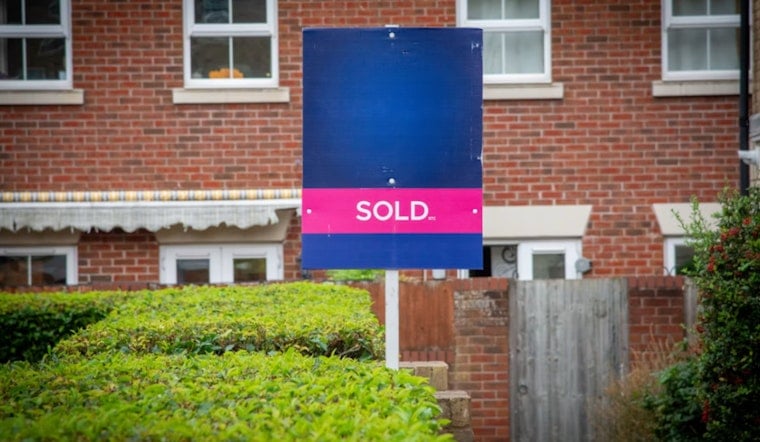
Grass and weeds still choke dozens of empty lots along Beach Boulevard in Biloxi, Mississippi, where cracked driveways lead to nothing but sand and sky. Twenty-one years after Hurricane Katrina tore through the Mississippi Gulf Coast, these scars remain a daily reminder of the storm's destruction. But real estate agents say something is finally shifting along U.S. 90 — the vacant lots are starting to sell.
Gregory Bertucci knows the frustration of that vacant landscape better than most. The 78-year-old New Orleans native has spent more than a decade trying to sell his waterfront lot in Gulfport, the former site of his eye clinic, according to NOLA.com. Over the years he has fielded interest from churches, a casino and even a drive-thru Starbucks, but nothing has closed. “We don't know what to do with it,” Bertucci said.
Bertucci built the clinic in 1982 on the site of a gas station that Hurricane Camille destroyed when it made landfall in 1969. After Katrina flooded the property, he chose not to rebuild, in part because the federal government had rewritten elevation requirements and raised buildings could not be financed the way they once were. He also worried that a raised clinic would be difficult for older patients and wheelchair users to reach. Now he practices ophthalmology a few days a week at a newer clinic farther from the beach, and he hopes to retire and liquidate his assets so he can provide for his family. For now, friends mow the grass on his lot, and others park motorhomes there during Cruisin' the Coast and Fourth of July fireworks. “Some coastal areas are not going to recover as they were,” Bertucci said.
New Flood Rules Reshaped the Beachfront
The empty lots trace back to the scale of Katrina's destruction. Storm surge along the coast reached peak heights of up to 28 feet and pushed inland as far as 12 miles, damaging or destroying more than 90 percent of coastal structures in Harrison, Hancock and Jackson counties, according to the National Centers for Environmental Information. In the storm's aftermath, FEMA established Advisory Base Flood Elevations of 18 feet along Harrison County's shoreline and 20 feet in Hancock County plus wave action, requiring new waterfront construction to sit far above ground level.
Those rules still shape the corridor today, with new homes rising on pilings more than 20 feet above ground, per the same NOLA.com report. Insurance has compounded the challenge: annual flood insurance premiums for beachfront homes in Mississippi's highest-risk zones range between $2,000 and more than $5,000, with some high-exposure parcels topping $6,000 a year, according to Bridgeway Insurance. Harrison County alone has logged 15,931 National Flood Insurance Program claims since 1978 totaling $1.3 billion in payouts, and the county has been included in 25 federal flood disaster declarations through this year, per FludZone.
Buyers Are Finally Circling the Coast
Despite those costs, agents say the market is turning a corner. Wealthy newcomers are arriving in coastal Mississippi and beachfront lots are beginning to sell at a faster pace, the NOLA.com article reports, even though buyers and developers can spend more than $1 million to build on a beachfront lot. Some of the vacant parcels are being purchased for vacation homes intended for families from Louisiana, while others are becoming vacation rentals, and longtime coastal residents are moving to higher ground in part because of rising insurance rates.
Real estate broker Sandi Sawyer Dulaney reported more than 30 empty beach-lot sales closed in the last two years between Pass Christian and Biloxi, though at least 50 empty beach lots remain on the market along the Mississippi coast. Dulaney said beachfront ownership and construction now require substantial spending. Danny Lee, who leads the Gulf Coast Association of Realtors, said growing numbers of residents and visitors are making commercial beach investment more viable than it has been in years.
Downtown Gulfport's $105 Million Bet
The clearest sign of that shift sits in downtown Gulfport, where developers broke ground in March on Channel South, a $105 million mixed-use project on 4.34 acres at U.S. 90 and 25th Avenue — the historic site of the Great Southern Hotel, according to Prosper Realty. The project is expected to open next year with 136 luxury apartments, more than 17,000 square feet of retail and restaurant space, a 294-space parking garage and a 114-room Marriott Tribute Portfolio hotel.
Tim Carlson, who helped found a commercial real estate firm, said that pattern has played out before. “After a catastrophe like Hurricane Katrina, everyone is gun-shy,” Carlson said, adding that eventually, buyers come back. Nearby, historic downtown Gulfport buildings are reopening alongside new construction, including the 115-room Markham Hotel, which first opened in 1927, sat vacant since 1970, suffered Katrina flood damage and completed a major restoration this spring.
Long Beach Bets on Public Investment
A few miles down U.S. 90, the City of Long Beach is trying a different approach: fixing up the public beachfront first and hoping private development follows. The city is completing its multi-phase Gateway Project at Highway 90 and Jeff Davis Avenue, adding a lighthouse tower structure, beachfront swings, wheelchair-accessible pathways, parking and improved drainage, according to a City of Long Beach announcement. The improvements also include palm trees, pavilions and additional parking on several empty beachfront blocks.
Long Beach Mayor Tim Pierce said the city is trying to reestablish itself as a great little town, though attracting developers has been difficult since Katrina destroyed hundreds of homes and businesses across coastal Mississippi. The lost hotels and condos erased a crucial part of many cities' tax bases, and developers have often been reluctant to build businesses high above the ground on pilings. Pierce hopes the investment could eventually help raise salaries for teachers and first responders, and that one large development taking root could spur further projects nearby, as waterfront hotels open and others remain under construction.
Betty Shaw, who founded the Gulfport Historical Society, recalled a very different U.S. 90 before the storm, one lined with smaller homes, motels and amusement parks rather than vacant grass lots. That contrast underscores just how long the recovery has taken. Regional transportation has also been slow to return: daily Amtrak passenger service along the coast, including stops in Bay St. Louis, Gulfport, Biloxi and Pascagoula, only resumed in August 2025 after 20 years offline, giving coastal cities a fresh tourism link even as their beachfronts remain a work in progress.





