

























































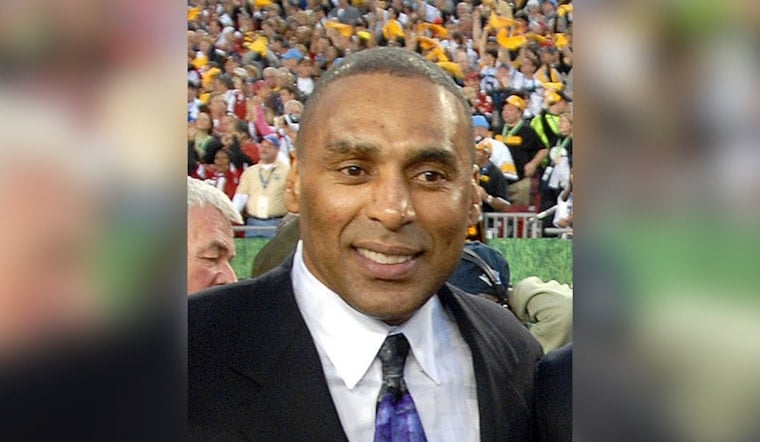
Roger Craig stood before the crowd in Canton, Ohio, on Saturday to finally claim his place in the Pro Football Hall of Fame, then used the moment to share something far heavier than a football milestone: he has vascular dementia. The 66-year-old former San Francisco 49ers running back delivered the announcement in a prerecorded video during his induction speech, telling viewers his diagnosis does not define him.
Craig was enshrined as part of a five-member Class of 2026 that also included Drew Brees, Larry Fitzgerald, Luke Kuechly, and Adam Vinatieri, according to the Pro Football Hall of Fame. As reported by The Athletic, Craig said his doctors believe the condition could be related to a concussion he sustained during his playing career, and that the symptoms crept in gradually enough that he initially dismissed them as normal aging.
He framed the disclosure as an act of service rather than a lament. Per the same account, Craig said sharing his story could encourage people to pay attention to their health and seek help when something feels wrong, and that it would be worthwhile if it helped even one family or former player. He described himself simply as a father, husband, teammate and friend, and said football gave him opportunities beyond anything he could imagine.
A Diagnosis Rooted in Reduced Blood Flow
Vascular dementia is caused by reduced blood flow to the brain, producing gradual symptoms such as slowed thinking, difficulty organizing thoughts, trouble finding words, and memory issues, according to medical definitions cited by the Mayo Clinic and reported by the Las Vegas Sun. The condition is classified as a qualifying neurodegenerative diagnosis under the joint NFL and NFLPA 88 Plan as well as the broader NFL Concussion Settlement, programs built to provide medical coverage and financial assistance to former players facing cognitive impairment, per court and plan documents. That settlement has disbursed more than $1 billion to retired players facing cognitive declines, according to the same filings.
It remains unclear exactly when Craig received his formal diagnosis, and how his condition may interact with those league-sponsored benefit programs going forward — details that have not been made public. What is clear is that his disclosure adds him to a growing group of retired NFL players bringing visibility to post-career neurodegenerative issues.
A 28-Year Wait for Canton
Craig's path to enshrinement was unusually long. He advanced as a senior finalist in December 2025 alongside former Bengals quarterback Ken Anderson and the late Steelers defender L.C. Greenwood, per Raiders.com, with the Hall's Seniors Blue-Ribbon Committee whittling an initial pool of 162 nominees down through multiple voting stages. Craig was inducted in his 28th year of eligibility, a wait attributable in large part to the sheer number of high-profile candidates produced by the 1980s 49ers dynasty.
Drafted by San Francisco in the second round, 49th overall, in the 1983 NFL Draft, Craig arrived from the University of Nebraska, where he starred as both a fullback and I-back and had been a state hurdle champion in high school track, according to the Pro Football Hall of Fame. He caught only 16 passes in college, making his transformation into one of the most dangerous pass-catching backs in Bill Walsh's West Coast offense all the more striking.
Records That Still Stand Out Decades Later
In 1985, Craig became the first player in NFL history to top 1,000 rushing yards and 1,000 receiving yards in the same season, finishing with 1,050 yards on the ground and 1,016 through the air. Only two other players have matched that feat since — Marshall Faulk in 1999 and Christian McCaffrey in 2019 — according to StatMuse.
His postseason résumé is just as distinctive. In Super Bowl XIX against the Miami Dolphins, Craig became the first player in Super Bowl history to score three touchdowns in a single game, catching two touchdown passes and rushing for another in San Francisco's 38-16 win, rushing for 58 yards and catching seven passes for 77 yards in that performance. Across his three Super Bowl victories with the 49ers, Craig totaled 410 yards from scrimmage, the third-highest career Super Bowl scrimmage total in NFL history behind only Jerry Rice and Franco Harris. Craig won 1988 Offensive Player of the Year and earned his only first-team All-Pro selection that same season.
Life After Football in the Bay Area
Craig's NFL career stretched 11 seasons, taking him from San Francisco to the Los Angeles Raiders and finally the Minnesota Vikings before he retired in 1993. He later became a fixture of Silicon Valley business, serving as Vice President of Business Development at Palo Alto-based TIBCO Software for more than 15 years, according to SFGate. He also became an avid marathon runner in retirement.
With his enshrinement, Craig joins an elite roster of 1980s 49ers dynasty figures already in Canton, including Joe Montana, Steve Young, Jerry Rice, Ronnie Lott, Charles Haley, Fred Dean, head coach Bill Walsh, and owner Edward DeBartolo Jr. It's a fitting final chapter for a Bay Area sports figure who, as Hoodline reunited with 49ers greats earlier this year, has remained closely tied to the franchise's golden era long after his playing days ended.





