

























































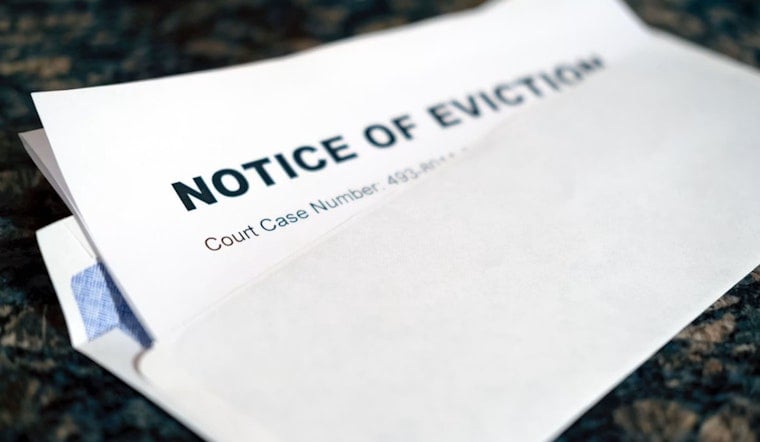
Fifty-five Cleveland households have gone without federal rental assistance since the beginning of August, and the landlords housing them are quietly covering the gap out of their own pockets while the city waits on paperwork from Washington. The tenants themselves are protected from eviction over the missing subsidy through October 31, but that safety net has an expiration date, and nobody involved can say for certain when the federal money will actually show up.
The breakdown traces back to a familiar bureaucratic snarl: Congress approved the U.S. Department of Housing and Urban Development's funding for the current fiscal year back in February 2026, but HUD has released the money slowly because of delays in the federal budget process, according to Cleveland.com. Cleveland is set to receive $28 million through several HUD programs, but the city cannot legally contract for money it does not yet have. Sarah Johnson said as much plainly, telling the outlet that Cleveland cannot contract for HUD money it does not have.
That legal reality has created a cash-flow vacuum for the nonprofit Emerald Development and Economic Network, known as EDEN, which administers housing subsidies directly to private landlords on the city's behalf. EDEN made its last subsidy payment to landlords in July, after Cleveland extended its EDEN contract earlier in the summer to cover June and July rent subsidies. The city's previous EDEN contract had expired on May 31, and by August, Cleveland did not have funding available to extend it again. EDEN warned landlords in advance that subsidy payments would stop that month.
Landlords Absorb Costs While Tenants Stay Protected
Federal housing assistance typically covers the remainder of a tenant's rent beyond what they can afford, since affected tenants generally pay about 30% of their adjusted monthly income themselves. With the subsidy checks gone, landlords are covering the missing difference temporarily and continuing to house tenants without receiving the full rent they're normally owed. Under the terms of EDEN's landlord agreements, that arrangement remains in effect for 90 days after the last subsidy payment, meaning landlords cannot terminate leases or begin eviction proceedings tied to the missing subsidy during that window.
Landlord Willie Thomas, who has two tenants in the housing assistance program, described the toll the delay is taking on both sides of the lease. He said the situation is stressful for tenants who risk losing their homes for something they did not do, and noted that landlords still have to pay water, gas, electricity and property taxes during the payment delay regardless of whether the subsidy arrives. Thomas told the outlet he has used his own savings to cover the gap during a previous funding delay, and said affected tenants have little control over the outcome and may face eviction after 90 days if nothing changes.
A Ticking Clock Toward October
Cleveland officials expected to submit the paperwork required for the new federal funding by Thursday, but even a timely submission doesn't guarantee a quick resolution. HUD can take up to 45 days just to review the city's plans, and the agency has not specified when Cleveland's grant agreement will actually be finalized. Once HUD approves the plans and executes a grant agreement, the city can enter a new EDEN contract, and EDEN says it will reimburse landlords for missed payments once the federal money finally arrives.
In the meantime, city officials are exploring options to bridge the gap, including reallocating unspent money from other existing contracts for a short-term EDEN extension, and considering timing future contracts so federal funds are available right at renewal to avoid repeating this scramble. If no new agreement is in place before the 90-day protection period ends, tenant eviction protections tied to the missing subsidy would lapse, though the current expectation is that protection lasts through the end of October.
A City That's Seen This Before
This isn't the first time Cleveland has hit this kind of wall. Cleveland City Council approved a $28 million federal entitlement spending plan last November, including $19.5 million in CDBG dollars, only after months of federal uncertainty and a 1.5% funding cut from the prior year, according to Signal Cleveland. City officials had previously advised housing nonprofits to scale back spending while awaiting federal grant execution, a pattern that's now repeating. The city's Department of Community Development had already opened public hearings in February on its 2026–2030 Five-Year Consolidated Plan, the required process entitlement cities must complete before formally applying for CDBG, HOME, and ESG funds, according to the City of Cleveland.
Cleveland isn't alone in facing this bottleneck. Houston's Housing and Community Development Department told its city council in March that HUD grant award letters for FY 2026 formula grants were delayed nationwide because of federal Congressional budget impasses, reflecting a problem playing out across entitlement communities nationally rather than one specific to Cleveland.
Rising Eviction Filings Raise the Stakes
The timing adds pressure to an already strained local eviction landscape. Cleveland logged 3,299 eviction filings through July 1, a 10% increase over the 2023–2024 baseline average, with 538 filings recorded in June alone, per data from The Eviction Lab. The city has roughly 95,834 renter households with a median monthly rent of $939. Complicating matters further, Cleveland Municipal Housing Court shortened the standard interval between an eviction filing and the first hearing from 30 days to 21 days in late 2023, accelerating the pace at which eviction cases move through the system.
Tenants who do end up in housing court aren't entirely without recourse. Cleveland's Pay to Stay ordinance, passed in 2022, allows tenants facing nonpayment eviction to halt proceedings by paying full back rent and capped late fees, or by presenting written agency approval letters confirming incoming rental assistance as an affirmative defense — with late fees capped at 5% of monthly rent or $25. Separately, an independent evaluation released in January by the Legal Aid Society of Cleveland found that the city's Eviction Right to Counsel program assisted 2,717 residents across 947 cases in 2025, helping 85% of participating households avoid displacement since the program's mid-2020 launch.
EDEN's Broader Role in Cleveland Housing
EDEN's footprint in Greater Cleveland extends well beyond the subsidy program now in limbo. Since co-founding Cuyahoga County's Housing First initiative in 2002, EDEN and its partners have built more than 780 supportive housing units across 13 developments, contributing to an 80%-plus reduction in local chronic homelessness, according to Signal Cleveland. The organization works alongside CHN Housing Partners and FrontLine Service across permanent supportive housing sites in the region. Last July, EDEN and CHN Housing Partners broke ground on Emerald Senior, a more than $20 million, 62-unit supportive housing project for low-income seniors with disabilities and senior veterans in Cleveland's Glenville neighborhood, financed through Low-Income Housing Tax Credits and slated for completion later this year, per CHN Housing Partners.
The current gap also arrives as another local housing group fights HUD grant changes in federal court, and as Cuyahoga County has pushed forward with its own funding efforts, releasing three solicitations in July totaling $4.37 million for affordable housing development, a pilot housing trust fund, and down payment assistance, with application deadlines in late August. For the 55 households waiting on their subsidies, though, the outcome still hinges on a single, unresolved question: whether Cleveland can finalize a new federal grant agreement and reconnect with EDEN before the 90-day protection window closes at the end of October.





