

























































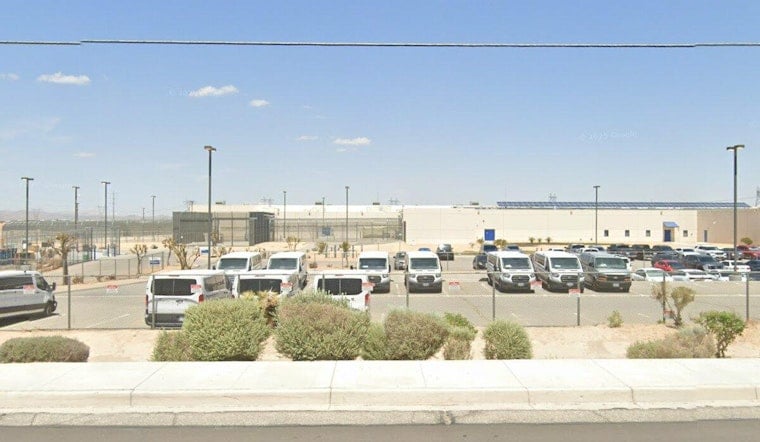
A federal judge has cleared the way for a jury trial against GEO Group, the private company that runs the Adelanto ICE Processing Center, over the 2021 death of a detainee named Martin Vargas Arellano. U.S. District Judge John W. Holcomb ruled that GEO Group owed Vargas Arellano a duty of care while he was held at the San Bernardino County facility, and found that a jury could conclude the company's conduct was a substantial factor in the stroke that ultimately killed him.
Vargas Arellano, who was 55 and suffered from diabetes, liver disease, high blood pressure, cellulitis, and severe psychiatric illness, was detained at Adelanto when COVID-19 tore through the facility in December 2020, according to PunchUp. He was hospitalized after contracting the virus, developed pneumonia, underwent brain surgery, and was ultimately left brain-dead and comatose before he died. Located roughly 85 miles northeast of Los Angeles, Adelanto is one of Southern California's largest immigration detention facilities, with capacity to hold up to 1,940 civil detainees, as Hoodline has reported.
A Duty of Care GEO Group Allegedly Ignored
GEO Group operates Adelanto under contract with ICE to provide housing, guards, and escorts, and it delivers medical services through a subcontractor, Wellpath LLC, which the wrongful-death complaint names as a co-defendant facing negligence and detention-standard claims, according to the National Immigration Project. The complaint alleges Vargas Arellano contracted COVID-19 directly from a Wellpath medical staff member. GEO Group was required to screen every staff member entering the facility for COVID-19 under ICE pandemic rules and CDC guidance, and symptomatic or exposed workers were supposed to be refused entry, with asymptomatic staff who had been exposed permitted inside only when necessary to keep critical infrastructure running.
GEO Group and Vargas Arellano's side agree that symptomatic or COVID-positive employees and subcontractors worked at facilities where he was held. Court findings cited in the case indicate GEO Group allowed symptomatic staff into the detention center at least 47 times. Attorney Khaled Alrabe said sick staff continued entering the facility even as Vargas Arellano was near numerous GEO Group employees and subcontractors before becoming infected, per the same PunchUp account. GEO Group has disputed the precise nature of its employees' and subcontractors' interactions with Vargas Arellano and has argued that Vargas could not prove its conduct caused his father's illness and death.
The case unfolded amid a nationwide outbreak in immigration detention: according to the U.S. Government Accountability Office, ICE had confirmed over 10,000 detainee COVID-19 cases and recorded 8 deaths as of March 2021. According to an ICE-posted Nov. 5, 2021 inspection report by The Nakamoto Group, Inc., the facility nurse reported that no detainees were positive for COVID-19 during that inspection.
A Year of Delay Before a Deathbed Release
The legal fight over Vargas Arellano's confinement began long before his death. After a March 30 filing, U.S. District Judge Terry J. Hatter ordered the emergency release of Vargas Arellano and five other medically vulnerable Adelanto detainees because of COVID-19 risks, according to the ACLU of Southern California. But ICE kept him incarcerated for another year after his initial housing placement fell through. He asked to be released during the pandemic because, Alrabe said, he knew the risks the virus posed to someone with his health.
ICE finally released Vargas Arellano from custody on March 5, 2021. He died three days later, on March 8, 2021, from what the complaint describes as COVID-related illness. A federal judge appointed a special master that March to investigate his death after finding that federal officials appeared to actively conceal his comatose condition and secret release from both his legal counsel and the court, according to the National Immigration Project. His attorney reportedly only learned he had been released to a hospital through secondhand reports after filing a missing person report.
Internal Reviews Found a Pattern of Avoidance
Vargas Arellano's deathbed release became part of the subsequent litigation over his death, the National Immigration Project noted. In 2021, ICE modified its policy to require possible reviews of post-release deaths within 30 days. In June, ICE rescinded the 30-day reporting requirement, reverting to rules that shield post-release deaths from mandatory federal reporting, as the Los Angeles Times reported. Civil rights advocates warned the rollback incentivizes releasing dying detainees to avoid official death counts.
GEO Group's Immunity Bid Rejected
GEO Group sought immunity under the federal Public Readiness and Emergency Preparedness Act, a law that generally shields healthcare providers and contractors from liability during public health emergencies. PunchUp reported that Holcomb rejected GEO Group's PREP Act immunity motion. GEO Group had claimed Vargas Arellano's stroke was an inevitable result of his pre-existing health conditions, but Holcomb found evidence could support a jury finding otherwise and denied the company's motion to end the case before trial, leaving causation disputes for a jury to decide.
The judge's ruling also allowed Martin Vargas to continue pursuing punitive damages, citing genuine factual disputes over the conduct of James Janecka, Adelanto's former warden who later became GEO Group's Western Region Vice President. Janecka served as facility administrator during the 2020 outbreak before his promotion to executive leadership, connecting corporate decision-making directly to the punitive damages question that will go before the jury.
Federal Government Already Settled Its Share
The lawsuit originally named the federal government alongside GEO Group and Wellpath, but Martin Vargas reached a settlement with the United States over claims brought under the Federal Tort Claims Act regarding ICE's oversight lapses at Adelanto. That settlement led to the government's dismissal from the case, leaving GEO Group and Wellpath as the sole remaining trial defendants. The family has waited more than five years for the case to reach trial, per PunchUp's report.
Attorney Stacy Tolchin said GEO Group will be held accountable for failing to follow federal detention standards meant to protect vulnerable detainees, and said the case sets a precedent for future actions against private prison companies. The lawsuit is widely seen as a major test of California's Assembly Bill 3228, enacted in September 2020, which created a state right allowing individuals to sue private detention facility operators for failing to meet contractual standards of care — the first law of its kind in the country, according to the LPE Project. PunchUp reported that it contacted GEO Group and ICE for comment. A jury will now decide the case.




