

























































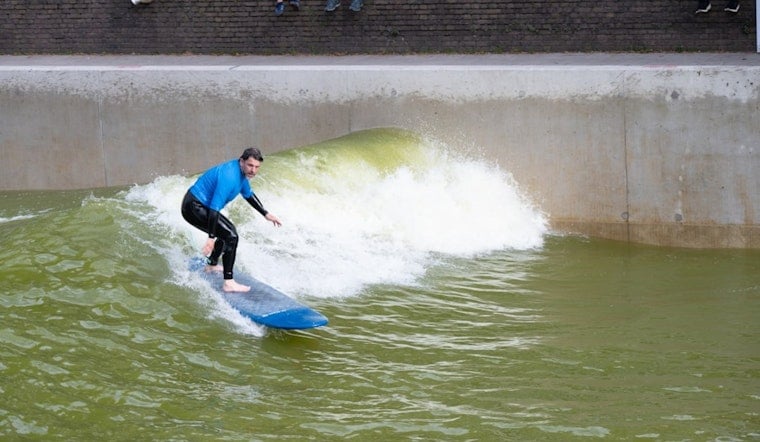
Surfers at artificial wave pools have long faced a familiar tradeoff: whatever wave size and shape the machine is programmed to produce that session is the one everybody gets, whether they are a beginner or an expert. A new piece of software called the Mixtape is aiming to end that compromise by identifying individual surfers in the lineup and calling up the specific wave each one picked ahead of time.
The system comes from a partnership between Endless Surf, the wave-pool technology arm of water park manufacturer WhiteWater West, and Flowstate, a company whose AI-powered computer vision platform can identify surfers without wearables, according to the New York Post. The two companies have been working on the collaboration for more than two years, per the same report. Flowstate's foundation model was trained on more than 25 million waves across six countries and five different wave-making technologies, according to Surf Park Central. The platform analyzes and scores rides.
How the Mixtape Actually Works in the Lineup
Once a surfer pre-selects their own wave, Flowstate's computer vision connects with the wave-generation software to deliver that specific ride after identifying them in the lineup, per the Post's reporting. The Mixtape factors in the skill levels of everyone in a group and can serve up different wave types simultaneously, letting friends and family share the same session while each person gets a wave suited to their ability. That means a beginner and an expert can paddle out together without one of them being bored or overwhelmed.
Luke Wallace said the Mixtape changes the dynamic that previously forced friends and family to want the same type of wave, according to the Post. Paul Chutter, also quoted in the report, said the Mixtape combines advanced technologies to make Endless Surf sessions more personalized. The collaboration additionally includes AI-powered coaching and multi-angle surfing capture, and the companies have said they plan to build more joint products going forward.
The Hardware Behind the Software
Endless Surf's wave-making relies on pneumatic caisson technology: compressed air chambers lining the back wall of a lagoon that displace water to generate programmable, ocean-like waves roughly every 10 seconds without any submerged mechanical plows, according to National Geographic UK. The lagoons are built in a patented heart-shaped design that lets advanced surfers ride the central peak while beginners work the shoreline, using recycled energy from the same wave, per Endless Surf's own technology materials.
WhiteWater West, the Canadian manufacturer that owns and develops Endless Surf, was founded in 1980 and previously engineered early hydraulic wave systems including Disney's Typhoon Lagoon in 1989, according to WavePoolMag's reporting on the company's history. The world's first operational Endless Surf facility, O2 SURFTOWN MUC near Munich, opened in August 2024 and generated more than 3.5 million waves in its first two years across a 34-caisson lagoon, WavePoolMag reported. In the United States, the discussion also turns to The Point Surf Park in Fellsmere, Florida.
Flowstate's Reach Beyond Endless Surf
Before teaming with Endless Surf on wave personalization, Flowstate described its AI camera and video capture platform in its own materials. Flowstate also offers Flowstate Game Modes, a gamification and rebooking engine with points-based leaderboards for surf-park operators, according to Surf Park Central.
The Post notes that not every U.S. wave pool uses Endless Surf's caisson system. DSRT Surf, a 5.5-acre lagoon in Palm Desert set to open in late summer 2026, instead uses North America's largest Wavegarden-powered surf lagoon, capable of producing up to 1,000 consistent, ocean-like waves per hour and designed to generate multiple wave types at once, serving surfers from beginners to experts, per the same report. The Palm Desert project has drawn its own scrutiny over water use in the desert: developers there have said the 7-million-gallon lagoon requires roughly 25 million gallons of water annually because of evaporation, filtration, and maintenance, and implemented a Turf for Surf initiative to remove non-essential grass from the adjacent Desert Willow Golf Resort to offset that draw, according to the Los Angeles Times.
A Booming Industry Chasing Repeat Customers
The push for smarter, more personalized wave technology comes amid commercial interest in landlocked wave venues. That interest has been visible closer to home too: Hoodline previously covered plans for an inland Draper surf park and construction underway at an Oceanside surf lagoon site. For operators, tools like the Mixtape represent a new session product they can market directly to guests, giving wave parks a fresh pitch beyond just building bigger lagoons.





