

























































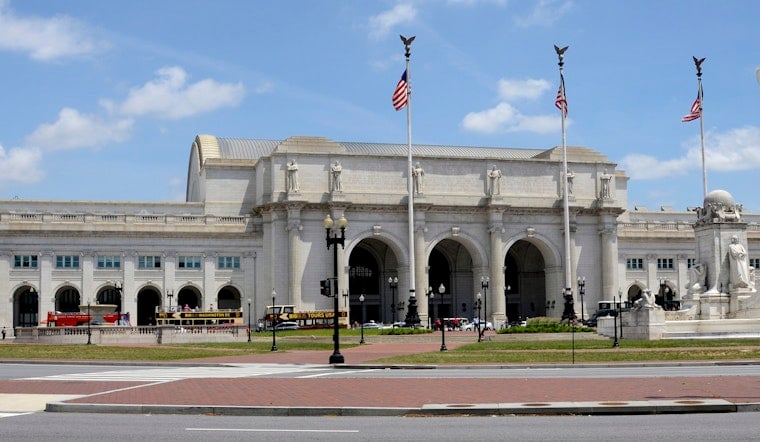
Amtrak will shut down the century-old First Street Tunnel beneath Capitol Hill for nine straight days this October, cutting off direct rail service between Washington Union Station and points south and forcing thousands of daily commuters and intercity travelers onto buses instead. The outage begins after the close of service on October 16, 2026, and runs until service resumes on October 26, meaning anyone riding Amtrak or Virginia Railway Express trains south of D.C. will need a new plan for more than a week.
The closure, which Amtrak is calling a “Pause for Progress,” will make Alexandria Union Station the northern terminus for trains arriving from the south, according to The Alexandria Brief. Amtrak Virginia will run one round trip between Norfolk and Alexandria and one between Roanoke and Alexandria, with three dedicated round-trip shuttle buses bridging the gap between Alexandria and Washington Union Station. As WTOP reports, Amtrak says the work is designed to address switch and crossover limitations that have long constrained the corridor.
Buses Fill the Gap for Long-Distance Riders
Beyond the Alexandria shuttle, Amtrak will run direct express buses connecting Washington, D.C., straight to regional Virginia destinations including Charlottesville, Roanoke, Lynchburg, Virginia Beach, Norfolk, Newport News and Williamsburg, per Amtrak's own announcement. The North Carolina-sponsored Carolinian train will also be truncated, running by rail only between New York and Washington, with a bus bridge covering the remainder of the trip south into North Carolina, the Alexandria outlet notes. WTOP's report adds that Amtrak will help affected riders with rebooking options and alternative travel solutions, and that the agency expects significant service reductions and train cancellations throughout the outage.
For Northern Virginia commuters, the disruption lands hardest during five specific workdays: October 19 through 23. That's because the shutdown affects A-Interlocking, the junction that routes all VRE traffic on both the Fredericksburg and Manassas lines into Washington Union Station, according to the same Alexandria Brief report. Daily commuters on those lines will need to navigate the same bus bridges terminating at Alexandria that long-distance Amtrak riders are relying on.
Why the Tunnel Needs Nine Days of Total Shutdown
The First Street Tunnel is not a modern piece of infrastructure. Built between 1904 and 1906 by the Washington Terminal Company, the 4,033-foot double-track tunnel connects Union Station's lower-level tracks to the rail lines heading toward Virginia, according to background compiled on Wikipedia. It also lacks overhead catenary wiring, which means southbound Amtrak trains arriving from the electrified Northeast Corridor have to uncouple their electric locomotives and switch to diesel before proceeding through the tunnel, a technical bottleneck baked into the corridor's design.
Amtrak says existing switches and crossovers inside the tunnel are beyond their service life and currently require a 10-mph speed restriction, per Amtrak. During the nine-day closure, crews will replace those aging switches and crossovers, rehabilitate the tunnel track base, and install modern electric switch systems meant to eliminate that speed cap for good. WTOP reports the work is intended to prevent larger, unplanned service disruptions down the road and to improve reliability along the Northeast Corridor and into the Southeast — the same rationale Amtrak has used to justify running the shutdown all at once rather than in phases inside the tunnel's cramped, century-old confines.
A Rough Month for Rail Riders Up and Down the Corridor
The timing is notable. The First Street Tunnel outage overlaps directly with Phase 2 of Amtrak's Portal North Bridge track cutover in New Jersey, running October 9 through November 16, 2026, which requires single-tracking across the Hackensack River and forces a 62% reduction in Amtrak and NJ Transit service along the Northeast Corridor, according to Trains. That means mid-Atlantic riders could face major disruptions on both ends of the corridor at nearly the same time.
It's also arriving during a stretch of record demand. Amtrak Virginia carried an all-time high of 1,451,276 passengers in state fiscal year 2025, a 4.8% increase over the prior year, according to Railway Supply. The tunnel rehabilitation ties into a much larger effort: Virginia's $5 billion “Transforming Rail in Virginia” initiative, which includes a $2.3 billion project to build a new two-track passenger rail bridge over the Potomac River aimed at doubling rail capacity between D.C. and Virginia by 2030. Until that bridge and related projects are finished, the region's only rail link south of Union Station remains this one narrow, non-electrified tunnel — a vulnerability Hoodline previously reported on after a signal outage stalled trains at Union Station in July.





