

























































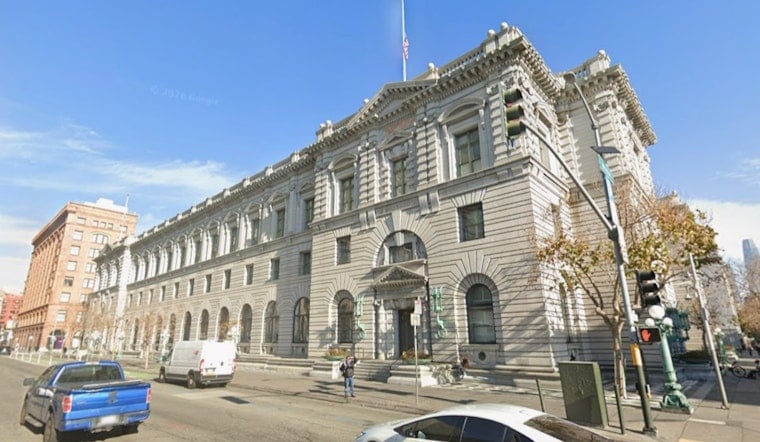
A federal appeals court ruled Friday that prediction markets like Kalshi are subject to state gambling laws when it comes to sports-event contracts, handing state regulators a major win and rejecting the company's claim that its offerings are federally protected financial swaps. The unanimous three-judge panel found that Kalshi's sports contracts function as sports bets rather than derivatives, meaning states retain the power to regulate them.
The ruling, first reported by The New York Times, came from the Ninth Circuit Court of Appeals and rejected Kalshi's request for relief against Nevada's gambling laws. Circuit Judge Ryan Nelson wrote that Kalshi's sports-event contracts were not swaps because they were, in substance, sports bets — a distinction that strips away the federal preemption Kalshi has relied on to argue the Commodity Exchange Act shields it from state oversight. The Commodity Exchange Act grants federal preemption from state laws for qualifying swaps, and the entire legal fight has centered on whether prediction markets are offering exactly that.
Nevada Attorney General Aaron Ford, whose office sued Kalshi in February 2026 over unlicensed operations, said his office was proud to have defended the state's authority. Sports betting, he said, does not become something else simply because a company calls it an event contract. The Commodity Futures Trading Commission currently oversees the prediction-market industry, and Kalshi has leaned on that federal relationship as the basis for its legal strategy nationwide.
Sports Contracts Split From Election Betting Fight
The court's rejection of federal preemption applied specifically to sports-event contracts, but it sent the separate question of election-event contracts back to a district court in Nevada for further consideration, leaving that fight unresolved. Election markets face distinct statutory scrutiny tied to public interest and political integrity concerns under the Commodity Exchange Act, a wrinkle that keeps a major slice of Kalshi's business in legal limbo even after Friday's decision.
In a concurring opinion, U.S. Circuit Judge Kenneth K. Lee stressed that police power over sports gambling has traditionally belonged to state governments and Indian Tribes, according to a summary from Holland & Knight. That framing reinforces Tribal gaming sovereignty against federal preemption claims, a point with real financial stakes given that gaming compacts generate revenue for Indigenous communities under state-tribal agreements.
The Ninth Circuit's decision did not stop with Kalshi. It consolidated the company's appeal with separate cases brought by Robinhood Derivatives and the North American Derivatives Exchange, rejecting federal preemption claims across all three exchanges, as Courthouse News reported. The ruling therefore lands on the broader prediction-market and retail-derivatives industry, not just on one company's Nevada dispute.
Markets React, Circuit Split Grows
Wall Street responded almost immediately. Shares of traditional sportsbook operators DraftKings and Flutter Entertainment jumped 6% to 7% following the ruling, while American Gaming Association CEO Bill Miller praised the decision as a major victory for state consumer protections, according to the same Courthouse News account. Commercial sportsbooks pay substantial state taxes and licensing fees that prediction markets had largely avoided, a disparity regulators have pointed to for months.
The Ninth Circuit's ruling creates a direct circuit split with the Third Circuit, which ruled in April 2026 that Kalshi's sports-event contracts were swaps under the Commodity Exchange Act — the opposite conclusion. That conflict significantly raises the odds the U.S. Supreme Court will eventually step in, and the Second, Fourth, Sixth and Seventh circuit courts of appeals are also weighing the same question of federal versus state control over prediction markets, per the Times report.
Kalshi general counsel Zach Fulton said the court erred and invented a new exception to the Commodity Exchange Act, adding that the circuit split calls for resolution by the Supreme Court. Kalshi spokesperson Dani Lever said the company believes CFTC regulations do not prohibit sports contracts, and Kalshi has said it plans to seek further review of Friday's decision.
States, Tribes Say Billions Are at Stake
More than 20 states are now involved in litigation over whether prediction markets are subject to state gambling laws, according to the Times. In July 2026, 44 states signed a letter arguing that sports bets are not swaps, futures or other derivatives, and separately argued that the CFTC lacks statutory authority to regulate sports bets at all.
The American Gaming Association estimated in May 2026 that states and Tribes have lost more than $1 billion in gaming tax revenue because federally regulated prediction markets have offered nationwide sports-event contracts without paying local gaming taxes, according to the Las Vegas Review-Journal. That framing traces back to the U.S. Supreme Court's 2018 decision striking down the federal ban on state sports betting, which established that states and Tribal nations hold exclusive authority to legalize and regulate sports wagering — a post-2018 framework that generated $18.09 billion in state gaming taxes in 2025 alone, per the American Gaming Association.
Age has also become part of the argument in Washington. A CNN analysis cited in congressional findings from the office of Representative Steven Horsford found that young adults aged 18 to 21 — who are legally barred from traditional gambling in most states — traded an estimated $5.4 billion on Kalshi during 2026. Horsford, a Nevada Democrat, and Representative Mark Amodei, a Nevada Republican, introduced the bipartisan Prediction Markets Are Gambling Act in July 2026 to amend the Commodity Exchange Act and explicitly bar federal prediction markets from offering sports betting or casino-style contracts, according to The Nevada Independent. Companion legislation was introduced in the Senate in March 2026 by Senators Adam Schiff and John Curtis.
A Pattern of State Pushback
Friday's ruling is the latest in a string of setbacks for Kalshi across the country. In July, Kalshi agreed to restrict Nevada users from wagering on sports, elections and entertainment contracts, and that same month U.S. District Judge Analisa Torres in the Southern District of New York denied Kalshi's bid for a preliminary injunction against state enforcement, a case Hoodline covered in a New York courtroom showdown. Massachusetts courts temporarily halted Kalshi's sports offerings back in January, and Maryland's election administrator opened a probe in July citing a state code provision that bans wagering on election outcomes.
Kalshi has drawn scrutiny beyond the courts, too. Baltimore sued the company and rival Polymarket this month over allegedly running unlicensed sportsbooks, while the New York City Council has been probing both platforms over advertising tactics that critics say target young users. The legal battle underlying all of it remains the same: whether prediction markets are offering federally protected financial swaps, or simply sports bets by another name. For now, at least on the sports side of that question, the Ninth Circuit has sided with the states.




