

























































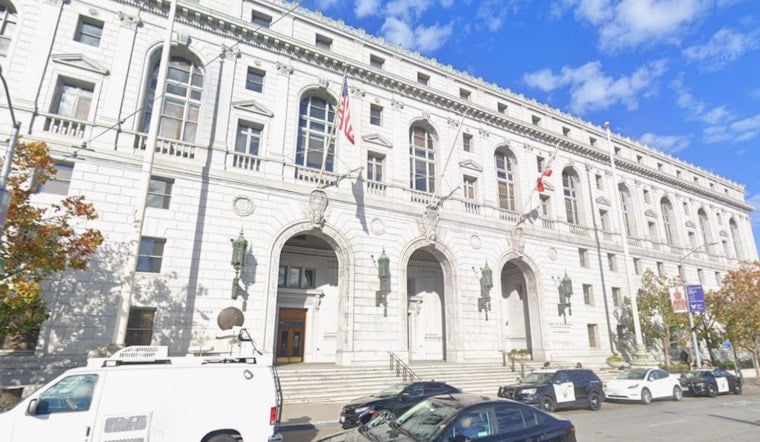
California's First District Court of Appeal ruled yesterday that Sonoma County did not violate the Public Trust Doctrine when it loosened water-well permitting limits in 2023, but the same panel found the county skipped the environmental review state law requires before adopting those rules. The dual verdict means county officials must now study how expanded groundwater pumping affects fish in the Russian River and its tributaries before the new well limits can stand unchallenged.
The decision, first reported by the San Francisco Chronicle, upheld the legislative process Sonoma County used to write its 2023 well ordinance. Associate Justice Tara Desautels wrote that the county gathered information, engaged the public, balanced conflicting policy concerns and fashioned a compromise, rejecting objections raised by plaintiffs California Coastkeeper Alliance and Russian Riverkeeper.
Wells Ordinance Survives a Public Trust Fight
Sonoma County's 2023 ordinance increased limits on well pumping from the Russian River and other waterways, a move officials said was needed to boost drinking-water supplies during summertime droughts. Justice Desautels wrote that Sonoma's regulation of well permits carries with it an affirmative duty to take the public trust into account, though she found the county had satisfied that duty.
The court held that Sonoma County was entitled to weigh the economic effects of the higher pumping limits, along with their impact on reasonable property use — including water for human health and habitation. County officials had determined the increased pumping would cause no harmful impact, a finding the appellate panel's ruling left undisturbed on public trust grounds.
County Must Still Complete a Formal Environmental Study
The county's win stopped there. Desautels wrote that the current ordinance at best both strengthens and weakens environmental protections, and the court rejected Sonoma County's argument that its permit approval and denial procedures were exempt from environmental review. As reported by Courthouse News, Desautels noted in a footnote that the panel expressed no opinion on how the county's environmental compliance should proceed, or whether temporary well permit moratoriums remain appropriate in the meantime.
Sonoma County was ordered to prepare a new environmental report under state environmental review requirements. If the ruling stands, the case returns to Sonoma County Superior Court, now overseen by Judge Jane Gaskell after Judge Bradford Demeo's retirement.
Precedent Now Binds Every California County, Advocates Say
Sean Bothwell of California Coastkeeper Alliance said the appellate decision "now binds every county in California," according to the Chronicle's report. The ruling builds on a 2018 case out of Siskiyou County, in which the Third District Court of Appeal required officials there to weigh how well-pumping permits could harm the Scott River — a decision the California Supreme Court later declined to review. Per Somach Simmons & Dunn, that same 2018 ruling also established that the state's Sustainable Groundwater Management Act does not preempt or supersede the older, common-law duties counties owe under the Public Trust Doctrine.
Don McEnhill of Russian Riverkeeper told the Chronicle that well-water pumps can lower the surface of waterways and harm or kill steelhead trout. He added that the ruling provides a path for other counties to issue well permits and avoid harm to imperiled species. The Russian River watershed provides spawning and rearing habitat for three federally protected fish species — Central California Coast coho salmon, California Coastal Chinook salmon and Central California Coast steelhead trout, per Courthouse News.
What Happens Next for Sonoma County's Wells
Sonoma County could still seek review from the California Supreme Court if the appellate ruling is not deemed final, according to the Chronicle's report. Per Permit Sonoma, the Board of Supervisors first imposed a moratorium on new well permits in October 2022 to form a Technical Advisory Committee, a process that culminated in the amended ordinance adopted in April 2023. A trial court order issued in December 2024 had temporarily halted all non-emergency well permitting countywide, before the First District Court of Appeal granted the county a stay in March 2025 that let Permit Sonoma resume issuing permits while the appeal was pending.
Sonoma County maintains more than 45,000 water wells in unincorporated areas — the highest per-capita count of any county in California — and issued an average of 320 new well permits annually between 2017 and 2022, per Courthouse News. The stakes extend well beyond rural well owners: Sonoma Water, the county's water agency, relies on Russian River surface flows and connected groundwater to supply drinking water to more than 600,000 residents across Sonoma and Marin counties, steering some of that supply south to Marin.
Broader Efforts to Protect the Russian River
In January 2026, eleven California environmental law professors represented by the Stanford Environmental Law Clinic filed a brief in the case arguing that counties share a constitutional and fiduciary duty with the state to protect public trust waters. The brief examined decades of California case law to argue against exempting local well permitting from public trust obligations.
Sonoma County has also pursued restoration work along the same river. Hoodline reported last year that the county approved a $25 million floodplain restoration project spanning 358 acres near Windsor, designed with Russian Riverkeeper and NOAA Fisheries to rebuild coho salmon and steelhead habitat while boosting groundwater recharge.





