

























































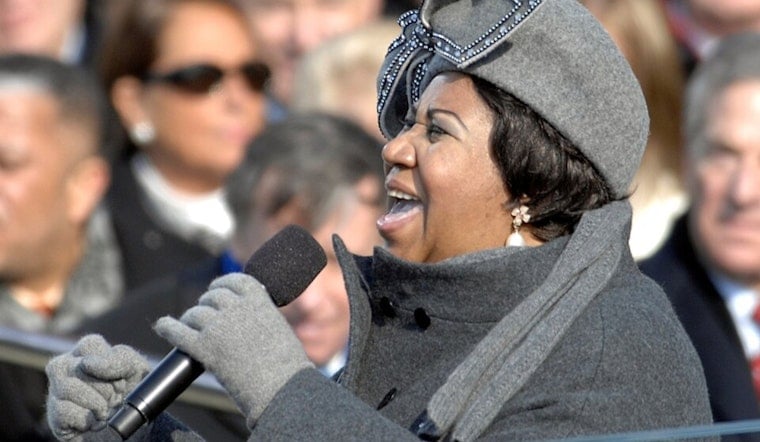
Eight years after Aretha Franklin's death, her four sons are still fighting — not over real estate this time, but over unreleased music and video recordings, personal belongings, and even who controls the security cameras watching over storage units packed with the Queen of Soul's possessions.
The latest round of family friction was detailed in a report from Detroit Free Press reporter Brian McCollum, which laid out how disputes have shifted away from the big-ticket items already settled in court and toward smaller, more personal battles over archival material and physical storage of Franklin's belongings. Those disagreements are unfolding years after the core legal fight over which of two competing handwritten wills should govern her estate was resolved.
That underlying legal fight traces back to July 2023, when an Oakland County Probate Court jury in Pontiac ruled that a four-page handwritten document found under a couch cushion in Franklin's home was her legally valid will, according to Forbes. That 2014 document overrode an earlier 2010 will that had been discovered locked in a cabinet, and it now governs how the singer's estate is managed — including the disputes over storage units and unreleased recordings playing out now.
How the Will Fight Reshaped the Family's Holdings
Michigan law allowed the couch-cushion document to stand as valid without witnesses or notarization because it was dated, signed by Franklin, and its material terms were written in her own hand — a legal category known as a holographic will, Forbes reported. That statute is what allowed a note found stuffed into furniture to ultimately govern an estate worth tens of millions of dollars.
The practical consequences of that ruling followed a few months later. In November 2023, Probate Judge Jennifer Callaghan formally awarded Franklin's real estate holdings based on the 2014 will, giving her son Kecalf Franklin the singer's primary Bloomfield Hills residence — valued at more than $1.1 million — while her son Edward Franklin received another suburban property, according to WDET 101.9 FM. Franklin's eldest son, Clarence Franklin, who has special needs and lives under legal guardianship in an assisted living facility, was accommodated through a separate settlement between his brothers and did not take part directly in the will trial, Forbes noted.
A Tax Battle That Froze Everything for Years
The real estate and possessions fights only became possible once a far bigger financial obstacle was cleared. The estate fully paid off a $7.8 million back-tax debt owed to the Internal Revenue Service in June 2022 via a cashier's check, according to EisnerAmper. That settlement resolved a debt that had blocked Franklin's four sons from receiving cash royalty distributions for nearly four years after her 2018 death. Unlike the estate tax battles fought by Prince and Michael Jackson, which centered on federal disputes over the valuation of post-mortem publicity and image rights, Franklin's fight was over unpaid personal income taxes spanning 2010 through 2017, Forbes reported.
The cost of years of litigation has taken a visible toll on the estate's finances. Public court filings from March 2023 showed the estate generated $3.9 million in income over a 12-month period while incurring an equivalent amount in expenses, including more than $900,000 paid in legal fees to multiple law firms, per CBS News. Even so, both the 2010 and 2014 handwritten documents agreed on one core point: Franklin's four sons should equally share all income generated by her music copyrights and royalties, CBS News reported.
Leadership Turmoil Set the Stage for Years of Court Oversight
The family discord over Franklin's estate is not new. Franklin's niece, Sabrina Owens, who originally served as the estate's personal representative, resigned in early 2020 amid intense family acrimony, prompting the probate court to appoint Detroit attorney Reginald Turner as interim executor, according to CBS News. That leadership vacuum contributed to years of prolonged court supervision that continues to shape how disputes over the singer's belongings are handled today.
Much of the chaos traces back to how unprepared Franklin's estate was when she died in August 2018 at age 76 without a formal estate plan. Early court filings from 2020 revealed that her home contained nearly $1 million in uncashed physical checks at the time of her death, according to Talbot Law Group, underscoring how little formal financial organization existed during her lifetime. That same lack of planning is now echoing in the current fight over who controls the storage units housing her unreleased recordings and personal effects — a dispute that, unlike the resolved tax debt and real estate transfers, remains unsettled.





