

























































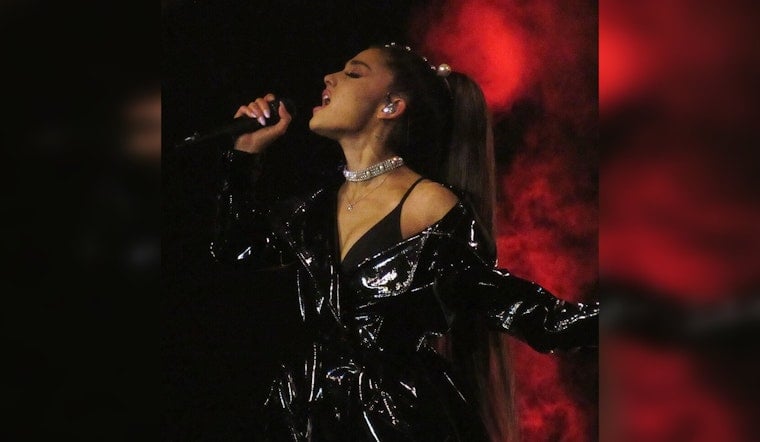
Ariana Grande is turning to Santa Monica Superior Court in an effort to unmask the hackers accused of stealing and selling her unreleased songs, videos and photographs for years. Court papers filed by her lawyers describe a campaign that allegedly began in 2019 and stretched through 2024, targeting not the singer herself but the photographers and producers who worked closest to her.
A John Doe Lawsuit Aimed at Anonymous Hackers
The lawsuit, filed July 27 in Santa Monica Superior Court, does not name any specific defendants because the perpetrators remain unidentified, according to court filings reported by MyNewsLA.com. Instead, Grande-Butera's attorneys are asking Los Angeles County Superior Court Judge Mark H. Epstein for an expedited discovery order that would let them serve third-party subpoenas on internet platforms and other entities whose services were allegedly used to disseminate and sell the stolen material. The subpoenas would compel those platforms to hand over information and data that could help identify and unmask the unknown defendants, per the filing.
According to the pleadings, unknown perpetrators hacked the personal digital accounts and devices of Grande's photographers and producers using stolen login credentials and phishing schemes, stealing her private, unreleased creative content in the process. That stolen material reportedly includes masters, demos, recording-session footage and photographs. Her attorneys argue that further informal investigative efforts would be fruitless, making the subpoenas necessary to move the case forward.
Five Years of Breaches, Detailed in Court Filings
The court filings lay out a chronological string of breaches, according to CBC: a 2019 compromise of a photographer's Dropbox account, a 2020 hack of a producer's phone that leaked unreleased studio recordings, and a 2024 phishing scheme in which hackers spoofed a photographer's Gmail account and web domain to deceive a digital technician. The pattern shows a sustained effort to breach Grande's creative circle rather than a single isolated incident.
The financial scale of the theft came into sharper focus in the same filings. Hackers stole and leaked 45 unreleased songs belonging to Grande in 2023 alone, with the material monetized on the dark web, The Guardian reported. Among the stolen tracks named in court documents were songs titled “Fantasize,” “That Bitch Is Mine” and “White Tee.”
Grande Warned Leakers Years Before Filing Suit
Grande's frustration with leakers surfaced publicly well before the lawsuit was filed. During a February 2024 appearance on the Zach Sang Show, she condemned the online circulation of “Fantasize” — a demo she co-wrote with Max Martin as a '90s girl-group parody for an unproduced TV project — warning “thieves, pirates, and crooks” that she would see them in prison, according to That Grape Juice.
A source close to Grande told PEOPLE that the lawsuit is meant to do more than just identify the individuals responsible for her losses. The goal, according to that source, is to set an industry-wide deterrent for artists who face dark-web theft of unreleased music and private media — a threat that legal commentary published in July 2026 says increasingly starts with freelance contractors. Photographers, sound engineers and video editors are frequently targeted by phishing attempts because they offer hackers a way to bypass record-label network security, per that commentary.
How California's Subpoena Process Works
Filing as a John Doe lawsuit is a recognized legal strategy in California for pursuing anonymous online actors. Under the state's civil procedure rules, plaintiffs can petition courts for expedited discovery to issue third-party subpoenas compelling internet service providers and platforms to produce IP address logs and subscriber data, as explained by Techdirt. It remains an open question whether dark-web transactions involving cryptocurrency can ultimately be traced back to real individuals without help from federal law enforcement.
There is precedent for such tracing succeeding. In October 2022, a UK court sentenced 23-year-old hacker Adrian Kwiatkowski to 18 months in prison after an international investigation by Manhattan prosecutors and London police found he had hacked cloud accounts to steal and sell more than 1,200 unreleased songs from artists including Kanye West, Frank Ocean, Ed Sheeran and Lil Uzi Vert for cryptocurrency, Complex reported at the time.
A Judge With Celebrity Case Experience
Judge Epstein, who is weighing Grande's discovery motion, has previously handled other notable entertainment disputes in Los Angeles County, including a 2024 dancer harassment suit against Lizzo and a 2026 financial fraud action involving Priscilla Presley, according to RadarOnline. This is not Grande's first turn in California or federal intellectual property court; she previously defended against a 2019 copyright action tied to visual artwork depicted in her “7 Rings” music video.
The filing arrives as Grande winds down a demanding stretch on the road. She recently closed out the U.S. leg of her Eternal Sunshine Tour with final Chicago shows before a break, before heading to London for her last performances, after which she scheduled an extended pause from public-facing work, according to earlier Hoodline reporting. For now, her legal team's focus has shifted from the stage to the courtroom, where the fight to identify the people behind years of stolen material is just getting underway.





