

























































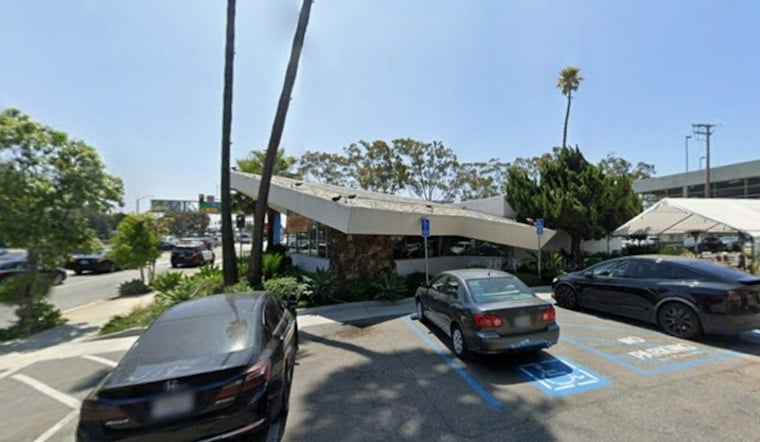
The diner Mel's Drive-In could soon disappear from Lincoln Boulevard, with plans filed to raze the restaurant and its parking lot in favor of an eight-story building packed with 138 apartments and ground-floor shops. The proposal targets 1670 Lincoln Boulevard in Santa Monica, a site long anchored by the retro burger spot, and would mark one of the more significant redevelopments along the corridor in recent memory.
Mel’s traces its roots to 1947, when Mel Weiss and Harold Dobbs opened their first drive-in in San Francisco. The Santa Monica restaurant occupies a building that opened in 1959 as the Penguin, near the historic end of Route 66. The company’s own history describes the site as part of Mel’s later expansion, tying the proposed demolition not only to a local restaurant but also to the brand’s longer California drive-in legacy. Mel’s history of the restaurant dates its founding and the Santa Monica building.
ValueRock Realty, which owns the property, recently filed an application for the project. The filing calls for razing the diner and its parking lot to make way for 138 studio, one-bedroom and two-bedroom apartments alongside 5,667 square feet of ground-floor commercial space. Plans also call for semi-subterranean parking for 123 vehicles, a rooftop deck and a central courtyard, with Ottinger Architects handling the design.
Fourteen of the proposed apartments would be set aside for very low-, low- and moderate-income households. In exchange, ValueRock is requesting density bonus incentives that would allow a larger building than zoning rules would otherwise permit, along with waivers to other land-use regulations, per the same outlet's report.
The requested density bonus and land-use waivers are part of a state-backed framework Santa Monica implements in its zoning code. The city’s ordinance says the program is intended to promote deed-restricted affordable housing and to carry out the city’s housing policies, while establishing procedures under California’s State Density Bonus Law. In practical terms, the local rules outline how the program is administered. Santa Monica’s density-bonus ordinance describes that purpose and its relationship to state law.
The proposal arrives amid a citywide push to plan for substantially more housing. Santa Monica’s adopted 2021–2029 Housing Element says the city must demonstrate zoning capacity for 8,895 homes during the cycle, with 69% of that capacity intended for affordable housing. That figure is a planning requirement—not a count of homes already built—and helps explain why projects proposing apartments and income-restricted units are part of the city’s housing debate. The city’s Housing Element announcement sets out the target.
A Modern Podium Rising Where Burgers Once Flipped
Renderings described in the filing show a modern podium-type development, a design style now common across new Westside apartment construction. The shift would replace the Lincoln Boulevard restaurant with housing that blends retail space at street level with multiple floors of residential units above a parking podium.
The proposal would replace a commercial property with a denser residential and mixed-use development along Lincoln Boulevard.
A Nearby Lincoln Boulevard Address
The proposed 1670 Lincoln site is near 1650 Lincoln Boulevard.
Together, the two addresses locate the proposal on Lincoln Boulevard, where the diner could be replaced by a new development.





