

























































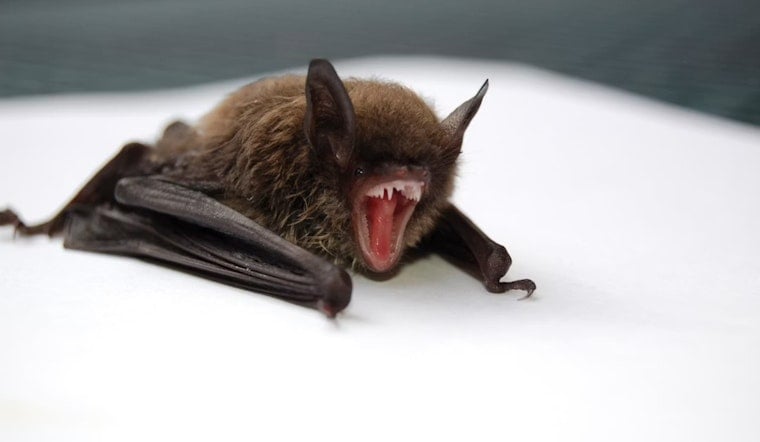
Amanda Griffin found multiple dead bats scattered across her driveway in central Ohio in early June, just the latest resident to stumble onto a growing and unexplained mystery. Across central and southwestern Ohio, wildlife officials say unusually large numbers of baby bats are turning up sick, dying or dead for the second consecutive year, and nobody yet knows why.
The Ohio Division of Wildlife has confirmed the deaths are concentrated in southwestern and central Ohio, according to NBC4 WCMH-TV. Scientists have documented between five and more than 30 sick or dying baby bats at a single colony location, and the agency says bats tested so far this year have come back inconclusive. Rabies tests on the animals have come back negative, ruling out one of the more feared possibilities, though state law still requires mandatory 24-hour reporting and lab testing for any animal involved in potential human exposure, per the Ohio Department of Health, which notes Ohio has not recorded a human rabies case since 1970.
A Second Summer of Unexplained Losses
The Ohio Division of Wildlife is now testing whether pesticides or herbicides could be contributing to the deaths, according to the same NBC4 report. Scientists have not pinpointed what is actually driving the mass die-off, and the division says it is formulating a plan for further testing next year if the deaths continue. It is a distinct puzzle from White-nose syndrome, the disease already devastating Ohio's bats, because that illness strikes adult bats during winter hibernation, while this die-off is hitting flightless pups during summer maternity season.
Gwen Hoogendoorn said the uncertainty has left rehabilitators without answers for the people calling in. She reported that an unfamiliar disease has appeared over the past two or three years and appears to be progressing, and she said the organization feels helpless and wants to both save bats and help the public understand what is happening. David Donahue said wildlife officials collect samples from affected colonies and contact the state for testing when reports come in. The Ohio Wildlife Rehabilitators Association, which Hoogendoorn represents, promotes wildlife conservation through education.
Why Ohio's Bats Were Already Vulnerable
Ohio's bat populations were struggling well before this die-off began. White-nose syndrome, caused by the invasive Eurasian fungus Pseudogymnoascus destructans, is the primary driver of North American bat die-offs since 2006, according to the National Invasive Species Information Center. The fungus thrives in cool, damp caves and has killed millions of bats across more than 40 states by disrupting hibernation and depleting fat reserves.
Monitoring by the Ohio Department of Natural Resources found that bat populations in the state's two largest winter hibernacula fell between 91% and 99% after White-nose syndrome was first detected in southern Ohio in 2011. Four of Ohio's 10 native bat species — the Indiana bat, northern long-eared bat, little brown bat and tri-colored bat — are now classified as state-endangered, with the Indiana bat and northern long-eared bat also federally protected under the Endangered Species Act, according to the Ohio Department of Health.
Legal Protections During Maternity Season
Ohio law strictly limits what property owners can do about bat colonies found in buildings this time of year. Under Ohio Administrative Code 1501:31-15-03, pest control operators and property owners are barred from excluding colonies of five or more bats between May 16 and July 31, a window designed to prevent flightless pups from being trapped and killed inside structures during maternity season. Exceptions require written authorization from the Division of Wildlife chief and are granted only when human health or safety is at risk.
Ohio regulators also strongly recommend against clearing trees between April 1 and October 1 to protect summer roosting habitat for endangered bats, warning landowners that illegally destroying occupied roost trees can bring state restitution charges, according to the Tribune Chronicle. The restrictions exist specifically to protect female bats and their flightless pups nesting beneath peeling bark and in tree cavities.
Why the Loss of Bats Hits Farmers and Families
The stakes extend well beyond the animals themselves. Bats eat moths and crop-destroying beetles, and a single bat can eat 1,000 mosquitoes in an hour every night. When bat numbers drop, farmers spray more chemicals to compensate, and that increased spraying raises food costs, impacting agriculture, food availability and household budgets.
A landmark economic assessment led by the U.S. Geological Survey and university researchers estimated that insectivorous bats save American agriculture between $3.7 billion and $53 billion a year by suppressing crop-destroying insects and cutting pesticide needs. A single big brown bat colony of 150 bats can consume nearly 1.3 million pest insects annually. Separate field research on corn crops found that excluding bats led to nearly 60% more corn earworm larvae and over 50% more kernel damage per ear, work that Bat Conservation International says demonstrates bats save the global corn industry more than $1 billion a year.
The public health stakes reach further still. A study published in the journal Science in September 2024 found that when White-nose syndrome caused regional bat populations to collapse, farmers increased synthetic insecticide use by 31.1%, a shift researchers linked to a 7.9% rise in local infant mortality across 245 affected U.S. counties studied between 2006 and 2017, according to ScienceDaily.
How to Report Dead or Dying Bats
State biologists are relying on residents to help map where the deaths are happening. The Ohio Division of Wildlife is asking anyone who finds three or more dead bats within one day of each other at a single location to report it, either through the dedicated email address [email protected] or by calling 1-800-WILDLIFE. Single dead bats can simply be disposed of in the trash, but clusters help biologists map juvenile mortality and collect fresh tissue for testing.
Sick or downed baby bats can also be taken to wildlife rehabilitators for assessment and care. Around 30 wild animals test positive for rabies in Ohio each year, mostly bats, raccoons and skunks, according to the Ohio Department of Health, underscoring why any bat handling should be left to trained rehabilitators or reported to the state rather than handled directly by residents.





