

























































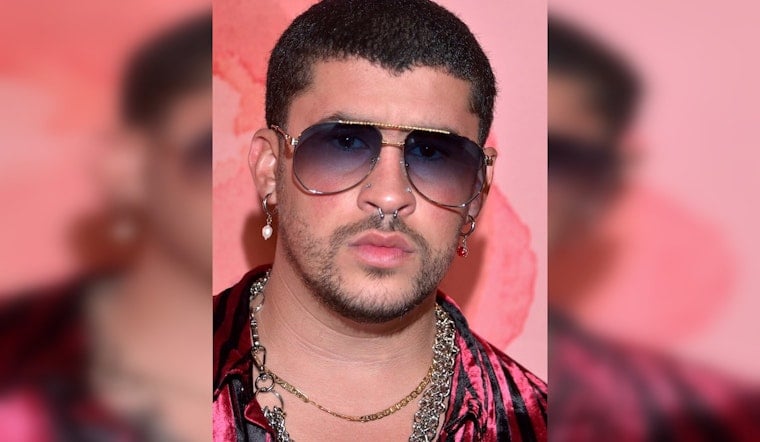
A federal judge in downtown Los Angeles spent an hour Thursday weighing whether to undo his own ruling in a sprawling copyright case that has put Bad Bunny, Karol G, Daddy Yankee and more than 100 other artists on notice over reggaeton's signature dembow beat. Judge André Birotte Jr. took the matter under submission at the end of the hearing and said he would need several weeks to decide whether to reconsider his earlier decision sending the case toward a jury trial.
The case traces back to Cleveland “Clevie” Browne and the heirs of Wycliffe “Steely” Johnson, who hold the composition copyright for the 1989 track “Fish Market” and claim it is the original source of reggaeton's dembow rhythm, according to Rolling Stone Australia. That drum pattern became widely known as dembow after Shabba Ranks used it on his 1990 track “Dem Bow,” a lineage documented by Berklee College of Music. In July, Birotte found that a jury must decide whether an estimated 1,800 reggaeton songs infringed the “Fish Market” composition copyright, a ruling that as reported by Music Business Worldwide stemmed from a factual dispute between competing expert witnesses over whether the instrumental contained original, copyrightable elements.
Bad Bunny's lawyers filed a motion asking the judge to reverse that July ruling or, failing that, allow defendants to immediately appeal it to the Ninth Circuit. Lawyers for other artists joined the request for reconsideration, according to the Rolling Stone Australia account of the hearing.
A Frankenstein Loop or a Real Pattern?
At the hearing, Bad Bunny's lead lawyer Kenneth Freundlich argued that the two-bar timbale loop identified as protectable appears only in a track called Pounder (Dub Mix II), not in “Fish Market” itself. He pointed to Clevie Browne's own sworn testimony, in which Browne said the first bar came from the opening measure of “Fish Market” while the second bar came from bar 22 — meaning, per Freundlich's argument, that the pattern plaintiffs are trying to protect was a pastiche assembled from different portions of different songs rather than an original selection and arrangement found in a single work. Freundlich told the court that a selection arrangement cannot be based on a pastiche of compositions, per the same account. Browne testified that the two-measure pattern in question consisted of two bars that were not connected within “Fish Market.” The complaint also notes that Pounder (Dub Mix II) lacks the tambourine element identified as protectable in “Fish Market,” and that Steely & Clevie owns the sound recording copyright for Pounder but not its composition copyright — that composition copyright instead belongs to Dennis Halliburton, who is not a party to the lawsuit.
Plaintiffs' attorney Stephen M. Doniger pushed back, arguing that Pounder contains much of the same selection and arrangement as “Fish Market” and that there remains a genuine factual dispute over whether the two-bar slice actually comes from “Fish Market.” Co-counsel Benjamin Tookey answered Freundlich's argument directly, telling the court a consecutive two-bar timbale pattern exists in one place in “Fish Market” and was simply repeated at different times within the track. Judge Birotte pressed the plaintiffs on how they reconcile their claimed “Fish Market” pattern with testimony that its timbale figure actually came from two separate portions of the song.
Defense Says Case Threatens an Entire Genre
Beyond the technical dispute over bars and loops, Bad Bunny's team has argued more broadly that plaintiffs constructed an unprotectable “Frankenstein” work by piecing together seven separate drum elements across three different tracks rather than identifying them within a single copyrighted work, according to Complex. Separately, defense attorneys representing dozens of accused artists have argued the drum pattern consists of unprotectable musical building blocks derived from public-domain Caribbean rhythms, including the 19th-century habanera beat.
Duke University law professor Jennifer Jenkins has cautioned that a legal victory for Steely & Clevie would create an unprecedented standard in music litigation, effectively granting a monopoly over an entire musical genre three decades after the original track's release, Music Business Worldwide reported. The lawsuit, originally filed in 2021 and consolidated in 2023, targets more than 1,800 songs recorded across three decades — including Luis Fonsi's “Despacito,” which has drawn over 7.6 billion views on YouTube, according to DancehallMag. Co-plaintiff Wycliffe “Steely” Johnson died in New York in 2009 at age 47, leaving his estate to continue the fight alongside Browne, per the same DancehallMag account.
Bad Bunny's Specific Songs at Issue
Bad Bunny has denied allegations that he infringed Steely & Clevie's work on dozens of songs, including accusations tied to “Una Vez,” “Tití Me Preguntó” and “Un Ratito.” Other artists named among those potentially involved in the sprawling case include Karol G, Anitta, Justin Bieber, Pitbull and Daddy Yankee, per the Rolling Stone Australia report from the hearing. The case also names major record company divisions such as Universal Music Group, Sony Music and Warner Music Group, a scope World Music Views has tied to the federal court's Los Angeles jurisdiction.
Freundlich told the court that taking the case to trial could extend discovery and preparation into 2035, underscoring the scale of a dispute already touching roughly 1,800 songs by scores of famous artists. Regardless of how Birotte rules on reconsideration, the case will continue on separate claims involving allegedly unauthorized samples of sound recordings owned by the plaintiffs.
This isn't Bad Bunny's first brush with a California copyright claim this year. In March, U.S. District Judge Otis D. Wright II dismissed a separate federal lawsuit against the artist over his track “Enséñame a Bailar” with prejudice after the plaintiff abandoned the case, Music Business Worldwide reported at the time. Birotte said an order on reconsideration would probably take a few weeks, leaving Bad Bunny, his co-defendants and the Steely & Clevie estate to wait and see whether the dembow case proceeds toward the jury trial the July ruling set in motion.





.jpg)