

























































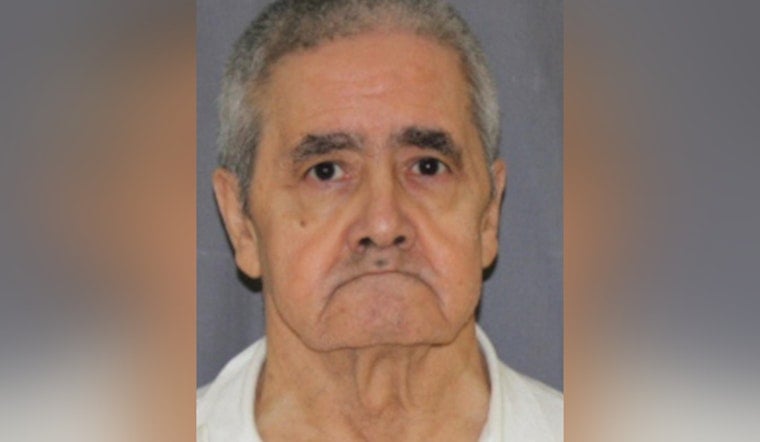
A 75-year-old inmate serving a lengthy sentence for the sexual assault of a child was found unresponsive in his cell at a state prison near Beaumont last Sunday, and was pronounced dead about 30 minutes later, according to the Texas Department of Criminal Justice. Victor Salcedo had been incarcerated at the Mark W. Stiles Unit, serving time for aggravated sexual assault of a child and indecency with a child.
TDCJ has listed the preliminary cause of death as natural causes, and the agency says no foul play is suspected, as reported by 12NewsNow. The medical examiner's office will still complete a full review, including autopsy results, before the case is considered closed. TDCJ has released no additional information beyond its preliminary death report, and the outlet notes that findings could still change once the autopsy is finished.
A Case Rooted in El Paso
Salcedo originated from El Paso, Texas, where he was arrested in 1999 after an eight-year-old victim reported abuse to a school principal, according to the Court of Appeals, Eighth District of Texas. A jury there convicted him in 2001 on two counts of aggravated sexual assault of a child and one count of indecency with a child, sentencing him to 99 years in prison on each assault count and 10 years for indecency.
Salcedo later filed an appeal to the 41st District Court in El Paso County. The Eighth District Court of Appeals ultimately dismissed one of the two aggravated sexual assault counts, ruling that the victim's testimony had not established the physical contact required to sustain that particular charge. The court upheld his remaining aggravated sexual assault conviction along with the indecency charge, leaving the bulk of his original sentence intact.
Inside the Stiles Unit
The Mark W. Stiles Unit, where Salcedo was housed at the time of his death, is a maximum-security state prison established in 1993 in unincorporated Jefferson County, about four miles southeast of downtown Beaumont. The 776-acre facility can house up to nearly 3,000 male inmates and sits alongside the LeBlanc and Gist state units, according to the Texas Department of Criminal Justice.
The unit also functions as a regional hub for the University of Texas Medical Branch, which manages health services across multiple East Texas prisons. Its infirmary includes 17 beds, 13 of them for assisted living, along with 21 wheelchair-accessible bunks — infrastructure built in part around the realities of an aging prison population.
Scrutiny Over Heat and Health Conditions
The Stiles Unit has drawn scrutiny in recent years beyond its medical role. A TDCJ internal investigation made public in March found that staff at the facility had falsified summer 2022 cell temperature logs, recording figures between 58 and 60 degrees when actual temperatures reached at least 76 degrees, amid a broader lack of air conditioning across state prison housing, according to The Texas Tribune. That investigation stemmed from a federal lawsuit challenging heat conditions in Texas prisons.
That same month, U.S. District Judge Robert Pitman ruled in the case that extreme heat in un-air-conditioned Texas prisons — where indoor temperatures regularly surpass 100 degrees — likely constitutes unconstitutional cruel and unusual punishment, per Reuters. Roughly two-thirds of Texas state prison facilities lack full air conditioning in inmate housing areas. Salcedo's death has not been linked to heat exposure; TDCJ's preliminary finding attributes it to natural causes, though the full autopsy is still pending.
An Aging Prison Population
Salcedo's death also fits within a demographic trend that has strained the Texas prison system for years. Inmates aged 55 and older are the fastest-growing group in TDCJ custody, with more than 19,200 senior inmates reported by October 2020, a 51% increase since 2010, according to Texas Legislature Online. Incarcerated people tend to experience accelerated aging and chronic health conditions roughly a decade earlier than the general population.
That trend carries a steep financial cost. By fiscal year 2019, Texas was spending more than $750 million annually on prison health care, a 53% jump over seven years, driven largely by an aging inmate population that accounted for nearly half of all hospitalization costs despite making up only about one-eighth of the state's prisoners, per The Texas Tribune.
What Happens Next
Under Texas Code of Criminal Procedure Article 49.18, prison officials must investigate any in-custody death and submit a written Custodial Death Report to the Texas Office of the Attorney General within 30 days, with a public version made available online. That process, along with the medical examiner's completed autopsy, will determine the official cause of Salcedo's death. Until then, TDCJ's finding of natural causes remains preliminary, and no further details have been released.





