

























































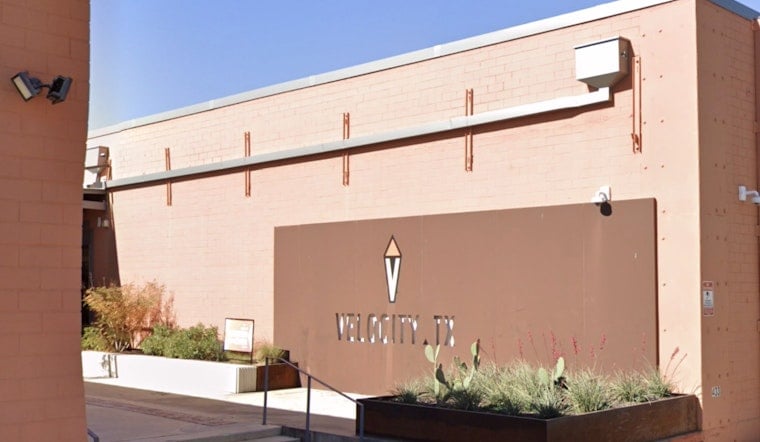
A Belgian biotechnology company has chosen San Antonio's East Side as the home for its first American operation, leasing lab space at VelocityTX to develop an intravenous therapy aimed at treating sepsis, severe burns and trauma. Valedyn Inc. was established as the U.S. subsidiary of Ynios Pharma and will work out of VelocityTX's innovation center on a 12-acre bioscience research campus, developing treatments based on Belgian research into a therapy called TA64.
The move places Valedyn among a growing cluster of life science startups leasing space at VelocityTX's East Side campus, according to the San Antonio Express-News. Valedyn was co-founded by Jean François Plucker and Philippe Van Wesepoel, who launched the company in February. Ta64 is described as an intravenous therapy, and Valedyn's treatments are designed to stabilize the body during severe trauma and critical illness, with potential applications in both military and civilian healthcare, and the company says its therapies will be used in civilian settings and combat environments.
Heather Hanson, president of BioMedSA, said San Antonio is a good place to launch a company, and her organization has leads on 21 other companies interested in relocating to the city. The Belgian Trade Commission connected Valedyn with BioMedSA in mid- to late 2025, setting the relocation in motion. BioMedSA recruits domestic and international organizations to San Antonio, part of a broader push tied to the city's healthcare and bioscience sector, which the San Antonio Chamber of Commerce estimates generates roughly $44 billion in annual economic impact and employs nearly 200,000 workers — about one in five local jobs.
Why San Antonio's Trauma Network Was the Draw
San Antonio's decision to court Valedyn reflects the city's long-standing priorities, and city leaders framed the deal around the region's trauma-care infrastructure. Mayor Gina Ortiz Jones, a former U.S. Air Force officer and Under Secretary of the Air Force who took office as the city's 69th mayor last year, said Valedyn's work aligns with San Antonio's commitment to advancing trauma care, supporting military readiness and building a resilient, knowledge-driven economy.
The city has two Level 1 trauma centers — University Hospital and Brooke Army Medical Center — which combine military medical leadership, trauma expertise and what officials describe as a deeply collaborative culture. Brooke Army Medical Center, based at Joint Base San Antonio-Fort Sam Houston, is a 425-bed facility that serves as the Department of Defense's largest hospital and its only Level 1 trauma center, according to a July 2020 report published in Military Medicine. The same research details how University Hospital and Brooke Army Medical Center coordinate through the Southwest Texas Regional Advisory Council to serve a 22-county regional trauma service area spanning 26,000 square miles that stretches to the U.S.-Mexico border.
Brian Peters, VelocityTX's director of marketing and communications, said San Antonio is a national hub for trauma care and military medicine. He pointed to additional institutions clustered around the city, including the Trauma Institute of San Antonio, described as the first congressionally funded joint military-civilian trauma institute in the country, along with the Defense Health Agency and the Naval Medical Research Unit-San Antonio. The U.S. Army Institute of Surgical Research, also based locally, is regarded as one of the world's leading burn treatment facilities — directly relevant to Valedyn's focus on burn therapy.
Sepsis's Enormous Toll Shapes the Research Target
The scale of the medical problem Valedyn is chasing is significant. Sepsis affects at least 1.7 million adults in the United States every year and results in more than 350,000 deaths during hospitalization or discharge to hospice care, according to the Centers for Disease Control and Prevention. That national burden helps explain why a therapy aimed at stabilizing patients during severe trauma and critical illness has drawn interest well beyond Belgium.
A Growing East Side Campus
Valedyn's arrival builds on VelocityTX's recent expansion. The organization completed Phase 1 development of its historic Merchants Ice complex on the East Side in May 2024, opening VelocityTX Co-Labs, a 5,000-square-foot community lab space offering bioscience startups BSL-2 research facilities — a milestone Hoodline covered at the time. VelocityTX's innovation center is designed as a coworking space for startups and is meant to enable collaboration between innovators working on different products. Upon full development over the next decade, the 12-acre campus is projected to generate more than $1.4 billion in annual economic impact and create over 2,500 jobs, according to VelocityTX.
Local funding and research pipelines add further support for companies like Valedyn. BioMedSA's annual BioFest Invest competition has helped participating early-stage life science startups raise more than $85 million in funding since it launched in 2021, per Capital Analytics. The region's academic research base also grew substantially after a September 2025 merger between UT Health San Antonio and the University of Texas at San Antonio created an integrated research university with roughly 40,000 students and a $2.2 billion annual budget, expected to generate more than $6 billion in annual regional economic impact.
Federal research funding has also been shifting toward Texas. The Advanced Research Projects Agency for Health established its national Customer Experience Hub in the state, expanding federal research funding opportunities for San Antonio medical research institutions, according to TxBiomed Magazine. With BioMedSA already fielding leads from 21 other companies eyeing a move to the city, Valedyn may be the first of several international biotech firms to land on San Antonio's East Side in the coming years.





