

























































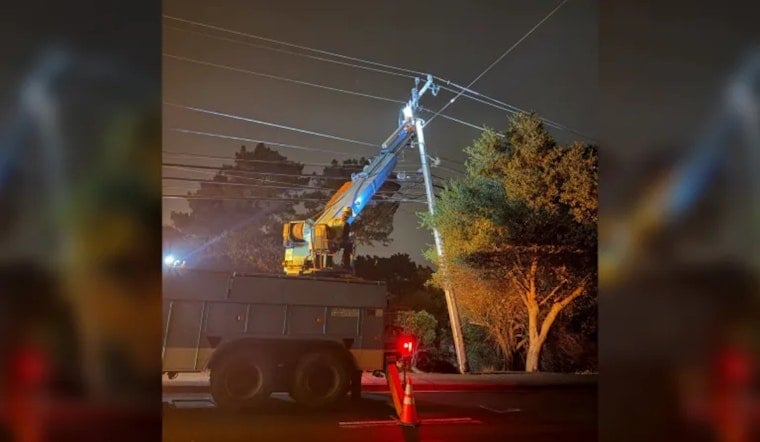
Nearly 4,600 PG&E customers across Belmont woke up in the dark today after an unplanned power outage struck just before 5:30 a.m., knocking out electricity in the Central, Notre Dame, and Cipriani neighborhoods with no estimated restoration time in place.
The outage was first reported by KRON4, and the Belmont Police Department said it was aware of the outage affecting those same three areas, according to the station's report. PG&E told KRON4 in a statement that its team is evaluating the electrical system to identify damaged sections and make necessary repairs in order to safely turn the power back on, though no timeline for full restoration had been released as of the outage report.
An outage of this size touches a meaningful slice of the city. Belmont has more than 10,500 housing units spread across its 4.6-square-mile footprint, according to U.S. Census Bureau QuickFacts data, meaning the blackout left a significant share of local households without electricity heading into the workday.
Dark Intersections Mean Legal Stop Signs
The timing carried real consequences for morning drivers. Under California Vehicle Code Section 21800(d)(1), any driver approaching an intersection where the traffic signal has gone dark due to a power outage is legally required to come to a complete stop and treat the crossing as an all-way stop before proceeding, according to guidance published by the City of Los Banos. That obligation fell on Belmont commuters navigating the Central, Notre Dame, and Cipriani areas, which combine low-lying commercial corridors with residential streets that climb into the Peninsula hills, per background from the Wikipedia.
Adding to the morning's traffic headaches, Caltrans had scheduled overnight pavement and crosswalk marking work along State Route 82, also known as El Camino Real, between F Street in Belmont and Third Avenue in San Mateo, with lane closures running through 7:59 a.m. each night from Monday through today. That construction window overlapped directly with the outage-darkened intersections along the same corridor.
Why Restoration Estimates Take Time
PG&E's process for pinpointing damage and restoring power follows a standardized sequence. Under guidelines from the California Public Utilities Commission, investor-owned utilities including PG&E must prioritize restoring emergency services and critical infrastructure — hospitals, telecommunications facilities, and water districts — before re-energizing large blocks of residential customers. That hierarchy can delay updates for homes still waiting to see their lights come back on.
Early-morning outages like Friday's also tend to lack immediate restoration estimates simply because crews need time to physically assess damaged lines. Industry research group Chartwell reported in July 2025 that PG&E has leaned on a machine-learning system called smartETOR to automate restoration-time estimates, a tool that has pushed the utility's outage-notification delivery rate to 94%. Even so, accurate estimates typically only populate once field crews isolate the specific damaged grid sections.
A Regional Pattern of Sudden Outages
Belmont's blackout adds to a string of multi-thousand-customer outages across San Mateo County this year. In nearby Menlo Park on May 22, a vehicle crash into a power line on Ravenswood Avenue cut electricity to 3,585 PG&E customers for nearly four hours, according to Patch. PG&E remains the dominant electric provider across the county, serving more than 312,000 of the roughly 326,000 customer accounts tracked countywide by PowerOutage.us.
For residents facing extended outages, PG&E policy states that customers hit by unannounced power outages lasting longer than 48 continuous hours under normal operating conditions may qualify for automatic or requested Safety Net compensation payments.




