

























































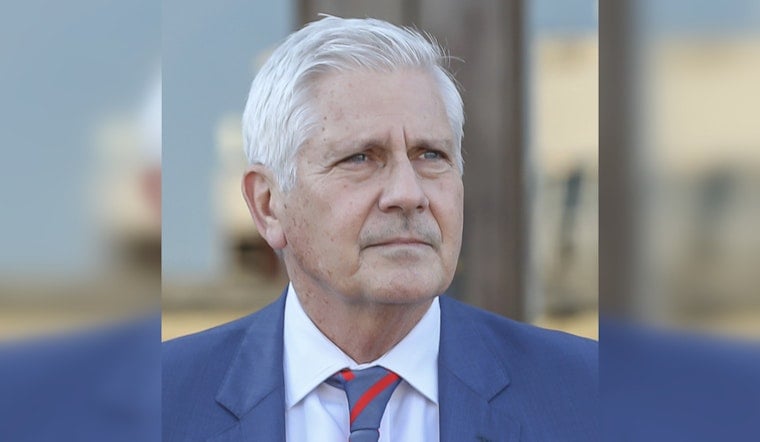
Nassau County Executive Bruce Blakeman says he would tear down New York's decade-old BitLicense framework if voters send him to the governor's mansion, calling the regulatory regime cost-prohibitive for the startups it was meant to police. Blakeman, the Republican candidate challenging Governor Kathy Hochul in this year's race, made the pledge even though he admits he doesn't currently own any cryptocurrency himself and says he simply can't afford it right now.
Blakeman vowed to repeal the BitLicense framework entirely if elected, according to the New York Post. New York digital currency firms currently need a BitLicense to legally buy or sell digital currency in the state, a requirement in place since 2015. Blakeman told the paper that a transaction tax on crypto would end economic activity in the sector outright, and separately called a tax on every cryptocurrency transaction oppressive.
What It Actually Costs to Get Licensed
While the Post's report notes BitLicenses can cost upwards of $10,000, other industry estimates paint a starker picture of the real financial burden facing applicants. Total costs to obtain and maintain a New York BitLicense typically range between $350,000 and $1.5 million or more upfront in legal, compliance, and auditing expenses, according to Brico, with annual operational spending running from $400,000 to over $1.5 million more. The official NYDFS application fee itself is a non-refundable $5,000, but applicants must complete a detailed 44-page checklist covering corporate governance, business plans, and risk disclosures before regulators even begin their review, per Tetra Consultants, which notes that processing timelines routinely stretch 12 to 18 months.
Critics argue the BitLicense creates significant barriers for companies seeking to launch and grow in New York, a complaint Blakeman has now folded into his campaign platform. He said he would meet with cryptocurrency businesses to develop what he called a sensible approach, and argued New York should nurture the crypto industry by building a closer relationship between the private and public sectors. Blakeman said prior approaches to bitcoin and cryptocurrency have treated the industry as the enemy, and declared that New York should be the financial capital of the world.
Hochul's Track Record on Crypto Oversight
Blakeman's deregulation pitch runs directly counter to the approach Hochul has taken since entering office. Under her Fiscal Year 2023 budget enacted in April 2022, New York authorized NYDFS to collect annual supervisory assessment fees from BitLicense holders to fund regulatory oversight, according to Foley & Lardner LLP — fees that virtual currency firms had previously been exempt from paying, unlike state-chartered banks and insurers. Hochul also signed a two-year moratorium in November 2022 blocking the state from granting or renewing air permits for fossil-fuel-powered proof-of-work crypto mining facilities, a move Hunton Andrews Kurth LLP says was meant to keep crypto energy demands from derailing the state's climate goals.
Blakeman criticized Hochul directly, saying she does not understand that her concerns about digital currency should be negotiated rather than simply dictated, and argued her approach drives business out of New York. He said Hochul does not want to engage in negotiation or dialogue about cryptocurrency at all. Blakeman also weighed in on New York City politics, saying a governor has substantial power over the city's mayor and that he would not let the mayor destroy New York City or harm the state; he added that he would stop Zohran Mamdani if Mamdani tried to destroy the state's economy, though the Post notes Mamdani's own position on digital currency remains unclear.
A Regulatory Regime Under Fire From Multiple Directions
The BitLicense, promulgated in June 2015 by the New York State Department of Financial Services under 23 NYCRR Part 200, was the nation's first comprehensive state regulatory regime built specifically for virtual currency businesses, according to InnReg. Created under former Superintendent Benjamin Lawsky, it mandated cybersecurity standards, anti-money laundering controls, and capital requirements modeled on traditional financial safeguards. NYDFS issued the state's first BitLicense to Circle Internet Financial in September 2015 and approved its first limited-purpose trust charter for virtual currency to Gemini Trust Company the following month, establishing the two regulatory pathways firms still use today.
That framework has not stopped major institutional players from pursuing licenses despite the entry costs — NYDFS granted a Virtual Currency Business Activity License and Money Transmission License to institutional platform Bullish US Operations LLC in September 2025 for spot trading and custody services. But a December 2025 follow-up audit from the Office of the New York State Comptroller found that NYDFS supervised 22 virtual currency licensees holding over $404 billion in assets as of December 2024, while flagging an average three-year lag between required licensee financial examinations despite a two-year statutory mandate. The Comptroller's initial 2024 audit had already found some BitLicense applicants waiting up to four years for approval.
Even as Blakeman pushes deregulation, other officials in New York are moving to tighten the screws on unlicensed crypto operators. Manhattan District Attorney Alvin Bragg and State Senator Zellnor Myrie introduced the CRYPTO Act in January 2026, proposed legislation that would make operating an unlicensed virtual currency business in New York a felony carrying up to 15 years in prison, according to the Manhattan District Attorney's Office. If enacted, New York would become the 19th state to treat unlicensed virtual currency business activity as a crime rather than a purely civil infraction.
The Race Tightens Heading Into Fall
Blakeman's crypto pitch lands as the governor's race itself is narrowing. An August 2026 CBS News poll showed Hochul leading Blakeman 49% to 39% among likely voters, cutting into what had been a 20-point gap recorded back in June. Blakeman picked up Donald Trump's endorsement after Representative Elise Stefanik suspended her own gubernatorial bid in December 2025, and the crypto framework repeal now joins a growing list of policy contrasts between the two candidates, following Blakeman's earlier push to claw back climate funds from the Hochul administration.



