

























































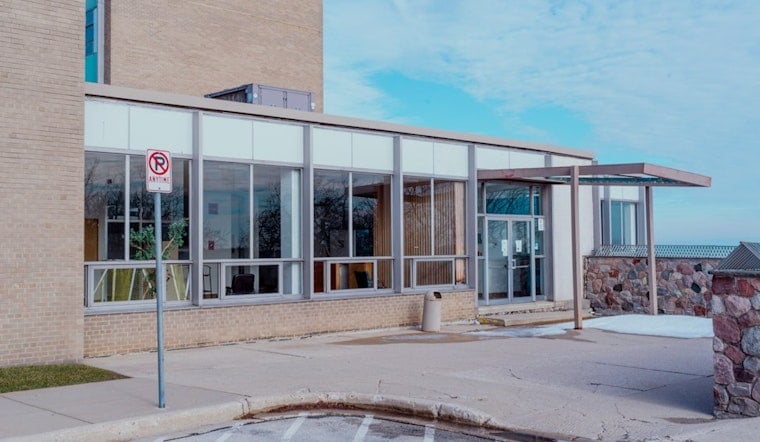
Cedar House Life Change Center broke ground last month on a 70-bed expansion of its Bloomington campus, a project aimed squarely at a problem that has plagued San Bernardino and Riverside counties for years: people seeking addiction treatment often wait 30 to 60 days just to get a bed. The new two-story building will add meeting rooms, visitation rooms and office space to a facility that, before construction began, already operated 125 residential beds and delivered more than 62,000 hours of care in 2023.
The groundbreaking ceremony, held July 16 in Bloomington, drew more than 150 guests and included a presentation on Cedar House's future vision for the campus, according to the San Bernardino Sun. Cedar House chief executive officer Jamie Lamb said in a news release that community leaders and the state's commitment to behavioral health made the expansion possible, calling the groundbreaking event a tremendous success that supports the organization's bright future. The event also featured Fontana Mayor Acquanetta Warren, San Bernardino County Department of Behavioral Health acting director Josh Dugas, Cedar House board president Joyce Ablett, chief advancement officer Melissa Hughes, and Brian Banks, a senior consultant for Advocates for Human Potential.
A $30 Million Bet on Faster Access to Care
The new building, set at 32,000 square feet, is funded by an award of more than $30 million from the state Department of Health Care Services' Behavioral Health Continuum Infrastructure Program, with Cedar House requesting the funding with support from San Bernardino County. That state money traces back to Proposition 1, the voter-approved $6.4 billion Behavioral Health Infrastructure Bond Act passed in 2024 to expand community-based behavioral health and addiction treatment facilities statewide, according to the Office of Governor Gavin Newsom. San Bernardino County has also chipped in directly: the Board of Supervisors approved a separate $50,000 grant in May from District-Specific Priorities funds to support facility infrastructure, maintenance, equipment and technology upgrades at the Bloomington campus, per the San Bernardino County Board of Supervisors.
Adding 70 residential beds is also expected to free up space for an expansion of outpatient services, according to the Sun's report on the groundbreaking. Cedar House already runs structured outpatient programs including the Matrix Model, a 16-week evidence-based curriculum blending group counseling, relapse prevention, family education and 12-Step facilitation, alongside withdrawal management and medication-assisted treatment, according to Inland Empire Community News.
A Regional Overdose Crisis Behind the Numbers
The urgency behind the expansion is grounded in grim local statistics. Fentanyl-related deaths in San Bernardino County rose from 74 fatalities in 2019 to a peak of 436 in 2023, before decreasing 36% to 278 deaths in 2024, according to the county's Community Indicators data. Even with that single-year drop, the county's age-adjusted drug overdose mortality rate climbed 70% between 2020 and 2023, rising from 10.1 to 17.3 deaths per 100,000 residents, per the San Bernardino County Community Vital Signs Initiative.
Those figures help explain why local leaders and the state are pouring capital into residential and step-down treatment capacity rather than treating the recent decline as a sign the crisis has passed. Cedar House provides treatment for people affected by addiction at its Bloomington facility, located at 18612 Santa Ana Ave., and the shortage of available beds regionally has left many people waiting weeks for a treatment slot to open, even after the 2024 decline in fentanyl deaths.
From a 12-Bed House to a Multi-Facility Campus
The expansion marks the latest chapter in a history that stretches back more than five decades. Cedar House was established in 1973 under the name Amigo House by nine founders from Fontana, Riverside and Upland, according to Cedar House Life Change Center. The organization operates at its current campus on Santa Ana Avenue and adopted the doing-business-as name Cedar House Life Change Center under its parent nonprofit, Social Science Services, Inc., per an interview with VoyageLA.
Cedar House has expanded its specialized offerings over time. The organization has since grown far beyond its original scope, and its calendar of community events reflects that reach: on May 2, Cedar House held its seventh annual Alumni Day at Ayala Park in Bloomington, an event that brought together alumni, clients, staff, families, resources and community supporters. The gathering gave former clients a chance to reconnect with staff and peers, share their recovery journeys and encourage others still in treatment. Lamb said in the news release that former clients' stories remind current clients that lasting recovery is possible and within reach.
What Comes Next for the Bloomington Campus
The 70-bed building is not the end of Cedar House's plans for the area. Beyond the current 32,000-square-foot residential structure, the organization intends to build on a 4.4-acre lot across Santa Ana Avenue, where it plans to construct a 7,000-square-foot sobering center designed to serve up to 20 people per 24 hours, alongside a 30-day stabilization center, according to Cedar House's own materials. The planned sobering center would add another type of facility to the campus.
Taken together, the newly broken ground and the future sobering center point to a broader strategy of building out the full continuum of care on one campus, from crisis stabilization to residential treatment to outpatient step-down services. For a region where waitlists have routinely stretched a month or two, county officials and Cedar House leadership are betting that more beds now mean fewer people falling through the cracks later.





