

























































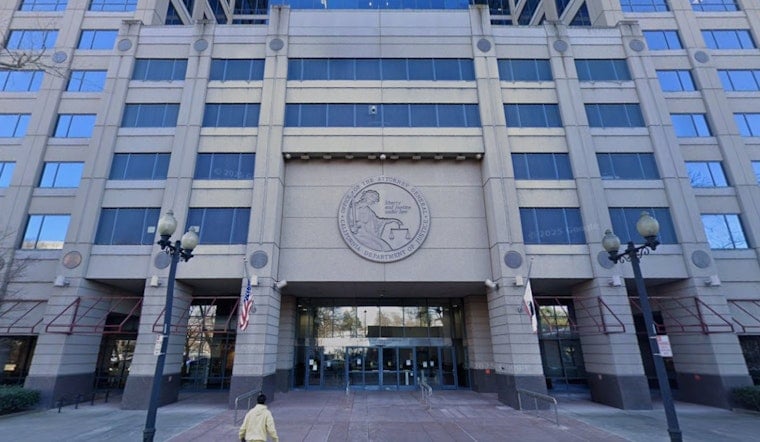
California Attorney General Rob Bonta filed a second amended complaint today, accusing DuPont, Corteva, Chemours, and the newly spun-off Qnity Electronics of illegally shuffling assets and restructuring their corporate structure to dodge liability for decades of PFAS contamination. The filing lands in the U.S. District Court for the District of South Carolina, where California's long-running case against the makers of so-called forever chemicals has been playing out for years.
According to the California Department of Justice, the complaint alleges the companies violated the Uniform Fraudulent Transfer Act and the Uniform Voidable Transactions Act. Bonta framed the move bluntly in a post on X, writing that the filing was meant to ensure the companies cannot game the system by illegally moving assets out of reach or though company restructuring to dodge liabilities for the harm they have caused, according to Rob Bonta. He added that our communities deserve justice — and we'll continue to fight for it.
Today, we’re filing our second amended complaint to ensure they cannot game the system by illegally moving assets out of reach or though company restructuring to dodge liabilities for the harm they have caused.
— Rob Bonta (@AGRobBonta) August 6, 2026
Our communities deserve justice — and we’ll continue to fight to…
A Restructuring Bonta Calls a Liability Dodge
The amended complaint claims the companies executed a Memorandum of Understanding designed to concentrate PFAS liabilities onto Chemours, the entity spun off from DuPont in 2015 that the state says holds the fewest assets among the group, per the same California Department of Justice filing. That agreement was reportedly amended more recently to strip Chemours of critical insurance coverage worth less than half its value, according to the state's filing.
The lawsuit also targets Qnity Electronics, DuPont's electronics business that was separated into its own company on November 1, 2025. As reported by the Financial Times, Bonta is asking the court to block DuPont and Qnity from transferring proceeds from asset sales tied back to the pre-2017 DowDuPont entity. Per Dupont, that spin-off brought DuPont $4.2 billion in dividend proceeds and set a 56-to-44 percent split for sharing legacy liabilities between DuPont and Qnity.
Years of Legal Pressure on Chemical Manufacturers
This filing builds on a case Bonta first brought in November 2022, when he sued 19 chemical manufacturers, including 3M and DuPont, accusing them of public nuisance, natural resource destruction, and failing to warn the public about PFAS toxicity, according to Bergeson & Campbell, P.C. That original complaint targeted seven PFAS compounds found across California water sources — PFOA, PFOS, PFBS, PFHxS, PFHxA, PFHpA, and PFNA — and sought statewide water treatment funding along with an abatement fund, the same filing notes.
The state has repeatedly pushed back on settlement offers it considers inadequate. In August 2023, Bonta led five state attorneys general in objecting to a $1.18 billion proposed settlement between public water suppliers and DuPont, Corteva, and Chemours, calling for higher payouts, the California Department of Justice said at the time. Then in July 2025, he led a bipartisan coalition of 23 attorneys general opposing a separate $10.5 billion to $12.5 billion nationwide class-action settlement between 3M and public water systems, arguing it still wouldn't cover the long-term damage to communities, per a coalition filing cited by the National Association of Attorneys General.
The Scale of PFAS Exposure Across California
The stakes behind the legal fight are significant. California Department of Justice filings from November 2022 estimated that PFAS chemicals are detectable in the bloodstreams of roughly 98 percent of Californians, underscoring how widespread exposure to the chemicals has become. PFAS exposure has been linked to a range of health effects, including cancer, liver damage, and reproductive harm, according to the same filings.
Bonta has also worked to defend federal protections tied to PFAS contamination. In January 2025, he co-led a coalition of 17 state attorneys general filing an amicus brief defending the Environmental Protection Agency's first nationwide drinking water standards for PFAS against legal challenges, the state's justice department said. Those standards set maximum contaminant levels for public water systems nationwide.
For now, the case returns to the federal court in South Carolina, where judges will weigh whether to grant the requested injunction blocking further asset transfers tied to Qnity and the pre-2017 DowDuPont entity. Bonta's office has signaled it intends to keep pressing the litigation as long as it takes, with the attorney general reiterating that California communities affected by forever chemicals deserve accountability from the companies he says created the contamination in the first place.





